Hi there. 🙋🏾♀️
What is this weather?! We hope you’re bundled up and safe wherever you are across Mzansi. In this week’s Wrap, Phala Phala is back in focus and heading to the ConCourt. Could Cupcake be booted out?
Meanwhile, Jacob Zuma and Kallie Kriel met last Thursday, and we’re all wondering what unholy alliance they’re concocting. We also tell you about a heroic mission out of Mpumalanga involving helicopters and croc-infested waters.
Internationally, we’re all watching attentively as the hantavirus saga plays out on the MV Hondius and tell you why experts say not to worry… yet.
Donald Trump says a deal in Iran is imminent, while another billionaire faced backlash over his Met Gala co-sponsorship (Sidebar: Beyoncé looked amazing, as usual).
Then we explain why xenophobic rhetoric in South Africa is largely exaggerated and what the NHI case before the ConCourt could mean for the country.
Also: one of our funding partners is running a survey, and needs your help. The Community Voice Survey covers local news and civic engagement, and the more people who complete it, the clearer the picture it paints.
In exchange for four minutes of your time, you’ll be entered into a draw to win one of ten R500 vouchers. Which, in this economy, is nothing to sniff at.
Fill it out and try out your luck here ➡️https://bit.ly/4uB38Eh
Also: If any of these stories catch your eye, share them with a friend or family member and get them to subscribe here. We need your help to get our amazing newsletter to more people!
So, let’s dive into these stories and more in this week’s wrap, brought to you by the explain.co.za team. 😄
Format:
▁ ▂ ▄ ▅ ▆ ▇ █BRIEFS
NATIONAL
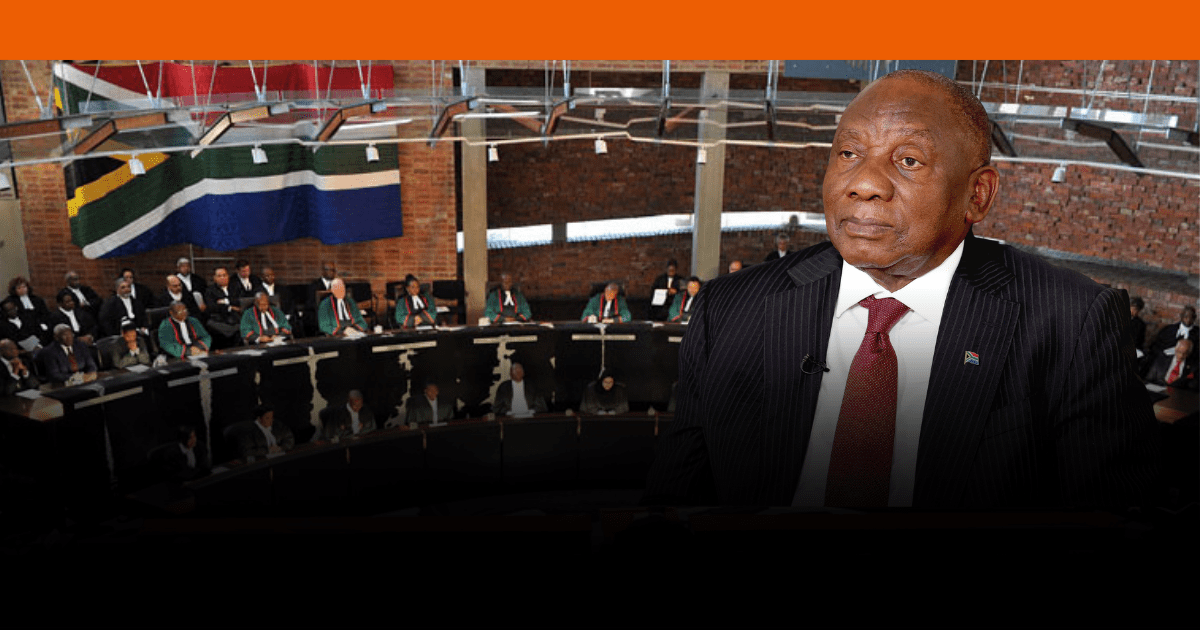
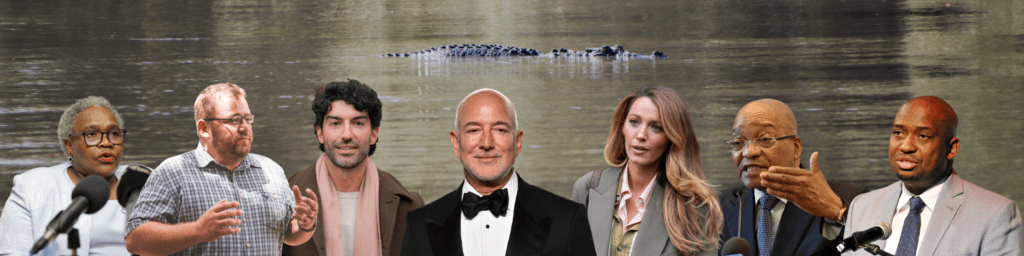
- The Constitutional Court will rule on Parliament’s handling of the Phala Phala scandal on Friday. The question is whether MPs acted lawfully when they voted against launching an impeachment inquiry into President Cyril Ramaphosa. The case stems from a Section 89 panel report, which found enough evidence to justify an inquiry into the theft of about $580,000 in foreign currency from Ramaphosa’s Limpopo farm. The EFF and ATM argue Parliament used ANC numbers, not constitutional principles, to make the whole thing disappear into the sofa cushions. 👀
- Sisisi Tolashe spent much of Wednesday’s parliamentary appearance denying and deflecting over her mounting scandals. The social development minister refused to answer questions about luxury SUVs allegedly donated to the ANC Women’s League, which she leads, but registered in her children’s names, saying the matter is with Parliament’s ethics committee. She also denied knowing that a departmental food aide was allegedly forced to hand over half her salary to Tolashe’s daughter. ANC MPs rallied behind her, while Ramaphosa is apparently taking “his time” deciding what to do. 🙄
- NSFAS was placed under administration for the third time on Monday. Higher Education Minister Buti Manamela appointed Professor Hlengani Mathebula to take full control, citing board resignations, irregular expenditure, ICT system delays and serious data-integrity concerns. The scheme, which funds higher education for thousands of poor and working-class students, has been in crisis for years. The catch? The man tasked with fixing NSFAS’s governance was himself criticised for governance failures at SARS. 👀
- MK Party leader Jacob Zuma and AfriForum CEO Kallie Kriel raised eyebrows this week after what both called a “very constructive” meeting. The unlikely duo discussed Section 235 of the Constitution, which allows cultural communities some form of self-determination — think Orania. The talks come after the MKP introduced a bill to scrap the section, with AfriForum accusing the party of trying to centralise power and weaken property rights. No big breakthroughs were announced, but the meeting shows just how strange South African politics is getting ahead of the elections. 😵💫
- A missing persons case in Mpumalanga took a wild turn last week after police discovered human remains inside a crocodile in the Komati River. A multi-agency search tracked the reptile to a small island — too dangerous to reach by boat. So SAPS diving unit Captain Johan Potgieter was lowered by helicopter into the croc-infested water to retrieve the remains. “This was definitely a first and hopefully… the last,” he said. Only in SA does a missing persons case end with a cop dangling over crocodiles. 😆 DNA tests are underway.
INTERNATIONAL
- Trump says the war on Iran will be “over quickly”, while US forces fired on an Iranian tanker and Israel continues to bomb Beirut. On Wednesday, the US president talked up “very good talks” with Tehran and a 14-point deal reportedly on the table, covering nuclear enrichment, sanctions and reopening the Strait of Hormuz. Iran says the proposal is “still under review”. Meanwhile, the UAE also said that it had been hit by Iranian missiles and drones for a second day running, though Tehran denied it. The olive branch comes with a side of airstrikes. 🫠
- Jeff Bezos’s decision to co-sponsor the Met Gala this year for $10 million did not go down well. 😬 Protests erupted across New York ahead of Monday’s event, with activists plastering subway cars with anti-Bezos posters, projecting slogans onto the Empire State Building and placing 300 fake urine bottles inside the Met — a nod to claims that Amazon workers are forced to skip bathroom breaks. NYC’s newly elected mayor skipped the gala entirely, citing his focus on “affordability.” Instead, he released a photo portfolio highlighting the workers behind the scenes of the fashion industry. 🙌
- China has dropped tariffs to zero for exports from 53 African countries with one awkward exception: Eswatini 😬 The move gives African goods cheaper access to China’s massive market, with South Africa’s apples reportedly first through the gate. The timing matters. As Donald Trump’s old US tariff plans unravel in court, China is positioning itself as Africa’s friendlier trade partner. Lower tariffs sound great, but Africa’s bigger challenge remains producing and shipping enough competitive goods to actually benefit from the deal.
- Elon Musk and Sam Altman’s Silicon Valley bromance is officially dead. 🫠 A California trial kicked off last week over Musk’s claim that OpenAI abandoned its original “AI for humanity” mission in favour of profits. Musk, who co-founded OpenAI with Altman in 2015 before leaving in 2018 after a power struggle, wants billions in damages and even wants Altman removed. OpenAI says Musk is just bitter because his own AI company, xAI, is falling behind. A verdict is expected in about three weeks.
- Blake Lively and Justin Baldoni settled their Hollywood lawsuit on Monday, two weeks before trial. The legal battle began in 2024 when Lively accused Baldoni of harassment, sexual misconduct and running a smear campaign on the set of It Ends With Us. He denied it all and counter-sued. But his case was thrown out while a judge dismissed 10 of Lively’s 13 claims, including sexual harassment, leaving little to argue about. 😶 Neither walked away with a cent, reportedly, while we’ve all been spared from possibly the most expensive therapy session ever.
▁ ▂ ▄ ▅ ▆ ▇ █ BIG STORIES
1️⃣The hantavirus cruise outbreak is closer to home than you think
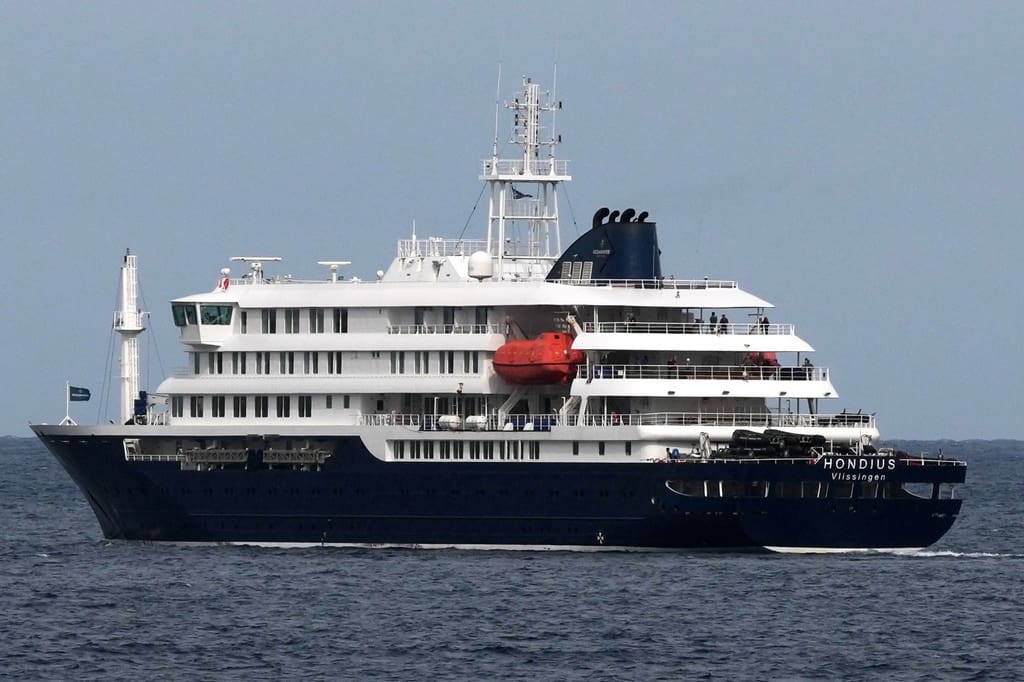
By now you’ve probably seen the headlines. A luxury expedition cruise ship, the MV Hondius, has become a floating health crisis. Three people are dead, eight cases of hantavirus have been confirmed by the World Health Organization, and 146 passengers from 23 countries are still on board, currently sailing toward Spain’s Canary Islands after three days anchored off Cape Verde. If you’re getting flashbacks to the Diamond Princess Covid outbreak in early 2020, you’re not alone.
It sounds like a story happening very far away. It isn’t.
One of the Dutch nationals who died was in Johannesburg when she passed away on 26 April. The day before, she had briefly boarded a KLM flight out of OR Tambo, KL592 to Amsterdam, but the crew refused to let her travel. She died the next day in Joburg. Everyone who was on that flight is now being contacted by Dutch health authorities, while our health department is working with the National Institute for Communicable Diseases and Gauteng Health Department authorities to “conduct contact tracing to stop potential spread of the virus”. Welcome to 2026, where contact tracing is, once again, a vibe.
Quick background: Hantavirus itself isn’t new. It’s a family of viruses carried by rodents, found on multiple continents, usually picked up through contact with their droppings or urine. What’s on the Hondius is the Andes strain, named after the South American mountain range where it’s endemic. It’s one of the very few hantaviruses that can spread person-to-person, though only through very close physical contact. WHO officials have been quick to stress this is nothing like COVID-19, no casual airborne transmission required.
The cruise began in Ushuaia, the southern tip of Argentina, on 1 April, which is why Argentinian authorities are now investigating whether passengers were exposed to rodents before setting sail. Argentina has recorded 101 hantavirus infections since June 2025, roughly double the caseload of the same period last year. Infectious disease specialist Hugo Pizzi told the Associated Press that climate change is the driver. Warming has made parts of Argentina more tropical, encouraging the plants whose seeds feed the rodents that carry the virus. More heat, more rodents, more virus.
Five years after COVID-19 rewrote our vocabulary, the comparisons are inevitable. But Hantavirus is rare, hard to catch, and the experts are saying don’t panic. Maybe just give the cruise a miss this year. 😬
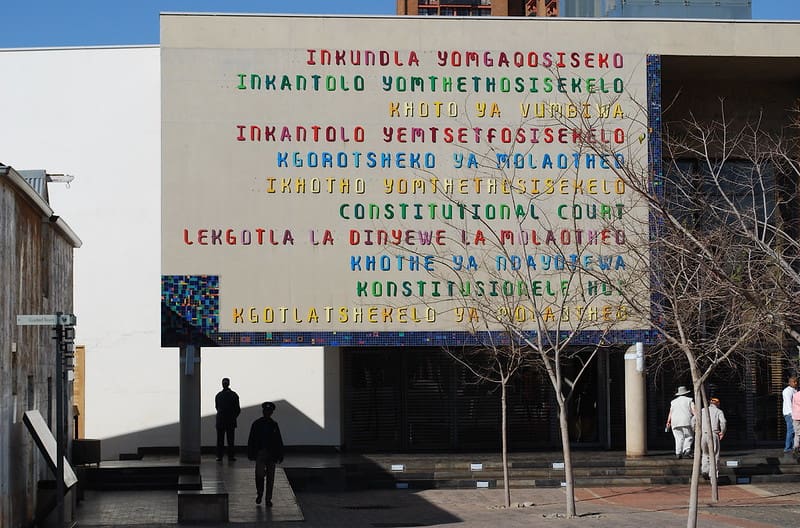
2️⃣National Health Insurance showdown lands at the ConCourt.
If you have medical aid, the ConCourt case unfolding right now is one to watch.
The legal challenge centres on the National Health Insurance (NHI) Act, signed into law in May 2024, which aims to create a universal state-run healthcare system. The Board of Healthcare Funders and the Western Cape government are challenging the law in the ConCourt, arguing Parliament rushed it through ahead of the 2024 election without telling South Africans the basics: what it costs, what it covers, or how it actually works.
The case could eventually reshape medical aids, since the Act proposes limiting schemes to services not covered by the NHI. During proceedings, Justice Steven Majiedt said the public participation process left people “groping around in the dark”. Parliament and Health Minister Aaron Motsoaledi’s legal team disagree, citing nearly 350 000 written submissions and thousands who attended public hearings.
But several judges sounded uneasy, especially about cost. Justice Majiedt described the scheme as “frightfully expensive”, which is judicial-speak for, “Who exactly is paying for this?”
The big issue hiding under all the constitutional jargon is Section 33 of the Act. Once NHI is fully operational, this clause says medical schemes will only be allowed to cover treatments not already offered by the state. Translation: your medical aid stops being your main healthcare plan and becomes a top-up. 😬
For now, nothing has changed. President Cyril Ramaphosa already paused implementation while the court challenge plays out. But the judgment, expected later in 2026, could reshape the entire healthcare industry.
Three outcomes seem most likely:
🔸 The court could uphold the Act in its entirety, meaning the NHI rollout would accelerate, and Section 33 would move closer to reality.
🔸 It could keep the Act but require Parliament to publish proper costings and clearer benefits first, slowing implementation dramatically.
🔸 It could strike the law down on procedural grounds, sending it back to Parliament for another round of consultation and delaying everything by years.
That last option matters politically, too. The Parliament that passed the Bill no longer exists. South Africa is now governed by the GNU, where the ANC still backs NHI, but the DA very much does not. So this case is no longer just about healthcare. It is quietly becoming yet another major ideological cage fight for the GNU.
3️⃣South Africa is once again having a very loud argument about migrants
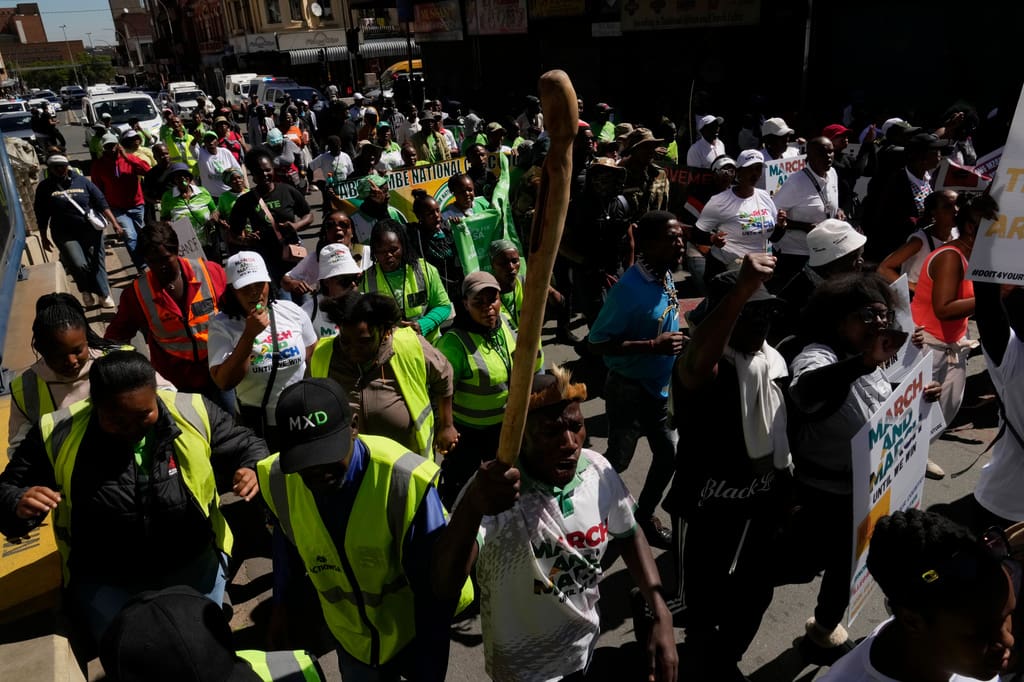
Shops have shut. Roads have been blocked. Protesters marched through Durban, Johannesburg and Pretoria in the past week, chanting variations of “send foreigners home”. And with local government elections now just six months away, political parties are increasingly joining in.
At the centre of the latest protests is March and March, an anti-migrant group founded by Durban radio personality Jacinta Ngobese-Zuma. The movement says it is trying to “clean up” communities. Critics say it looks a lot more like vigilantism. The group has carried out raids on migrant-owned businesses and drawn support from politicians linked to ActionSA, the MK Party, the Inkatha Freedom Party, and the Patriotic Alliance.
But here’s the awkward part for everyone blaming migrants for South Africa’s problems: the numbers do not really support the panic. According to the 2022 Census, around 2.4 million foreign-born people live in South Africa. That is roughly 3.9% of the population, the lowest proportion recorded in more than a decade. Meanwhile, more than 12 million South Africans are unemployed under the expanded definition, which includes people who have stopped looking for work.
In other words, a relatively small migrant population cannot realistically explain a massive unemployment crisis. That has not stopped migration from becoming one of the country’s hottest political talking points. Loren Landau, a migration scholar at Wits University, told /explain/ that South Africa is following a global trend where anti-immigrant rhetoric has moved from the political fringes into the mainstream. Statements that might once have ended political careers are now being repeated at rallies and on campaign stages.
Political theorist Richard Pithouse argues that migration is being used as a distraction from deeper failures around housing, jobs, crime, and service delivery. It is easier to point at migrants, he says, than explain why electricity still cuts out and taps still run dry after decades of promises.
The timing also matters. Local elections are becoming more competitive, opposition parties are fighting for attention, and migration has become politically useful shorthand for frustration and anger. Which means the real story here may not be migration itself. It is how fear around migration is being turned into a campaign strategy.
Read our full explainer here.
That’s it from us at The Wrap, an award-winning product of explain.co.za – simple news summaries for busy people. 💁🏾♀
The Wrap is sponsored by explain’s agency division. We specialise in content marketing for purpose-driven organisations, often with a pan-African reach. Mail info@explain.co.za for a quote.
🇸🇺🇧🇸🇨🇷🇮🇧🇪
Remember to share the love. 💫
Tell your friends to sign up:
📩 Email: http://explain.co.za/subscribe
📲 Our new WhatsApp channel: https://whatsapp.com/channel/0029Vac06yM8kyyLmOulb80J
_Till next time, goodbye from the team, Verashni, Kajal, Sinawo, Theresa, Tshego, Kamogelo, Calay, Mbuyiswa and Ratiloe._ ✌🏽