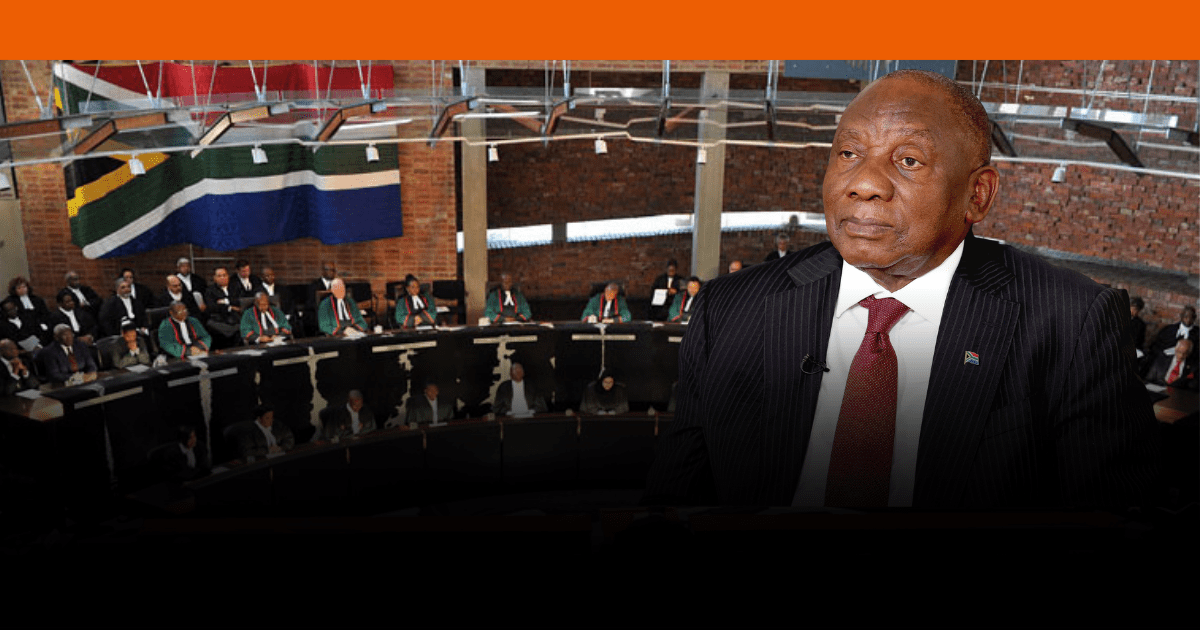
The Board of Healthcare Funders and the Western Cape are arguing that Parliament rushed the National Health Insurance Act through. The judgment, which is months away, will reshape what medical schemes can cover – or won’t.
By Yeshiel Panchia
South Africa’s National Health Insurance (NHI) Act is before the Constitutional Court this week, and the stakes are high. Two groups, the Board of Healthcare Funders and the Western Cape government, argue that Parliament rushed the law through without proper public consultation, clear costings, or a defined benefits package. Judgement is reserved and likely months away. If the challengers win, the Act could be sent back to Parliament or the provinces for a fresh consultation process, delaying implementation by about a year.
But the real twist is political. The Parliament that passed the Bill in December 2023 is no longer in office. South Africa is now governed by the Government of National Unity, where support for NHI is far shakier. Justice Steven Majiedt summed up the mood from the bench on Monday, on the first day of a three-day hearing, describing the scheme as “frightfully expensive”. So while this is technically a constitutional case, it is also shaping up to be yet another of GNU’s major ideological showdowns.
What’s actually being argued
At the heart of the Constitutional Court case is a simple question: did Parliament properly consult South Africans before passing the NHI Act? Two groups say no.
The Board of Healthcare Funders argues the public participation process was basically a giant “tick-box” exercise. Their advocate, Bruce Leech SC, told the court that Parliament never published proper cost estimates or a detailed list of NHI benefits before passing the law, meaning citizens were being asked to comment while “groping around in the dark”.
The Western Cape provincial government’s argument is narrower but sharper: that the National Council of Provinces rushed the Bill through too quickly. The province says its requests for more time were brushed aside as Parliament pushed to pass the law before the 2024 election. The NCOP’s select committee described it as “unreasonably inflexible” when the province asked for more time.
Parliament and the Health Minister’s legal team, Adv Ngwako Maenetje SC and Kameshni Pillay, argue the opposite: that consultation was extensive. They pointed to nearly 339,000 written submissions, more than 11,500 people attending provincial hearings, and 35 substantive changes made to the Bill in response to feedback.
“Just having hearings is not evidence of substantive engagement, of effective and substantial engagement, equal to the nature of the policy that’s under consideration,” said Prof Alex van den Heever, Chair in the Field of Social Security Systems Administration and Management Studies at the Wits School of Governance, in an interview with /explain/ this week. The volume defence, he argued, is precisely what the Constitution doesn’t permit. “A tick-box exercise essentially implies that the executive is creating the legislation. It means Parliament is there just a rubber stamp.”
And in his reading, scale is exactly what raises the constitutional stakes. “The larger it is, the bigger the scale, the more impacted, the wider the range of potential impacts and risks,” Van den Heever said. “It requires that you engage extensively in a substantive way.” That logic that the bigger the reform, the more substantive engagement that Parliament owes sits at the spine of the Western Cape’s procedural complaint.
What the NHI Act actually does, in plain English
So what does the NHI Act actually do? Three big things.
First, it creates a single national health fund. Instead of government hospitals and private medical schemes operating separately, the state becomes the main buyer of healthcare services. Hospitals, doctors, and clinics would contract with the NHI Fund, which would then pay them.
Second, and most controversially, Section 33 limits what medical aids can do once NHI is fully implemented. Medical schemes would only be allowed to cover treatments not already offered by the NHI. In practical terms, medical aids become “top-up” insurance, not your main healthcare cover.
Third, the Act creates a Benefits Advisory Committee appointed by the Health Minister. This body decides what healthcare services the NHI actually covers. That raised alarm bells in court this week, with Justice Steven Majiedt questioning whether a committee with that much power could avoid corruption or political interference.
Importantly, the Act is technically the law already, but most of its key sections are not yet in effect. President Cyril Ramaphosa paused implementation in February 2026 while the Constitutional Court challenge plays out.
Three plausible rulings
There are three realistic ways this Constitutional Court case could end.
- The court upholds the Act. NHI survives intact, and the government can start implementing it within weeks. That means Section 33, the clause that limits medical aids to covering only services not offered by NHI, is moving from theory to reality. The many other legal challenges waiting in the wings would then focus on whether the Act itself is constitutional, rather than on how it was passed.
- The court keeps the Act, but with conditions. This is the middle-ground outcome many analysts think is most likely. The court could rule that Parliament must first publish proper costings and a clear benefits package before implementation continues. NHI survives, but rollout slows dramatically.
- The court strikes the Act down. If the judges find the consultation process unconstitutional, the law goes back to Parliament for a rewrite and fresh public participation. That would delay NHI by at least a year, probably longer, while medical aids continue operating as they do now.
Lurking behind the legal arguments is a bigger question: is South Africa’s healthcare crisis actually about money? Van den Heever argues it is not. In a July 2025 interview, he said, “It is a governance problem. It’s not a chronic resource problem.” His view is that: “Bad financial performance and health outcome performance, they are correlated. So if you have bad financial performance, you have bad health outcomes.”
What this means for the 9 million on medical aids
For the roughly 9 million South Africans on medical aid, this court could eventually change what their medical schemes are legally allowed to cover. Right now, there are 78 registered medical schemes in South Africa, with Discovery having a 58% market share. A main member on Discovery’s Classic Smart Saver plan pays about R3,350 a month in 2026.
If Section 33 of the NHI Act survives, medical aids would eventually only be allowed to cover treatments not offered by the NHI. That means your medical aid stops being your main healthcare system and becomes “top-up” insurance instead. That prospect has already triggered a fight inside the GNU. Health Minister Aaron Motsoaledi has repeatedly insisted, “Medical aids are out under the NHI, even if it means the end of the GNU.” DA ministers disagree. The Medium-Term Development Plan targets to scrap medical aids by 2029, but this has not been quietly resolved. It is the unfinished business hanging over the Court’s ruling.
Critics also argue the numbers simply do not add up. Speaking at a UHAC media briefing on 06 March 2025, chair of the Progressive Health Forum, convenor of the Universal Healthcare Access Coalition, and a former chief executive of the Board of Healthcare Funders, Dr Aslam Dasoo, called the Act “implementable if there’s no money for it. And its provisions are completely unworkable on any reading, and yet there is a political persistence with it. And I think that’s an entirely ideological.”
So what happens now?
First: closing arguments wrapped up yesterday. One big thing to watch is whether Treasury finally weighs in properly on costs. Judges have repeatedly raised affordability concerns, and any late financial evidence could shape the court’s view of Parliament’s consultation process.
Second: the politics. If the court signals discomfort with Section 33, the clause limiting medical aid tensions inside the GNU will spike fast. The ANC remains committed to NHI in principle. The DA does not. With local government elections looming on 4 November, healthcare could become the coalition’s next public battlefield.
Third: the queue of other court cases waiting behind this one. More than a dozen groups, including Solidarity, AfriForum and the South African Medical Association, are preparing separate constitutional challenges. If the Act gets struck down on procedural grounds now, some of those cases will weaken immediately. If it survives, the real substantive fight begins.
Van den Heever believes Parliament is likely to lose the procedural challenge, stating that he believes judgment could be expected around November 2026. If the BHF wins, the Act would have to go through a fresh consultation process, either in Parliament or through the provinces, adding roughly another year before the NCOP can reconsider it in 2027. Crucially, the Bill would return to a very different Parliament from the one that passed it in 2023: the GNU has changed the political arithmetic.
For now, though, nothing changes overnight. Your medical aid continues to work exactly as it does.