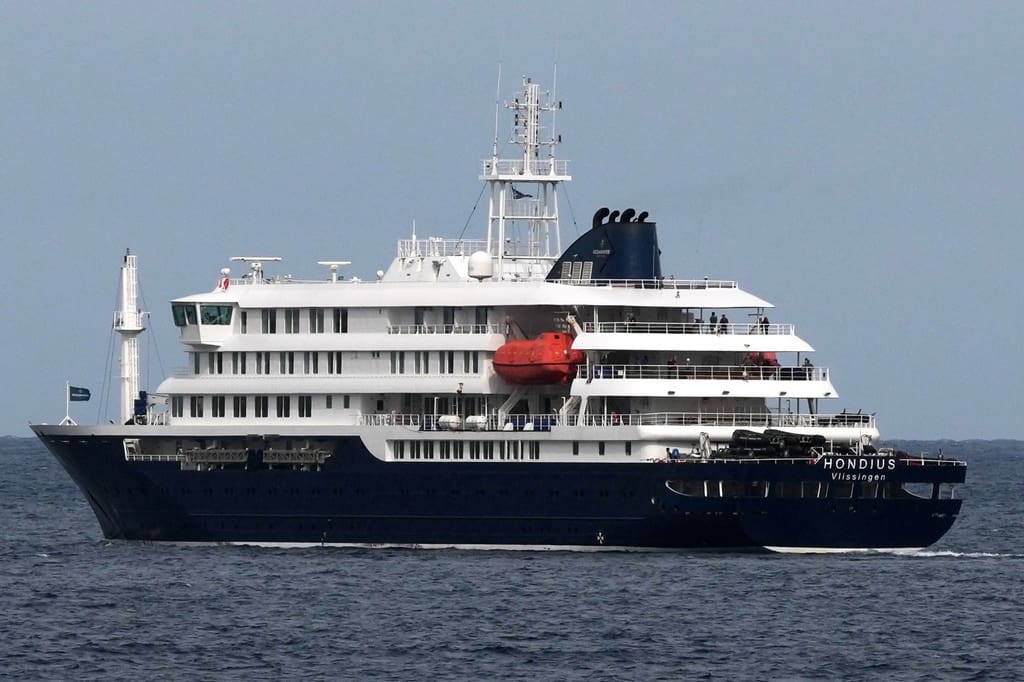
By now you’ve probably seen the headlines. A luxury expedition cruise ship, the MV Hondius, has become a floating health crisis. Three people are dead, eight cases of hantavirus have been confirmed by the World Health Organization, and 146 passengers from 23 countries are still on board, currently sailing toward Spain’s Canary Islands after three days anchored off Cape Verde. If you’re getting flashbacks to the Diamond Princess Covid outbreak in early 2020, you’re not alone.
It sounds like a story happening very far away. It isn’t.
One of the Dutch nationals who died was in Johannesburg when she passed away on 26 April. The day before, she had briefly boarded a KLM flight out of OR Tambo, KL592 to Amsterdam, but the crew refused to let her travel. She died the next day in Joburg. Everyone who was on that flight is now being contacted by Dutch health authorities, while our health department is working with the National Institute for Communicable Diseases and Gauteng Health Department authorities to “conduct contact tracing to stop potential spread of the virus”. Welcome to 2026, where contact tracing is, once again, a vibe.
Quick background: Hantavirus itself isn’t new. It’s a family of viruses carried by rodents, found on multiple continents, usually picked up through contact with their droppings or urine. What’s on the Hondius is the Andes strain, named after the South American mountain range where it’s endemic. It’s one of the very few hantaviruses that can spread person-to-person, though only through very close physical contact. WHO officials have been quick to stress this is nothing like COVID-19, no casual airborne transmission required.
The cruise began in Ushuaia, the southern tip of Argentina, on 1 April, which is why Argentinian authorities are now investigating whether passengers were exposed to rodents before setting sail. Argentina has recorded 101 hantavirus infections since June 2025, roughly double the caseload of the same period last year. Infectious disease specialist Hugo Pizzi told the Associated Press that climate change is the driver. Warming has made parts of Argentina more tropical, encouraging the plants whose seeds feed the rodents that carry the virus. More heat, more rodents, more virus.Five years after COVID-19 rewrote our vocabulary, the comparisons are inevitable. But Hantavirus is rare, hard to catch, and the experts are saying don’t panic. Maybe just give the cruise a miss this year. 😬