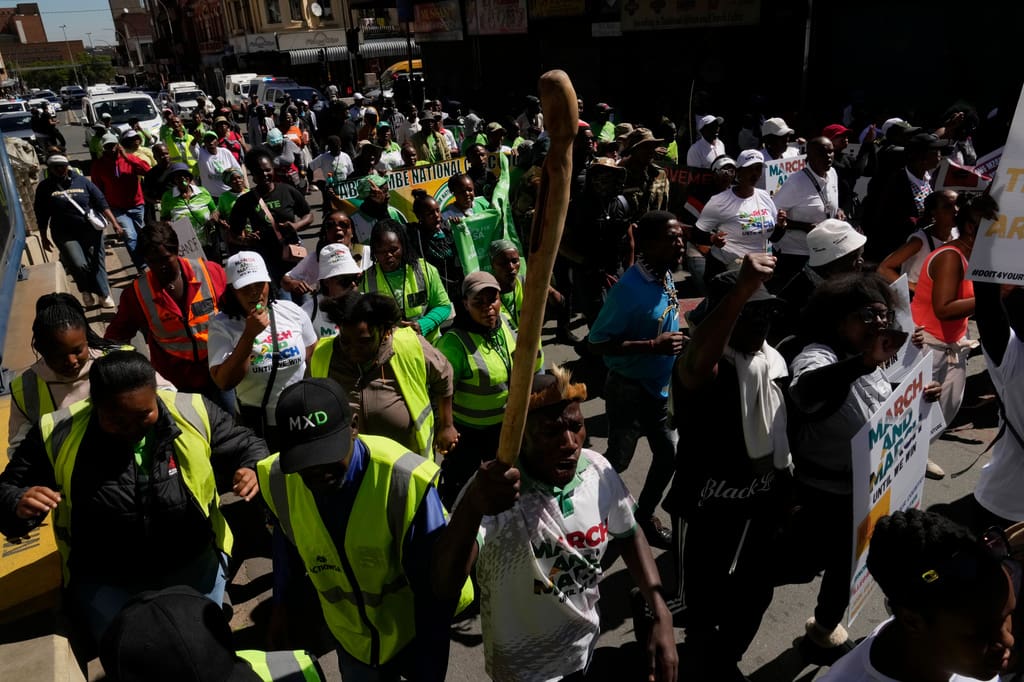
If you walked through any of Mzansi’s major city centres this past week, you probably noticed shops were closed, streets were quieter than usual, and taxis were being rerouted. That’s because the country was experiencing a partial shutdown, called by the anti-migrant group March and March. The organisation and allied groups held protests with a clear message: “Send the foreigners home.”
Over the past three weeks, similar anti-foreigner marches have taken place in Durban, Pretoria, and Johannesburg. And they’ve received political backing: public representatives from parties like ActionSA, the Inkatha Freedom Party, the MK Party, and the Patriotic Alliance have all attended.
According to two of South Africa’s leading scholars on migration and populism, who spoke to /explain/ this week, what’s playing out is not a response to a shift in migration: it’s a response to a shift in its framing.
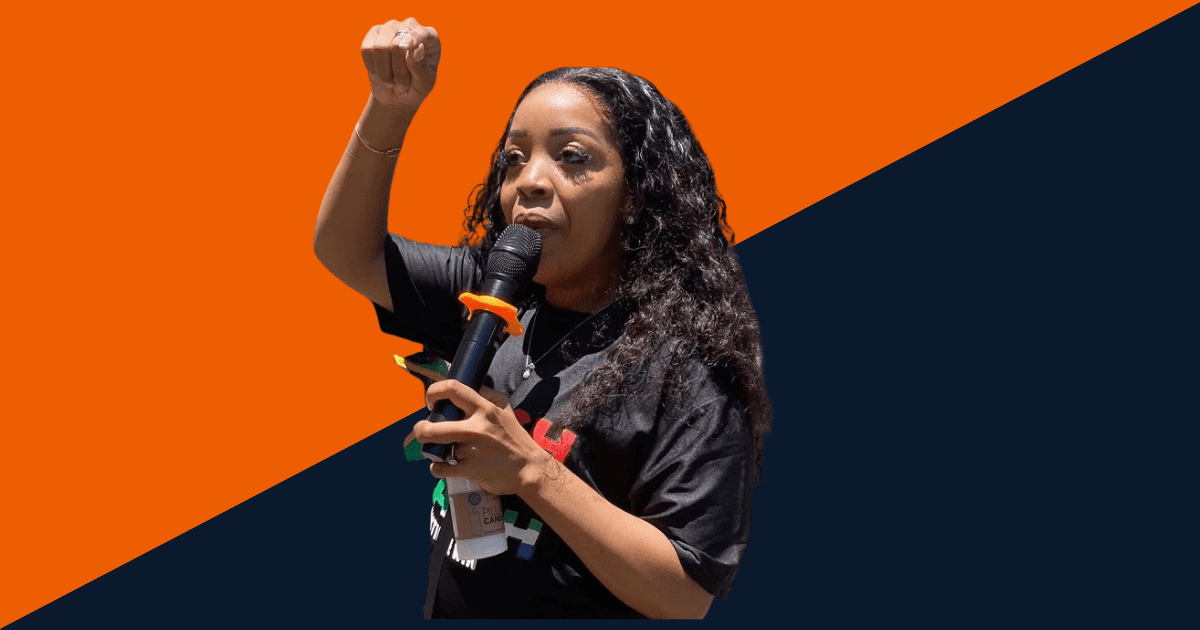
In an interview with Newzroom Afrika late last month, March and March leader Jacinta Ngobese-Zuma spoke of the shutdowns as part of a “clean-up effort”. Ngobese-Zuma did not respond to /explain’s/ request for comment.
What’s actually been going on
The recent shutdowns were focused on four main cities. At the centre is a March and March, which was founded in 2025 by Durban radio personality Ngobese-Zuma. The group is more than just a protest movement: it operates as a kind of vigilante street force, carrying out raids on foreign-owned businesses.
Meanwhile, international organisations have swiftly condemned South Africa’s latest xenophobic incidents. On 27 April, the African Commission on Human and Peoples’ Rights formally censured South Africa, warning about what it described as “vigilante conduct”. A day later, United Nations Secretary-General António Guterres condemned attacks on foreign nationals in KwaZulu-Natal and the Eastern Cape.
What the data tells us
Before getting into the politics of migration, it’s worth looking at the numbers. According to Statistics South Africa’s Census 2022, there are about 2.4 million foreign-born people living in South Africa. That’s roughly 3.9% of the total population – the lowest share recorded since at least 2011. Most of those migrants, about 86%, come from countries belonging to the Southern African Development Community.
Turning to the labour market, Statistics South Africa reported an official unemployment rate of 31.4% in the fourth quarter of 2025. Using the expanded definition, which includes people who’ve stopped looking for work, that figure rises to 42.1%. In real terms, that’s more than 12 million working-age South Africans without jobs.
This matters because xenophobic rhetoric frequently charges that foreigners are stealing South African jobs. But the numbers don’t support that.
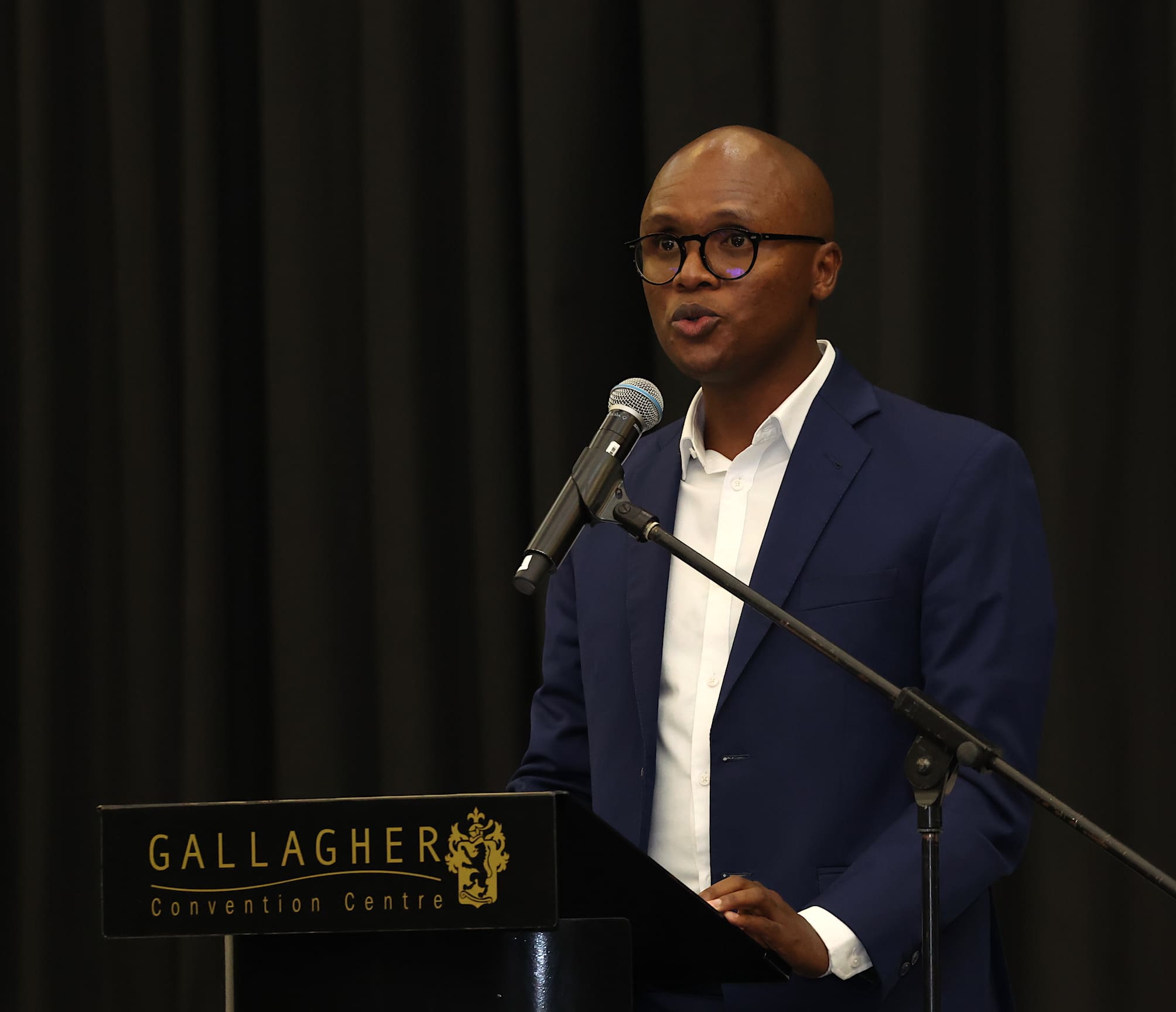
Richard Pithouse, a political theorist with Progressive International, and a long-standing scholar of South African populism, told /explain/ there is no real migration story here. “It’s a fabricated crisis,” he said, explaining that the broader systemic issues in South Africa, such as service delivery, crime, and inequality, cannot be attributed to immigration (legal or not), given the available data.
How xenophobia has been normalised
So if the numbers don’t back up the sense of crisis, what does?
Loren Landau, professor of Migration and Displacement at the University of the Witwatersrand, told /explain/ South Africa is part of a wider global pattern. “We’ve seen this sort of anti-immigration discourse become normalised around the world,” he said. “Statements [that] would’ve ended your political career 15 or 20 years ago are now mainstream.”
In South Africa, Landau added: “We’ve almost completely lost any significant public force that is trying to control that discourse.” Aside from the Economic Freedom Fighters, he says, no major party is clearly and consistently opposing xenophobia.
Where SA’s political parties stand
Here’s how the country’s major political parties have responded to immigration concerns over the past month.
- ANC: Ramaphosa used his Freedom Day speech to warn that concerns about illegal migration “must not give rise to xenophobia”, especially against people from other African countries. But he also said the government would keep cracking down on undocumented migration and on businesses hiring undocumented workers.
- DA: Home Affairs Minister Leon Schreiber has tabled a White Paper on Citizenship, Immigration and Refugee Protection, introducing merit-based naturalisation and tighter asylum rules. This week, DA MP Mzamo Billy said residents’ frustrations over undocumented foreign nationals were “justified”, while also condemning lawlessness.
- MK Party: Members and supporters have appeared at March and March events in Durban and Gauteng. So far, the party leadership has not publicly distanced itself from their actions.
- IFP: Delegations attended the Durban marches alongside MK members. On Freedom Day, IFP leader Velenkosini Hlabisa warned that illegal immigration has reached “a tipping point”.
- ActionSA: Party president Herman Mashaba – who, in 2018, wrote the now-infamous “Ebolas” tweet about migrant traders – continues to call for the deportation of all undocumented immigrants. ActionSA representatives appeared at the Durban shutdown.
- Patriotic Alliance: The party’s anti-migrant position remains unchanged from 2024. Its representatives joined the March and March coalition at recent events.
- Operation Dudula: The anti-immigration movement is now a registered political party and plans to contest Johannesburg, Ekurhuleni, and Tshwane in the 4 November local government elections.
There is one clear outlier: the EFF. At the party’s recent Workers’ Day rally, leader Julius Malema reaffirmed its long-standing position in favour of a more open, borderless Africa, even if some of his earlier rhetoric has been toned down.
“I have a lot of criticisms of the EFF, but on this question, they’ve just been clear,” Pithouse says. Landau made a similar point: on immigration, the EFF “has been consistent”.
Despite the EFF’s broad consistency, the party has in the past participated in anti-immigrant narratives and actions. One example is in January 2022, when EFF members accosted service workers at restaurants and attempted to verify their immigration status.
Why is this happening now?
For Landau, the phenomenon is not new. “Almost every year since about 2007, about this time in April, May, we’ve seen anti-immigration mobilisation,” he said. “What seems to be different from the protests we’ve seen in the last year or two is this more overt connection with political parties.”
“Two things have happened,” he said. “One is that elections have become more competitive. And the second is that as opposition parties have won, and the ANC has remained in power, none of the parties can make real promises of reform… So for all the parties, [xenophobia] has become a very convenient distraction.”
Pithouse argued that the marches themselves are not organic. “March on March is not a grassroots popular thing,” he said. “It’s very well funded. It’s got an excellent media strategy. It’s a project that is trying to exploit social desperation for its own ends.” The mobilisation, he added, is also drawing on a particular strain of Zulu nationalism organised in Gauteng and KwaZulu-Natal.
Public opinion data suggests this messaging is landing. The Inclusive Society Institute’s GovDem survey shows that distrust of African immigrants has risen sharply, from 62.6% in 2021 to 73.1% in 2025. Among unemployed South Africans, it sits higher still, at 77.3%.
What to watch in the lead-up to the local elections
There are two big things to keep an eye on.
First: Does any of this rhetoric turn into actual law?
Right now, there’s a lot of talk, but not much concrete policy. The only detailed proposal on the table is from Schreiber, whose white paper focuses on administrative changes like merit-based naturalisation and tighter asylum rules. That’s a long way from the mass deportations being demanded on the streets.
Meanwhile, the Border Management Authority remains under-resourced, and the asylum system is still backlogged. In short, the state’s capacity hasn’t caught up with the political messaging: it’s mostly language, very little law.
Second: What happens after the election?
For Pithouse, this is the more serious question. “Once they’ve [anti-immigrant groups] got a force that is organised, that is practised, once they have a capacity for street violence,” he said, “what are they going to do with it?”
Landau offers a simpler and arguably harder prescription: Stop talking about migration. Start talking about jobs, housing, water, and electricity – the conditions that move the polling.
A different response
In July 2025, Operation Dudula marched on the offices of the Socio-Economic Rights Institute (Seri) in Braamfontein. The latter had been taking legal action against the xenophobic movement, and the march was widely seen as an attempt at intimidation. But Seri had its own supporters. Members of Abahlali baseMjondolo, alongside more than 10 other civil society organisations, gathered outside Seri’s offices in solidarity.
Pithouse described the moment vividly. “[They] just stood silently together,” he said, “but like hundreds of people. That was brilliant and beautiful.” The crowd, he added, was not enormous. “But it’s because of the normalisation of the use of violence that it has such an impact.”
This brings us to the 4 November ballot. It won’t be only about who wins seats, but it will also test two deeper questions. Which parties can turn rhetoric into political power, and which communities, when faced with pressure on the streets, are willing to stand together and push back?