Last week, we told you about the shaky ceasefire between the US and Iran. One week later, it’s still holding, for now… But the first attempt to turn the ceasefire into a structured peace process has failed, and pressure is building again across the region.
The first round of talks took place in Islamabad, Pakistan, over the weekend.
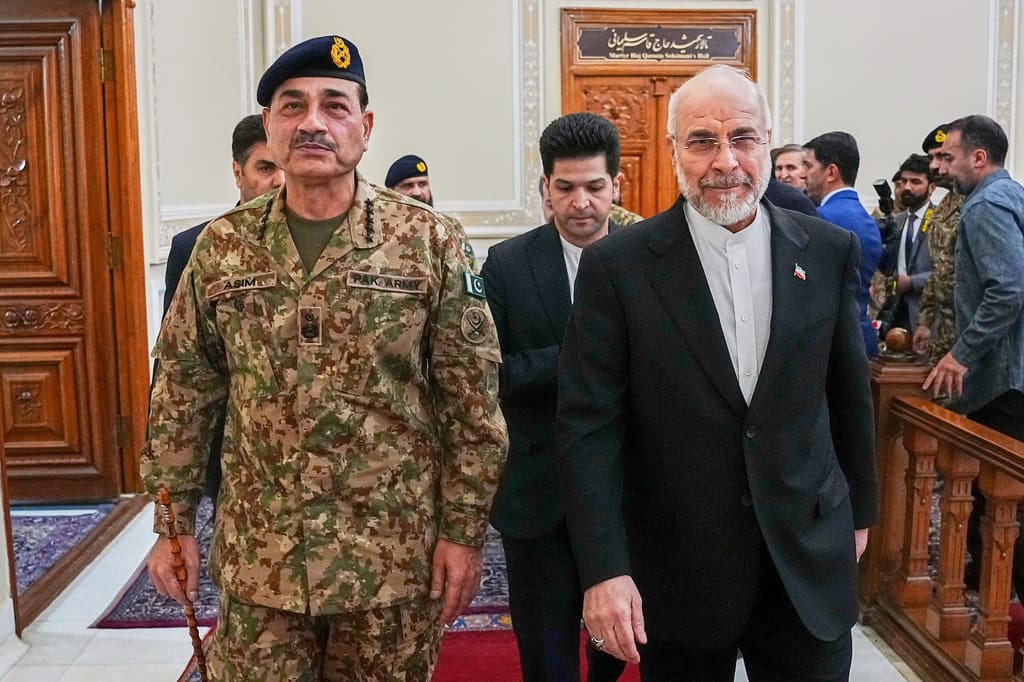
The United States, Iran, and mediator Pakistan all sent senior politicians and diplomats to the negotiating table. The US delegation was led by US Vice-President JD Vance, alongside Trump’s son-in-law Jared Kushner and envoy Steve Witkoff. Iran sent senior political figures, including Parliamentary Speaker Mohammad Bagher Ghalibaf and Foreign Minister Abbas Araghchi. Pakistan facilitated the negotiations, with Army Chief Field Marshal Asim Munir, Prime Minister Shehbaz Sharif, and Foreign Minister Ishaq Dar leading its delegation.
The discussions ran for roughly 21 hours… but ended without a deal.
Why? Well, both parties had their own red lines that weren’t up for negotiation. The US went into the talks pushing for Iran to abandon its nuclear programme, accept stricter monitoring, and ensure the security of shipping through the Strait of Hormuz. Iran rejected these demands, calling them “excessive” and pushing for compensation for strikes carried out during the war, access to frozen financial assets, and recognition of its role in the region.
Since the talks collapsed, pressure has only increased.
On Sunday, Trump announced a naval blockade targeting Iranian ports. The measure, which took effect on Monday, has tightened economic pressure in the region and around the globe.
The International Monetary Fund (IMF) has now outlined potential global economic scenarios linked to the conflict. None of them are positive. In the most severe case, the IMF sees a “close call for a global recession”.
Back home, Mzansi isn’t getting away unscathed. The IMF has reduced South Africa’s 2026 growth forecast by 0.4 percentage points to 1%.
Where do things stand?
The ceasefire is holding, but it is not moving forward to the next stage. The initial talks in Pakistan showed that both sides are still stuck on the same issues.
Pakistan is still trying to give peace a chance and has continued efforts to restart negotiations. Al Jazeera reported on Wednesday that Munir had travelled to Tehran to arrange a second round of talks. There is no agreement yet on timing or terms of these renewed negotiations.
Right now, this looks more like a pause than a path to peace. If talks begin again soon, there is still a chance to build on what the ceasefire has achieved so far. But if they do not, the ceasefire is likely to expire without a replacement, leading to the resumption of war between the US and Iran.