Hi there. 🙋🏾♀️
It’s been an interesting week across the world, and we’re here to walk you through it.
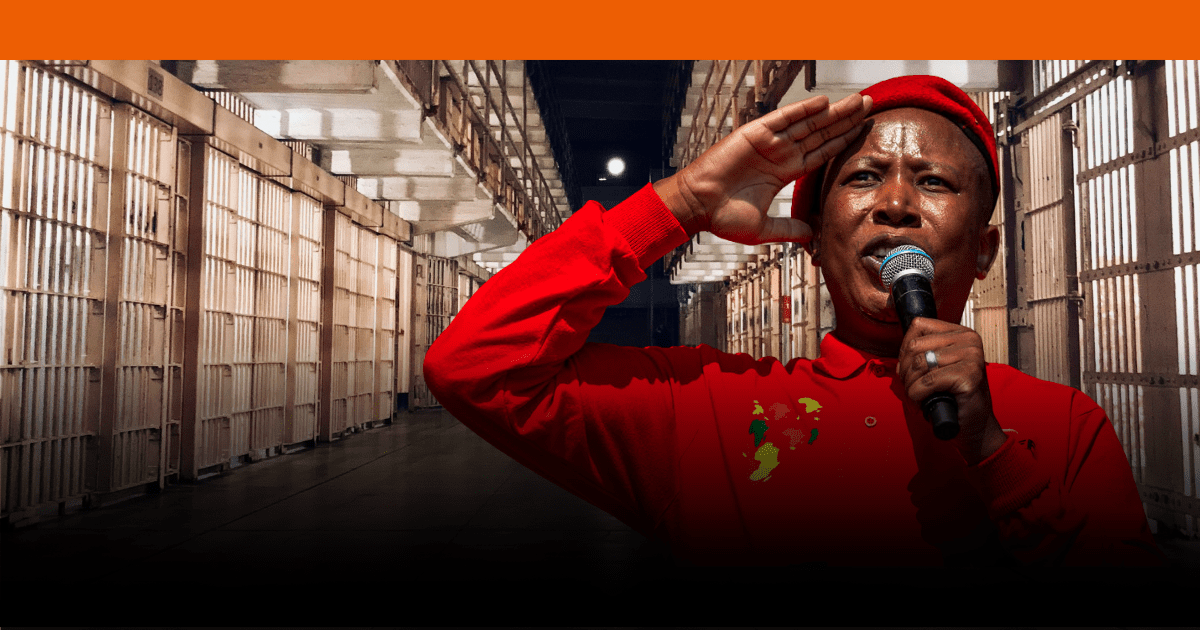
Starting in the Eastern Cape, Julius Malema could soon be swapping his red overalls for orange ones after his sentencing on Thursday. We unpack his sentence and the history behind the case. Staying with politics, the Democratic Alliance has a new leader, while its Joburg mayoral candidate’s water-based antics are getting a reaction.
Internationally, Donald Trump is on the warpath again (when isn’t he?). This time, with the pope. Yes, really. Meanwhile, his ally in Hungary has been pushed out after 16 years in power.
Also in this issue: Air New Zealand wants to make economy class more sleep-friendly. That’s great news, assuming you can still afford a ticket after the IMF’s latest outlook.
Also: If any of these stories catch your eye, share them with a friend or family member and get them to subscribe here. We need your help to get our amazing newsletter to more people!
So, let’s dive into these stories and more in this week’s wrap, brought to you by the explain.co.za team. 😄
Format:
▁ ▂ ▄ ▅ ▆ ▇ █BRIEFS
NATIONAL
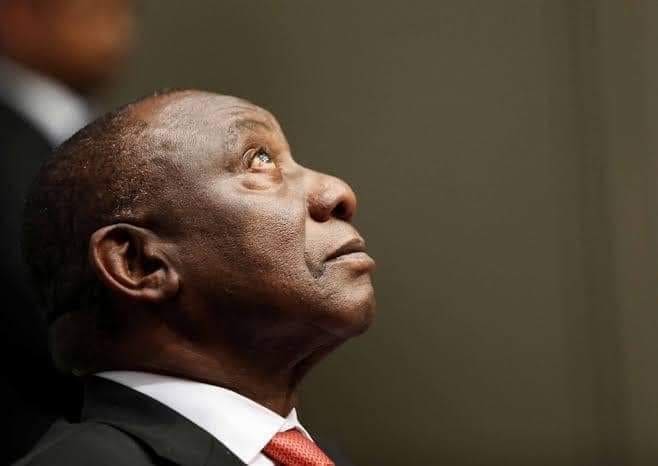
- President Cyril Ramaphosa has FINALLY appointed two new Constitutional Court justices. Last week’s announcement came six months after interviews – an unprecedented delay. Nambitha Dambuza-Mayosi and Katharine Savage start on 1 May, making SA one of a few countries with a woman-majority apex court. 🙌🏾 It also restores the full bench of 11 judges for the first time in a decade. The move comes as backlogs grow: judgment turnaround times have doubled to 204 days between 2010 and 2021 as the court’s workload has roughly tripled. 😬
- SA has a new US ambassador – and he’s done this before. President Cyril Ramaphosa has appointed Roelf Meyer, 78, as South Africa’s next ambassador to Washington. Meyer helped to negotiate the end of apartheid in the 1990s, where he and Ramaphosa first bonded across the negotiating table. SA has been without an ambassador in DC since US President Donald Trump expelled Ebrahim Rasool in March 2025. Meyer’s first big task: securing an AGOA extension. If he could help to dismantle apartheid, surely he can handle Trump. 🤞
- Robben Island is getting a glow-up. The Island Museum is converting some of the roughly 100 former prison-guard homes into tourist accommodation, with upgrades already underway on one house as a pilot. The museum has a R70 million budget for the project and wants to meet Tourism Grading Council standards. It recorded more than 250,000 visitors in 2025, 36% of them South African. The museum, which hasn’t raised its tariffs in four years, says the move is about long-term conservation of the World Heritage Site.
- Gerda Steyn made it seven in a row at the Two Oceans Marathon on Saturday, clocking 03:27:43 over 56km. 🏆 Arthur Jantjies took the men’s title, with fellow Saffa Onalenna Khonkhobe in second = Mzansi clean sweep. But the race itself had more to prove than the athletes. In 2025, too many runners were allowed to enter, the City of Cape Town pulled its support, and finishers were left without medals. A new board, chairperson, and a professional staging company, Stillwater Sports, are getting things back on track.
- Helen Zille has traded pothole swimming for a boat ride. 👀 After Elias Motsoaledi Road in Dobsonville was flooded, the would-be Joburg mayor seized the campaign moment and gleefully crossed the street in an inflatable boat this week. It follows her previous viral “swim” in a long-neglected burst pipe. The stunts land because the problem is real: Johannesburg’s infrastructure is collapsing, and the ANC-led coalition seems to be sinking, not swimming. At this rate, Joburg’s mayoral race might double as a water-sports event.
INTERNATIONAL
- Trump has picked a fight with the pope. On Sunday, he posted a lengthy rant on Truth Social targeting Pope Leo XIV, who has condemned wars, particularly the US-Israel war in Iran. The clash puts Trump lieutenants like JD Vance, a devout Catholic, in the awkward position of defending him and criticising the pope, which he still did, ever the political flip-flopper. Pope Leo says he is unafraid. Trump, meanwhile, deleted an AI image of himself as a Jesus-like figure after growing backlash – including from his own deeply religious political base. 🤨
- The defeat of Hungary’s Viktor Orbán has stalled the spread of right-wing populism across the world. Orbán conceded defeat on Sunday after 16 years as prime minister. He will be succeeded by his former ally, Péter Magyar, 45, whose Tisza Party secured a two-thirds parliamentary majority on a record 77.8% voter turnout. Younger Hungarians, in particular, turned against a government accused of corruption as the economy faltered. 👀 Good news for the European Union, whose multilateral, rules-based order Orbán and his allies in Washington and Moscow have long opposed.
- The International Monetary Fund has sounded the alarm on projected weaker global growth, given the war in the Middle East. In its latest biannual World Economic Outlook, released on Tuesday, the fund forecast growth to slow to 3.1% in 2026, down from 3.3% in January, before the war began. The report also pointed to mounting public debt and eroding institutional credibility as key pressure points globally. 😕 Meanwhile, SA’s forecast sank to 1% from 1.4%. Still, the IMF’s managing director praised SA’s resilience and reforms.
- Economy class just got a bed – for a pretty price. Air New Zealand has announced “Skynest”: six lie-flat sleeping pods squeezed into a screened-off area of its Boeing 787-9 on the Auckland-New York route, launching in November. A four-hour session costs $495 on top of your economy ticket. It’s a clever upsell dressed up as democratising comfort: you’re still in economy, you’re just paying extra to briefly not be. United Airlines is already planning its own version for 2027. Snoring permitted. Smuggling children, not. Bookings open 18 May. 😴
- Legendary Indian singer Asha Bhosle has died at age 92. 🕊️Bhosle passed away in Mumbai on Sunday after being hospitalised for a heart attack. Her career spanned nearly eight decades, with thousands of recordings across genres and languages, making her one of the defining voices of Indian cinema. She was cremated on Monday at Mumbai’s Shivaji Park with full state honours. Just before the pyre was lit, crowds of mourners sang one of her iconic songs, “Abhi na jaao chhor kar”, which roughly translates to “Don’t leave just yet”. 💔
▁ ▂ ▄ ▅ ▆ ▇ █ BIG STORIES
1️⃣From rally to jail: Malema sentenced in firearm case
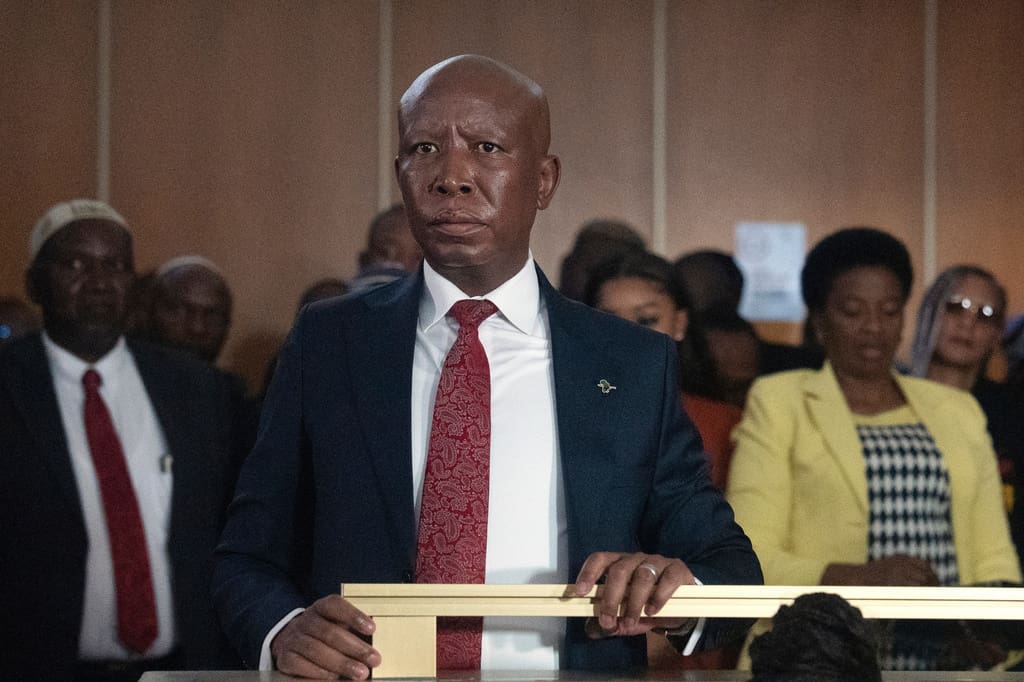
EFF leader Julius Malema has long been known as a firebrand, but when the metaphor turned somewhat literal, he was asking for trouble. Eight years after he discharged a firearm at a rally in Mdantsane, Eastern Cape, the consequences have finally landed.
On Thursday, Malema was sentenced to five years in prison over the firearm incident, which happened back in 2018. He was also fined for related charges.
Receiving a sentence of more than one year disqualifies Malema from being a member of parliament. But that only kicks in when all his appeal options have been used up.
Outside the KuGompo Magistrate’s Court in the Eastern Cape, hundreds of EFF members, dressed in their trademark red, gathered to support their leader. But his sentencing did not go their way.
Malema was charged with five counts, with the most serious carrying prison terms. The charges under the Firearms Control Act include unlawful possession of a firearm, unlawful possession of ammunition, discharging a firearm in a built-up area, failure to take reasonable precautions to prevent injury or damage, and reckless endangerment to people or property.
🔹On count one, Malema was sentenced to five years in prison.
🔹On count two, he received two years in prison.
🔹On counts three, four, and five, he was fined R20 000 each, with six months in prison if the fines are not paid.
The prison terms will run concurrently, meaning at the same time, for a total of five years.
Malema had pleaded not guilty, arguing the gun was a toy used for dramatic effect.
Magistrate Twanet Olivier, handing down her sentence, said it was “nonsensical” for the defence to “sugar coat” the discharge of the firearm as a celebratory shot, adding that Malema knew the act was unlawful.
The state had asked for 15 years imprisonment, arguing that firing a gun at a crowded rally was dangerous and needed to be treated seriously, particularly given Malema’s position as a political leader.
Afrikaner lobby group AfriForum opened the case against him, which dragged on for years before Malema was finally found guilty in October 2025.
Malema’s lawyer said they will be appealing the ruling to try to prevent the EFF leader from going to prison. Malema has previously said he will take the matter all the way to the Constitutional Court. Meanwhile, he will remain a member of Parliament – for now. “As the matter is now subject to the appeal process, no immediate constitutional implications arise for the membership status of Mr Malema,” said Parliament spokesperson Moloto Mothapo.
Whether this revives the EFF’s flagging electoral support or politically buries Malema and his party remains to be seen.
Keep following /explain/ for updates on what this sentence means for the EFF and South African politics.
2️⃣Pakistan talks fail as US-Iran ceasefire enters second week under strain
Last week, we told you about the shaky ceasefire between the US and Iran. One week later, it’s still holding, for now… But the first attempt to turn the ceasefire into a structured peace process has failed, and pressure is building again across the region.
The first round of talks took place in Islamabad, Pakistan, over the weekend.
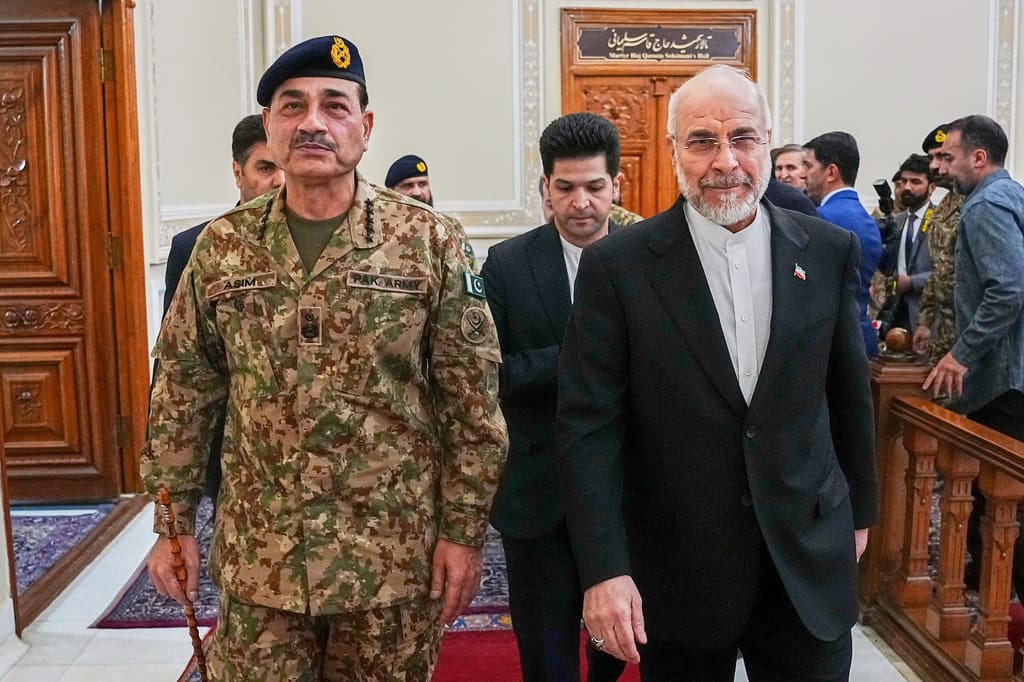
The United States, Iran, and mediator Pakistan all sent senior politicians and diplomats to the negotiating table. The US delegation was led by US Vice-President JD Vance, alongside Trump’s son-in-law Jared Kushner and envoy Steve Witkoff. Iran sent senior political figures, including Parliamentary Speaker Mohammad Bagher Ghalibaf and Foreign Minister Abbas Araghchi. Pakistan facilitated the negotiations, with Army Chief Field Marshal Asim Munir, Prime Minister Shehbaz Sharif, and Foreign Minister Ishaq Dar leading its delegation.
The discussions ran for roughly 21 hours… but ended without a deal.
Why? Well, both parties had their own red lines that weren’t up for negotiation. The US went into the talks pushing for Iran to abandon its nuclear programme, accept stricter monitoring, and ensure the security of shipping through the Strait of Hormuz. Iran rejected these demands, calling them “excessive” and pushing for compensation for strikes carried out during the war, access to frozen financial assets, and recognition of its role in the region.
Since the talks collapsed, pressure has only increased.
On Sunday, Trump announced a naval blockade targeting Iranian ports. The measure, which took effect on Monday, has tightened economic pressure in the region and around the globe.
The International Monetary Fund (IMF) has now outlined potential global economic scenarios linked to the conflict. None of them are positive. In the most severe case, the IMF sees a “close call for a global recession”.
Back home, Mzansi isn’t getting away unscathed. The IMF has reduced South Africa’s 2026 growth forecast by 0.4 percentage points to 1%.
Where do things stand?
The ceasefire is holding, but it is not moving forward to the next stage. The initial talks in Pakistan showed that both sides are still stuck on the same issues.
Pakistan is still trying to give peace a chance and has continued efforts to restart negotiations. Al Jazeera reported on Wednesday that Munir had travelled to Tehran to arrange a second round of talks. There is no agreement yet on timing or terms of these renewed negotiations.
Right now, this looks more like a pause than a path to peace. If talks begin again soon, there is still a chance to build on what the ceasefire has achieved so far. But if they do not, the ceasefire is likely to expire without a replacement, leading to the resumption of war between the US and Iran.
3️⃣A new Democratic Alliance era begins under Geordin Hill-Lewis
So the Democratic Alliance has a new leader.
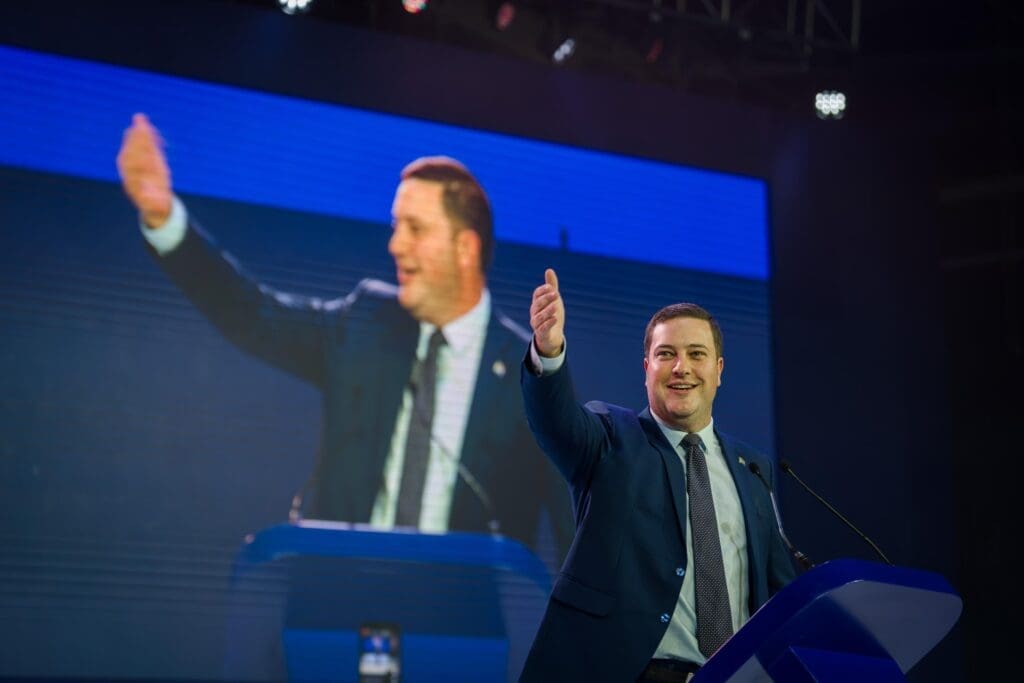
At its 2026 federal congress on Sunday, current Cape Town mayor Geordin Hill-Lewis was elected to lead the party for the next three years.
More than 2,000 delegates gathered over two days to elect new leadership.
It wasn’t even close. Hill-Lewis won more than 90% of the vote, comfortably beating DA caucus leader Sibusiso Dyonase.
The 39-year-old takes over from his friend John Steenhuisen, who said back in February he wasn’t going for a third term and wanted to focus on his ministerial duties instead. He’s been leading the party since 2019 and helped to push the DA into the government of national unity after the 2024 elections.
In his final speech on Saturday, Steenhuisen said he feels he’s leaving the party in a better place than he found it. He also talked about the “moonshot mission”, which was the idea of getting opposition parties to work together to try to beat the ANC and keep the EFF out in the 2024 national elections. It didn’t quite work out that way, of course, with the DA ultimately partnering with the ANC.
Hill-Lewis takes the reins as the party prepares for local government elections later this year. Looking ahead, the DA is already thinking about 2029 and trying to become the biggest party in the country. But it won’t be a walk in the park: it only received about 21% of the vote last time round.
There was also a bit of a reshuffle in the party’s leadership structures.
This includes new roles for the likes of Solly Msimanga, formerly the DA’s Gauteng leader, who was elected federal chairperson. Solly Malatsi, Cilliers Brink and Siviwe Gwarube were picked as deputies. And Deputy Finance Minister Ashor Sarupen got the job of chairing the party’s federal council, replacing Helen Zille
The first day of the congress honestly felt more like an internal election campaign than a formal meeting, with music playing, people dancing, and active campaigning inside the venue.
There were cupcakes with Gwarube’s name on them. Meanwhile, Msimanga’s supporters were handing out stickers featuring his face as he ran for federal chairperson against Ivan Meyer. When Msimanga won, Meyer apparently walked out of the plenary. Talk about a sore loser.
Then came the speeches.
In his final address, Steenhuisen told delegates, “I love this party”, as he reflected on his time as leader.
Another key theme was the party’s ideology after a turbulent past that saw high-profile black leaders ousted.
Zille, speaking to News24, said she and her colleagues saved the party from a “tidal wave of woke, left, ethno-populism that would have been a total disaster for the DA and South Africa”. 🤐 Zille said the future of the party lies with what she called “blue people”, meaning people who buy into the DA’s idea of non-racialism and constitutional values.
Read the full explainer here to find out more about what Hill-Lewis stands for.
That’s it from us at The Wrap, an award-winning product of explain.co.za – simple news summaries for busy people. 💁🏾♀
The Wrap is sponsored by explain’s agency division. We specialise in content marketing for purpose-driven organisations, often with a pan-African reach. Mail info@explain.co.za for a quote.
🇸🇺🇧🇸🇨🇷🇮🇧🇪
Remember to share the love. 💫
Tell your friends to sign up:
📩 Email: http://explain.co.za/subscribe
📲 Our new WhatsApp channel: https://whatsapp.com/channel/0029Vac06yM8kyyLmOulb80J
_Till next time, goodbye from the team, Verashni, Kajal, Sinawo, Theresa, Tshego, and Kamogelo._ ✌🏽