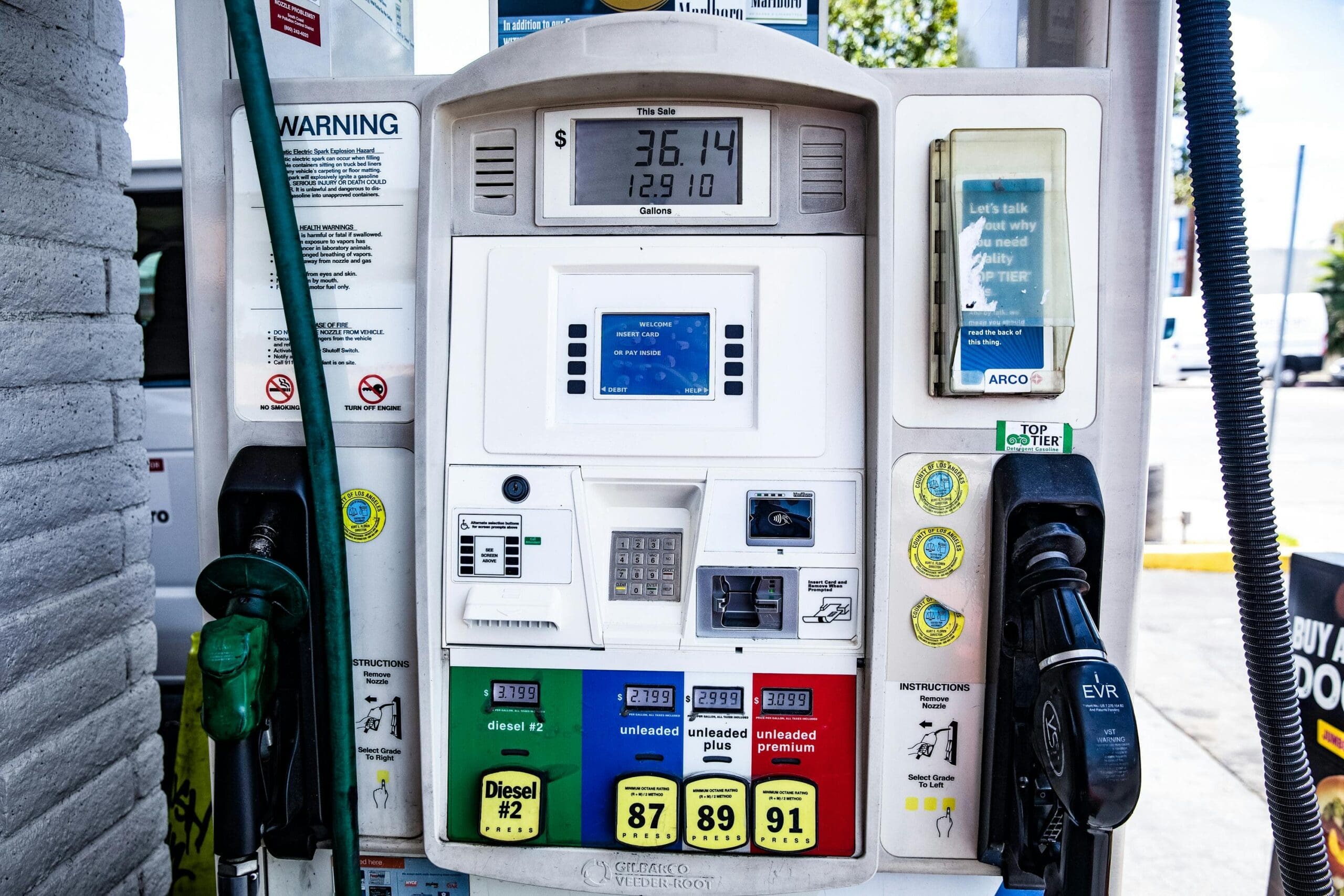
There was a last-minute plot twist in South Africa’s petrol price panic, courtesy of the government stepping in just before April’s increases kicked in. On 31 March, officials announced a temporary cut to the fuel levy — about R3 per litre for petrol and nearly R4 for diesel — softening what would have been a much uglier price hike prompted by the US-Israeli war in Iran.
Quick explainer: the fuel levy is a tax baked into every litre of fuel. It makes up roughly a third of what you pay at the pumps, though that share shifts with global oil prices and the rand. Before this intervention, Treasury had pegged the 2026 levy at R4.10 for petrol and R3.93 for diesel. So yes, the relief matters — but it comes with strings attached.
SARS says the relief — estimated at around R6bn — is not a freebie. That money still needs to be collected somehow, meaning taxpayers may feel it elsewhere down the line. Also worth noting: the levy cut is temporary. It buys government time rather than being a long-term fix.
Not everyone thinks expanded levy reductions, as some parties have pushed for, are the way to go. Efficient Group chief economist Dawie Roodt said: “I think reducing the fuel levies is not a good idea. Remember, the fiscal accounts are in deep trouble. This is just cheap politics.”
Meanwhile, the timing of the relief announcement evoked mixed reactions. The Organisation Undoing Tax Abuse (OUTA) welcomed the cut, but didn’t love the 11th-hour intervention – the day before the petrol price hikes on April 1st. By the time the government acted, the market had already priced in the pain, and businesses and households had spent weeks bracing for impact. Earlier communication, OUTA argued, could have reduced panic and helped people plan for knock-on costs such as transport and food.
And that’s the bigger issue here: uncertainty. Fuel prices ripple through everything — taxis, groceries, deliveries. That means last-minute decisions don’t just surprise motorists; they shake the broader economy, too. OUTA is now calling for at least a week’s notice ahead of future price adjustments, plus more transparency around South Africa’s strategic oil reserves (basically the country’s emergency fuel stash).
There is some global good news. Oil prices have dropped sharply, from about $111 to $94 a barrel, thanks to the US pausing its insanity in Iran. That, combined with a slightly stronger rand, could translate into a potential R2.70 per litre drop locally.
But here’s the catch: if the government reinstates the levy in full, that relief might vanish overnight.
In other words, your next fuel price depends on two things: geopolitics far away… and decisions much closer to home. Let’s hope that the ceasefire holds.