Or is it just another last-ditch effort before the 2026 local government elections?
The ANC is in full damage control mode.
After a decade of declining support, marked by corruption scandals, load-shedding, and record unemployment, the party is desperately trying to engineer a comeback. With the next round of local government elections around the corner at the end of 2026 and national elections not far behind, the ANC’s latest moves feel like a mix of strategy and sheer panic.
But will any of it actually work?
Let’s break down what the ANC is trying, why it matters, and whether it has any hope of clawing back lost ground.
1. The numbers don’t lie: the ANC is in freefall
In 2004, the ANC was sitting pretty with nearly 70% of the national vote. Fast forward to 2024 — the party won just 40%of the national vote, down from 57% in 2019 and 62% in 2014. That’s the worst performance in the party’s history and a brutal 30-point drop in two decades.
The rot is even more pronounced at the local level. The ANC’s support dipped below 50% nationally in the 2021 local government elections. The party also lost its majority in the remainder of South Africa’s major metros it still held governance: Joburg, Tshwane, Nelson Mandela Bay and eThekwini. These metros matter: they’re economic hubs and set the tone for political momentum.
So now coalitions are the name of the game, as in the 2024 national elections, no party secured a majority – for the first time in South Africa’s democratic history. Enter the Government of National Unity (GNU), a shaky alliance between the ANC, DA, IFP and others.
2. GNU or GTFO: why the ANC had no choice
This GNU isn’t exactly a happy marriage.
The Sunday Times recently reported that ANC MPs are fuming about what they see as the DA’s overreach in government. More than two-thirds of its 159 MPs, roughly 100 in total, confronted ANC secretary-general Fikile Mbalula at a heated caucus meeting in Johannesburg on Friday, demanding that the party kick the DA out of the GNU.
Many ANC members are reportedly unhappy about teaming up with the DA, their long-time ideological foe. But politically, the ANC didn’t have much room to manoeuvre.
Not everyone in the ANC is on board with a hard exit. Mbalula himself told journalists last week: “The ANC is not in a hurry to dismiss people from the GNU, neither are we afraid about their presence.” He added: “Even if you replace the DA, it doesn’t mean the replacement is going to be aligned to the ANC.”
The alternative? Being pushed into the opposition benches for the first time in 30 years.
3. Patrice Motsepe for president?
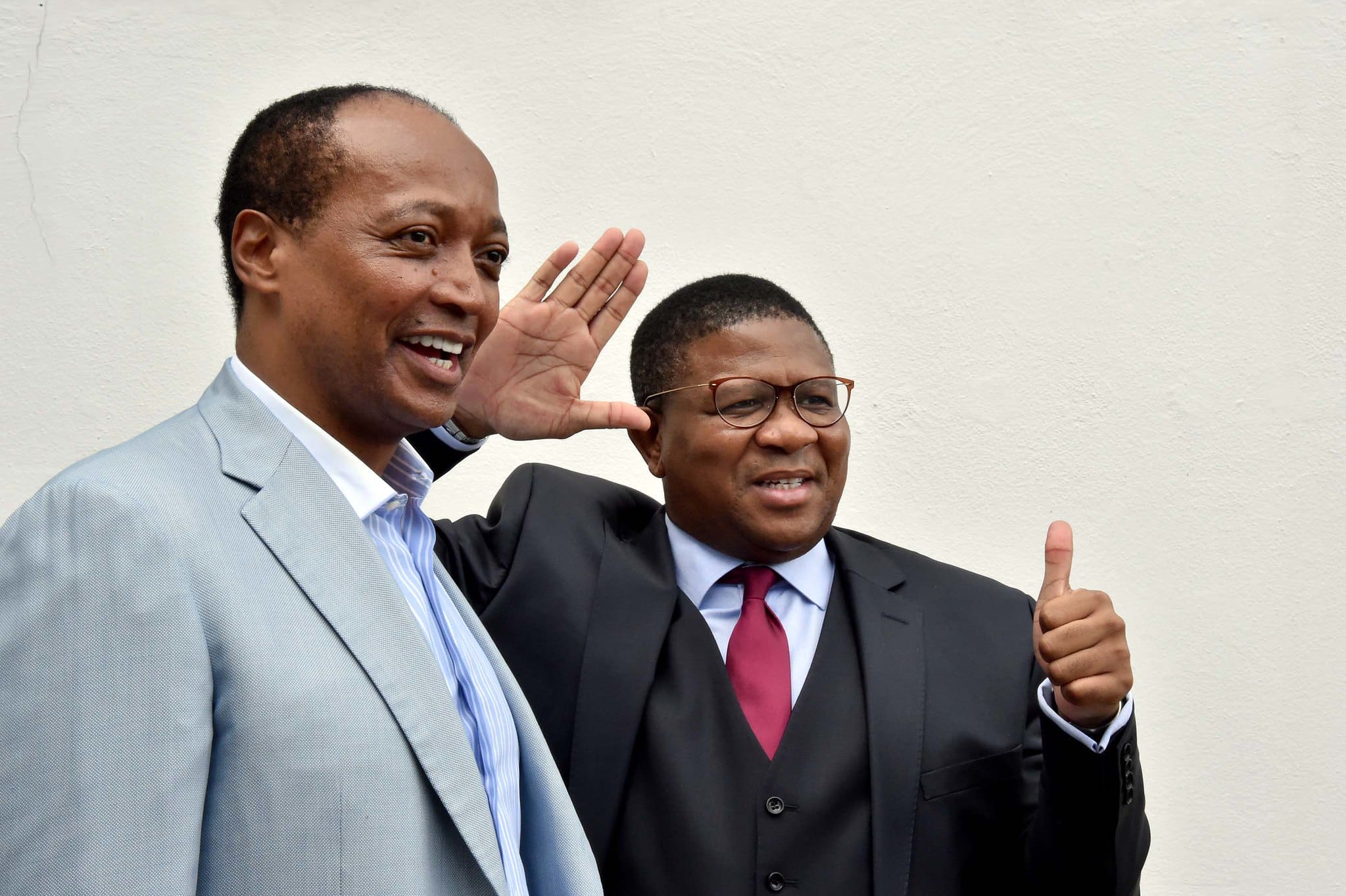
If the ANC is looking for a saviour, business mogul Patrice Motsepe is the name being floated. Motsepe, Africa’s ninth-richest man and President Cyril Ramaphosa’s brother-in-law, is reportedly being courted by powerful forces in the ANC who want him to take the reins after Ramaphosa steps down.
There is speculation that Motsepe could emerge as a unifying figure to lead the party into the future, particularly if Cyril Ramaphosa steps down after serving his second term, which ends in 2029. That would make Motsepe a candidate for the 2029 national election, not 2026’s local vote.
Still, some in the ANC believe that positioning someone with Motsepe’s business credibility could help the party’s image now, boosting confidence in its future direction and possibly helping it retain or regain voter trust in the short term.
Of course, Motsepe has yet to confirm or deny any presidential ambitions. But in South African politics, that’s rarely the final word.
4. The ANC’s Western Cape pipe dream
Despite getting a mere 19% of the vote in the Western Cape in 2024, the ANC says it wants to win the province back. And it’s sending in the cavalry.
In a province where the party has long struggled to gain traction, ANC heavyweights are being deployed to bolster its presence and rebuild ground-level support. The move forms part of what the party calls “a reinforcement of leadership and experience aimed at strengthening the ANC’s work in the province”.
The list of new provincial deployees reads like a who’s who of the ANC’s national leadership. It includes Minister of Employment and Labour Nomakhosazana Meth, Deputy Minister of International Relations Alvin Botes, and Deputy Minister of Communications Mondli Gungubele. Just to name a few.
The announcement came after the ANC’s Western Cape Provincial Executive Committee (PEC) held an ordinary meeting in Salt River at the end of April, followed by a special meeting to introduce the newly appointed NEC deployees.
The PEC meeting was billed as a moment to “reflect on organisational progress, confront prevailing challenges, and operationalize the 2025 theme: ‘The Year of Renewal to Make the ANC a More Effective Instrument of the People to Achieve the Vision of the Freedom Charter.’”
So, either the ANC knows something we don’t, or it’s engaging in some good old-fashioned political chest-beating.
5. Gauteng: the real battleground
Unlike the Western Cape, Gauteng is still within reach (only just). The ANC managed to hold onto its top spot in the province with 35.9% of the vote, followed by the DA at 27.5%.
Premier Panyaza Lesufi, who is also the ANC’s provincial co-convener, says the party is laser-focused on winning the province again in the 2026 local government elections. After a two-day lekgotla held in Fourways, Johannesburg, Lesufi said the ANC had met with a single purpose: to reposition itself as a responsive force in the lives of ordinary residents.
“As the ANC in this province, together with our alliance partners and leagues, our message is simple: It’s back to basics, and only the basics must be attended to and resolved immediately,” Lesufi said. “It’s the challenges that are in the face of our people, such as grass cutting, potholes, traffic lights, and the stopping [of] free-flow sewers in our communities that will preoccupy the ANC in this particular province.”
The lekgotla came weeks after President Cyril Ramaphosa criticised the province’s poor service delivery — and it appears that message has landed.
That said, the ANC still managed to be the biggest party in Gauteng in 2024. Although it’s not a majority, it gives the party a platform to build on, especially as coalition deals in the metros continue to shift.
Can the ANC make a comeback?
It’s trying. Hard.
From flirting with presidential outsiders to reworking its coalition strategies, the ANC is throwing the political equivalent of a Hail Mary pass.
But voters are wary. And a recent poll by the Institute of Race Relations (IRR) has added to the drama, showing the DA narrowly overtaking the ANC for the first time — 30.3% to 29.7%. Even more striking? DA support among black voters jumped from 5% to 18%.
Still, let’s not get ahead of ourselves. The IRR isn’t exactly a neutral player, and with a relatively small sample of 807 voters, it’s more of a snapshot than a crystal ball. More robust surveys, like those by the Human Sciences Research Council, typically poll tens of thousands and paint a broader picture.
Local elections in 2026 will offer a major clue about whether this comeback tour has any legs or whether the curtain is finally closing on the ANC’s dominance.

Emma is a freshly graduated Journalist from Stellenbosch University, who also holds an Honours in history. She joined the explain team, eager to provide thorough and truthful information and connect with her generation.