When Nicola Robin turns on her tap, she no longer assumes water will come out.
Earlier this year, the 32-year-old Melville resident went two weeks without water, with no warning and no updates. She had to fetch water from a nearby tanker, carrying five-litre bottles home for herself and her mother, who could not make the distance because of hip issues.
“For someone who doesn’t have a car,” she says, “you walk to the tanker, fill up two five-litre bottles, walk home – and flush your toilet once.”
On 31 March, Minister of Water and Sanitation Pemmy Majodina released three national reports in a single afternoon. Together, they paint a stark picture:
- Nearly half of South Africa’s wastewater systems, 396 of 848, are in critical condition.
- Drinking water is a slightly better picture. The share of systems in critical condition has actually fallen, from 9.9% to 7.9%.
- About 47% of treated water is lost before it even reaches people, through leaks, theft, and meter failures.
In simple terms, almost half of the water the country produces never reaches a tap. The government wants to bring that figure down to 20% by 2029.
Ramaphosa finally steps in…
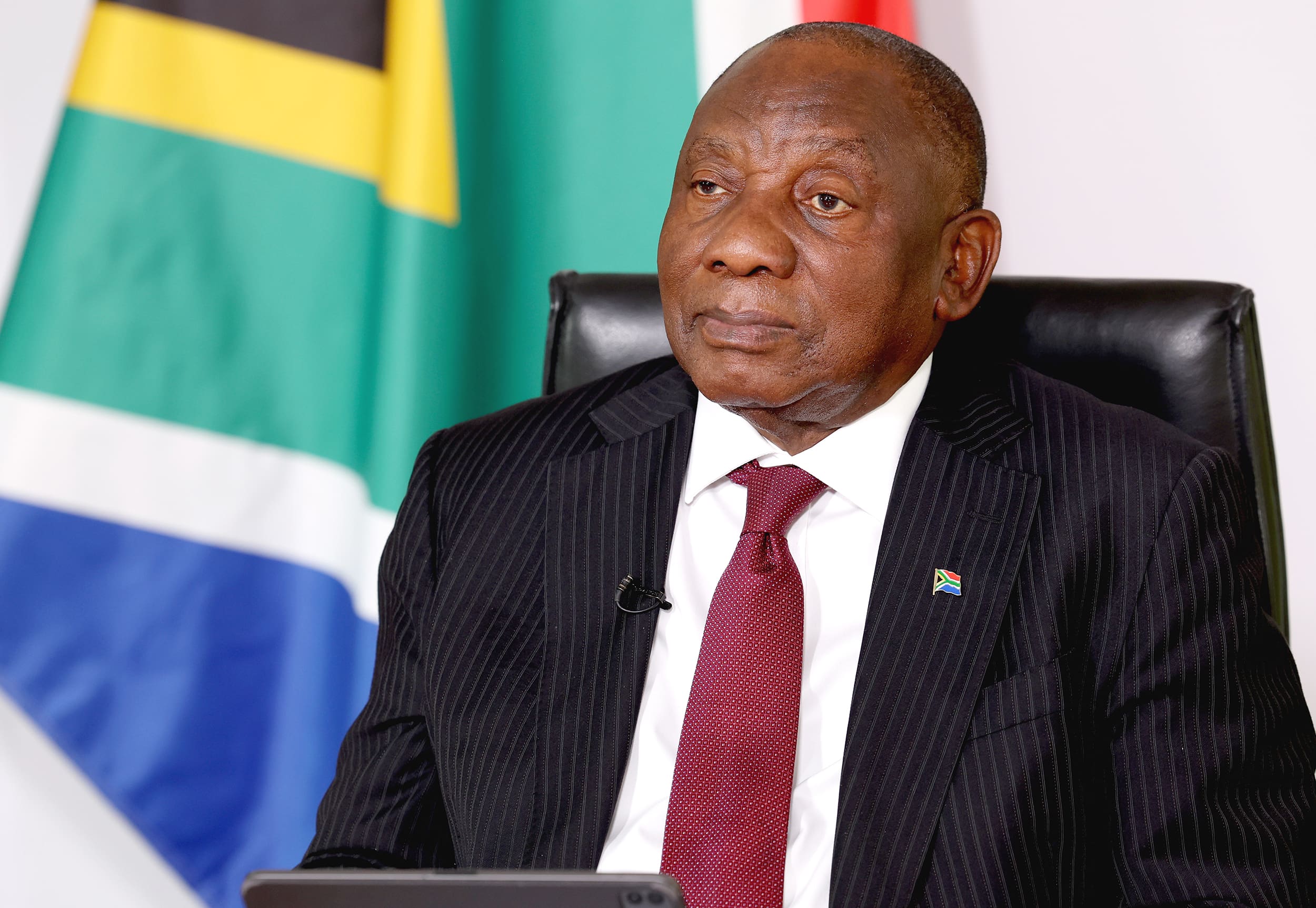
In his February State of the Nation Address (Sona), President Cyril Ramaphosa announced that he would take personal charge of the water crisis. For many South Africans, that moment felt overdue.
But the move is unusual. By law, water services are supposed to be managed by municipalities, not the presidency. Seeing the national government step in sends a clear message that accountability at the local level has failed.
Ramaphosa was blunt on the cause. “The critical problem is that in many metros, cities, and towns, water revenue is being used for other purposes,” he said at Sona. Translation: municipalities are collecting water tariffs and spending the money elsewhere.
Can a committee fix this?
The president’s solution is a new committee to coordinate the response.
But two months after the National Water Crisis Committee was announced, key details are still missing. There is no public list of members and the R156 billion pledged for water and sanitation in Sona is still being managed by existing departments rather than by the committee.
That raises a bigger question: What power does this structure actually have?
Water expert Mike Muller, who ran the Department of Water Affairs and Forestry from 1997 to 2005, has argued for years that the water problem isn’t about coordination. Writing in the Development Bank of Southern Africa’s (DBSA) African Journal of Infrastructure Development in April 2024, he put it squarely: “The extreme autonomy granted by the Constitution to local government is one of the root causes of the declining performance of water supply institutions.”
That autonomy, he argued, “insulates poorly performing municipalities from external intervention and makes it difficult for the affected communities to remedy municipal failure”. A coordinating committee does nothing to remedy that.
A system that’s falling apart
Unlike electricity, which is largely managed through a single national utility, water services are spread across 144 authorities. That makes coordination more difficult and failure more widespread.
Anet Muir, a chief director at the Department of Water and Sanitation, cast the issue succinctly at the live-streamed release of the national water reports in late March. “We can’t build more dams,” she said. “We must fix the holes.”
If the committee isn’t the answer, what is?
Dr Ferrial Adam, executive director of the civic watchdog WaterCAN, told /explain/ that the committee is starting from the wrong premise. It already has two predecessors doing similar work – a presidential working group set up in November 2024 and a mayoral water structure before that. “If it’s all government talking to themselves, it’s an echo chamber,” she said.
Without civil society at the table, she argued, “there are no checks and balances. You start working in the same kind of structure and system that caused the problem we’re in right now.” Adam’s organisation is calling for more direct oversight of water budgets so they can’t be spent elsewhere and for the Financial Intelligence Centre to monitor how money is used.
While the government debates solutions, the pressure on households continues to grow.
A new national water tariff came into effect on 1 April, and, according to the Competition Commission’s March report, household water prices had risen by 68% over five years.
Another path forward?
The law already has a lever that hasn’t been used. The Water Services Act distinguishes the water-services authority – the accountable municipality – from the water-services provider, the entity that actually runs the pipes. Muller’s argument in the DBSA paper is that when a municipality persistently fails, the provider role can be handed over to someone else, such as a water board, in some cases a private operator. A handful of municipalities are already using that kind of arrangement.
What’s missing, the paper argues, is political will. “The mere existence of a credible threat that national or provincial agencies could step in and take over the water-supply function might encourage better municipal performance,” Muller argues.
A separate development in Parliament echoes the same logic. The Water Services Amendment Bill, which the Cabinet approved last year, is now being reviewed by a parliamentary committee. It would require anyone running municipal water services to be licensed by the department, giving the national government a lever to vet who municipalities appoint to run the taps.
But the deeper problem, Muller’s paper suggests, is that the intervention tools that already exist haven’t been used. Whether the political will exists this time round is the question.
Back in Melville, Nicola isn’t waiting for policy debates to play out.
“I don’t feel super hopeful,” she says. “Since I’ve lived here, I wouldn’t say it’s improved – it’s only gotten worse.”
We’ll have to wait to see how the president’s water committee performs. For people already living through the water crisis, there’s only one measure of success: Do their taps begin to run or stay dry?