Hi there. 🙋🏾♀️
We’re back – and goodness, the world has been busy. In this week’s wrap: we finally have a shaky ceasefire between the US and Iran. Will it hold? We unpack that.
We also look at how well SARS performed in the last fiscal year. Speaking of taxes, a last-minute government intervention gave motorists some relief at the pumps. Don’t get too excited, though; as we explain, this may only be a temporary respite.
The basic education minister wants a new sort of history curriculum for South African schools and, as with everything in Mzansi, opinions are divided. The sports minister, meanwhile, is *checks notes* … beefing with a soccer superfan. Sigh.
Space science took a giant leap as NASA’s Artemis II mission to the moon made history. Kanye West had a less stellar (see what we did there?) week, losing out on the chance to headline a major festival and being barred from entering the UK. And, finally, we explore a recent exposé that suggests we should keep a closer eye on AI bigwig Sam Altman. No doubt he’s watching us all right back. 👀
So, let’s dive into these stories and more in this week’s wrap, brought to you by the explain.co.za team. 😄
_______
Format:
▁ ▂ ▄ ▅ ▆ ▇ █BRIEFS
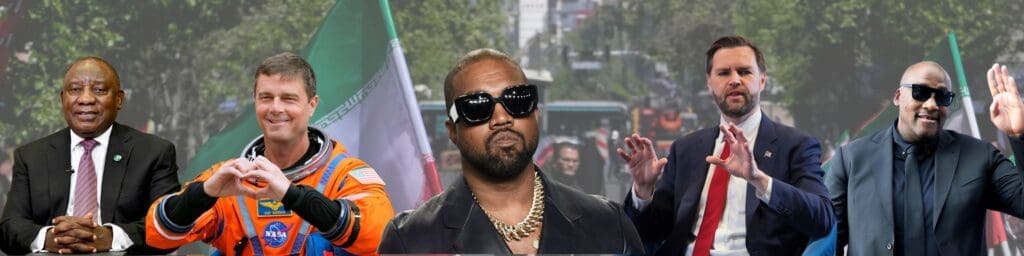
Illustrative Image, from left to right: Iranian Flag. Credit: Vahid Salemi/ AP Photo; Cyril Ramaphosa. Credit:
GovernmentZA/ Flickr; Reid Wiseman. Credit: Chris O’Meara/ AP Photo; Kanye West. Credit: Evan Agostini/Invision/AP, File; JD Vance. Credit: Jonathan Ernst/Pool Photo via AP; Gayton McKenzie. Credit: GovernmentZA/ Flickr
NATIONAL
- The South African Revenue Service collected a record R2.010 trillion in net tax revenue for the 2025/26 year.💸That’s the first time in 32 years the figure is higher than R2 trillion; it’s also about 8.4% higher than last year’s haul. What a way for SARS Commissioner Edward Kieswetter to round out his tenure, which began in 2019 and ends on 30 April. Finance Minister Enoch Godongwana praised him for rebuilding SARS after the tumultuous Zuma era. Kieswetter’s replacement, Dr Ngubane Johnstone Makhubu, starts work on 1 May.
- Cyril Ramaphosa received the US ambassador’s credentials. Leo Brent Bozell III was one of 20 envoys who presented their credentials in Pretoria to officially kick off their diplomatic duties. South Africa and the US are far from friendly right now: our ambassador was expelled from Washington last year after accusing Donald Trump of leading a global white supremacist movement, and Bozell is insisting that South Africa drop its International Court of Justice genocide case against Israel.
- Big changes are afoot in South African schools’ history curriculum. Basic Education Minister Siviwe Gwarube has proposed a new draft history syllabus for Grades 4 to 12. This would mean fewer Europe-focused lessons, like the arrival of Dutch traders led by Jan van Riebeeck in 1652, and a greater emphasis on African histories. It shifts the spotlight from individual figures to broader concepts such as revolutions and global movements. Supporters call it necessary; critics say it’s anti-intellectual.
- South Africa’s biggest soccer superfan still wants a government-funded 2026 FIFA World Cup trip. ⚽ Mama Joy Chauke must have known she was trying her luck: Sports Minister Gayton McKenzie said last month that only athletes and official teams qualify – there’s no budget for even the biggest Bafana Bafana fans. Over the weekend, Mama Joy complained about the policy on X and called for a new sports minister who “can love fans”. McKenzie held firm and, as yet, the two haven’t duelled at dawn with makarapas and vuvuzelas.
- A Durban driver danced into legal trouble. A viral video of a driver busting dangerous stunts on a public gravel road has gone from “viral” to “trouble”. He was filmed leaning almost entirely out of the car, grooving, one hand on the steering wheel – and cheered on by his passengers.😳 The man turned himself over to traffic cops in Pinetown after the clip blew up on social media. He hasn’t been charged yet, but is reportedly remorseful. Important reminder, folks: always keep your body inside a moving vehicle.
INTERNATIONAL
- The world has condemned Israel’s continued attacks on Lebanon. The US and Iran negotiated a two-week ceasefire, but Israel insists the truce doesn’t include Lebanon; Iran says the strikes are a “grave violation”. More than 250 people in Lebanon were killed by Israeli air strikes on Wednesday. Meanwhile, Hezbollah, a Lebanese group backed by Iran, fired rockets into northern Israel. No casualties were reported. The United Nations and other world leaders have called the latest civilian deaths and damage “appalling”. Read our full takeaway in the longer brief below.
- US Vice President JD Vance swears the US isn’t interfering in Hungary’s Sunday elections. 👀 Vance visited the country on Tuesday as part of the Trump administration’s mobilisation of far-right governments across the world. Analysts say this support is becoming a disadvantage for would-be mini-Trumps like Viktor Orbán, Hungary’s self-described illiberal prime minister. He’s been in power for 16 years and oversees an ever-poorer economy while he and his friends grow richer. Pundits are tipping these elections as the end of his reign.
- NASA’s Artemis II mission has made history by sending four astronauts farther from Earth than any humans before. 🚀 Reid Wiseman, Victor Glover, Christina Koch, and Jeremy Hansen travelled about 406,700 kilometres from Earth – roughly 6,600 kilometres farther than Apollo 13’s record-setting journey in 1970 – before looping around the Moon and heading for home. The crew captured breathtaking views of lunar craters and, perhaps most strikingly, our own planet. The mission is testing deep-space systems for when humans eventually return to the surface of the Moon.
- Kanye West has been barred from the UK. The rapper, who currently goes by Ye, was set to headline July’s Wireless Festival. Then his past antisemitic remarks came back to haunt him. Major sponsors pulled out, and the UK’s Home Office barred him from the country. ⛔ A day prior to the ban, an apparently contrite Ye offered to meet with members of the UK’s Jewish community and “listen” to their concerns. It was too little, too late. Wireless organisers cancelled this year’s festival and have promised ticketholders full refunds.
- A study published last year saying church attendance had soared among British young people has been retracted. Last month, the Bible Society retracted its report, calling the underlying data “faulty”. 😐YouGov, the company behind the 2024 survey, said its sample of more than 13,000 adults contained “fraudulent” responses. The report caused waves when it was released because church attendance in the UK, one of the world’s most secular countries, is known to be declining.
▁ ▂ ▄ ▅ ▆ ▇ █ BIG STORIES
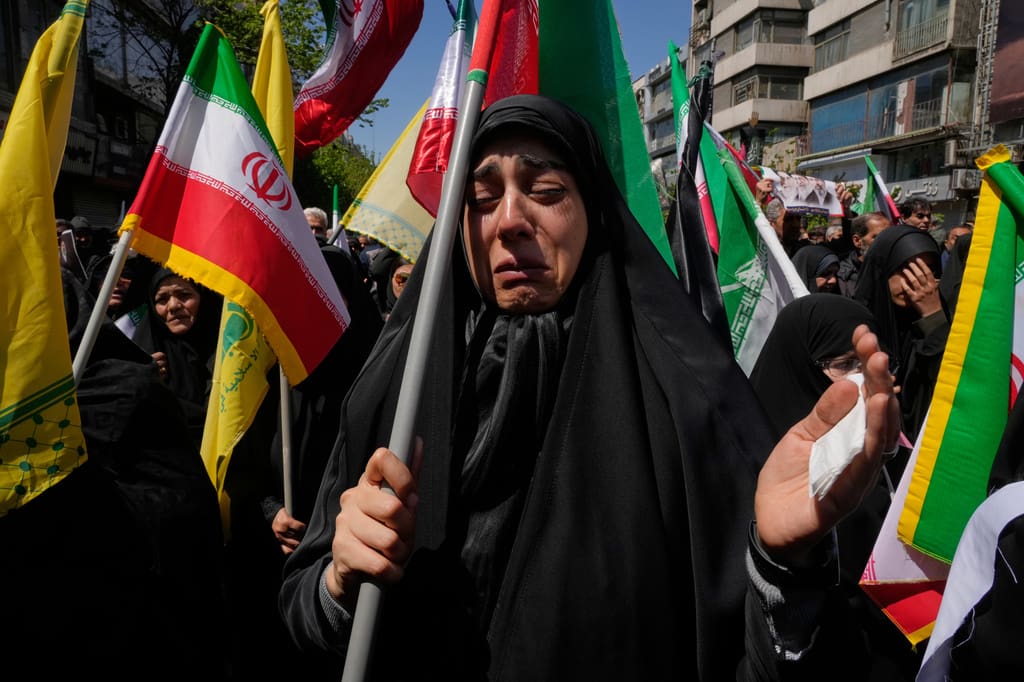
1️⃣ The US-Iran war has entered an unstable pause
The Iran war has entered a volatile pause. The fragile ceasefire is holding – but fighting continues to spread beyond Iran. The latest crisis was triggered by a dramatic warning from Donald Trump that pushed Washington into panic mode. He ominously warned on Tuesday that “a whole civilization” could be destroyed if a deal was not reached, prompting urgent lobbying in Congress and across the political spectrum for de-escalation.
That pressure helped produce an 11th-hour agreement: the United States and Iran announced a two-week ceasefire that day, contingent on reopening the Strait of Hormuz and entering negotiations. The truce temporarily eased fears of a broader regional war and even led to a drop in oil prices, although experts warn it won’t immediately stabilise them.
But the cracks started to show before the world could catch its breath.
The biggest fracture emerged almost instantly. Israel continued military operations in Lebanon, arguing that the ceasefire applied only to Iran.
Quick explainer: Lebanon matters here because it’s home to Hezbollah, Iran’s most powerful regional ally and a direct enemy of Israel. That means fighting in Lebanon is essentially Iran and Israel clashing by proxy, even when Iran itself isn’t directly involved. In other words: separate battlefield, same war.
Massive Israeli airstrikes on Beirut and other areas killed more than 250 people, with officials saying the campaign targeted Hezbollah infrastructure and would continue regardless of the Iran deal. Trump’s administration also stated that Lebanon was a “separate skirmish” not covered by the truce, deepening disagreements over what the ceasefire actually meant.
Iran reacted angrily, warning that continued Israeli operations could collapse negotiations. The strikes in Lebanon, combined with renewed tensions in the Persian Gulf, have already put the ceasefire under strain; Tehran has called further talks “unreasonable” under the current conditions.
Meanwhile, Trump has issued fresh warnings that a failure of the peace process could lead to “dramatic military escalation” – this, even as negotiations in Pakistan are being planned. Analysts describe the ceasefire more as a tactical pause than a peace deal.
The war is far from over. If Israel continues its Lebanon campaign and Iran retaliates indirectly through its regional allies, the ceasefire could collapse quickly. If negotiations hold, however, the current pause could evolve into a broader settlement covering Iran’s nuclear programme, regional militias, and maritime security in the Strait of Hormuz.
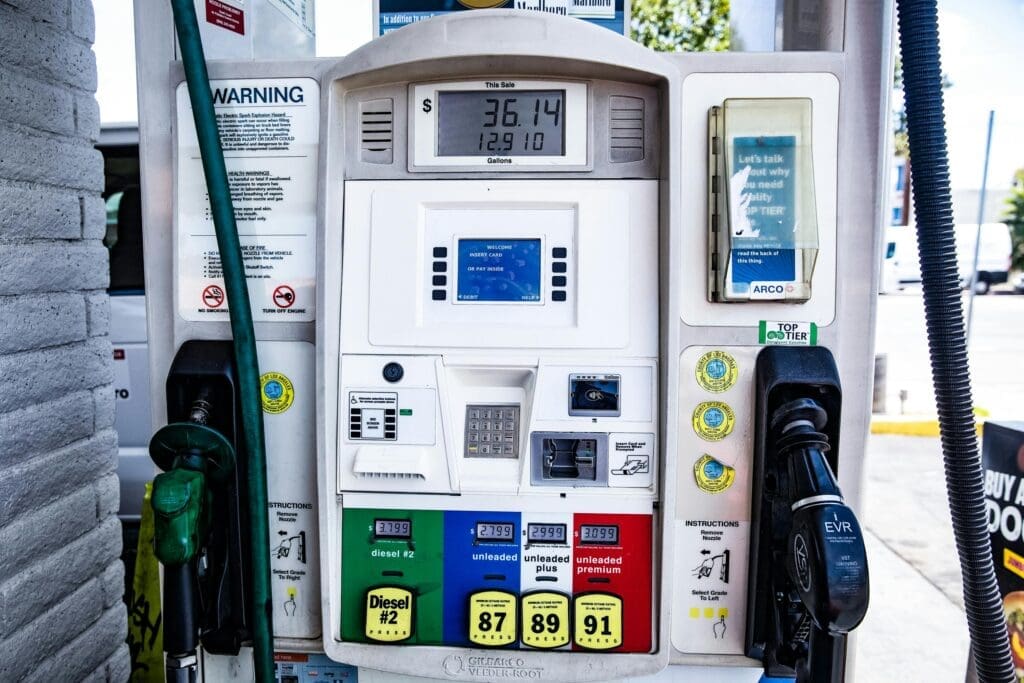
Gasoline Pump in a Gas Station. Credit: Ekaterina Belinskaya/ Pexels
2️⃣ SA’s fuel levy cut buys time, not relief
There was a last-minute plot twist in South Africa’s petrol price panic, courtesy of the government stepping in just before April’s increases kicked in. On 31 March, officials announced a temporary cut to the fuel levy — about R3 per litre for petrol and nearly R4 for diesel — softening what would have been a much uglier price hike prompted by the US-Israeli war in Iran.
Quick explainer: the fuel levy is a tax baked into every litre of fuel. It makes up roughly a third of what you pay at the pumps, though that share shifts with global oil prices and the rand. Before this intervention, Treasury had pegged the 2026 levy at R4.10 for petrol and R3.93 for diesel. So yes, the relief matters — but it comes with strings attached.
SARS says the relief — estimated at around R6bn — is not a freebie. That money still needs to be collected somehow, meaning taxpayers may feel it elsewhere down the line. Also worth noting: the levy cut is temporary. It buys government time rather than being a long-term fix.
Not everyone thinks expanded levy reductions, as some parties have pushed for, are the way to go. Efficient Group chief economist Dawie Roodt said: “I think reducing the fuel levies is not a good idea. Remember, the fiscal accounts are in deep trouble. This is just cheap politics.”
Meanwhile, the timing of the relief announcement evoked mixed reactions. The Organisation Undoing Tax Abuse (OUTA) welcomed the cut, but didn’t love the 11th-hour intervention – the day before the petrol price hikes on April 1st. By the time the government acted, the market had already priced in the pain, and businesses and households had spent weeks bracing for impact. Earlier communication, OUTA argued, could have reduced panic and helped people plan for knock-on costs such as transport and food.
And that’s the bigger issue here: uncertainty. Fuel prices ripple through everything — taxis, groceries, deliveries. That means last-minute decisions don’t just surprise motorists; they shake the broader economy, too. OUTA is now calling for at least a week’s notice ahead of future price adjustments, plus more transparency around South Africa’s strategic oil reserves (basically the country’s emergency fuel stash).
There is some global good news. Oil prices have dropped sharply, from about $111 to $94 a barrel, thanks to the US pausing its insanity in Iran. That, combined with a slightly stronger rand, could translate into a potential R2.70 per litre drop locally.
But here’s the catch: if government reinstates the levy in full, that relief might vanish overnight.
In other words, your next fuel price depends on two things: geopolitics far away… and decisions much closer to home. Let’s hope that ceasefire holds.
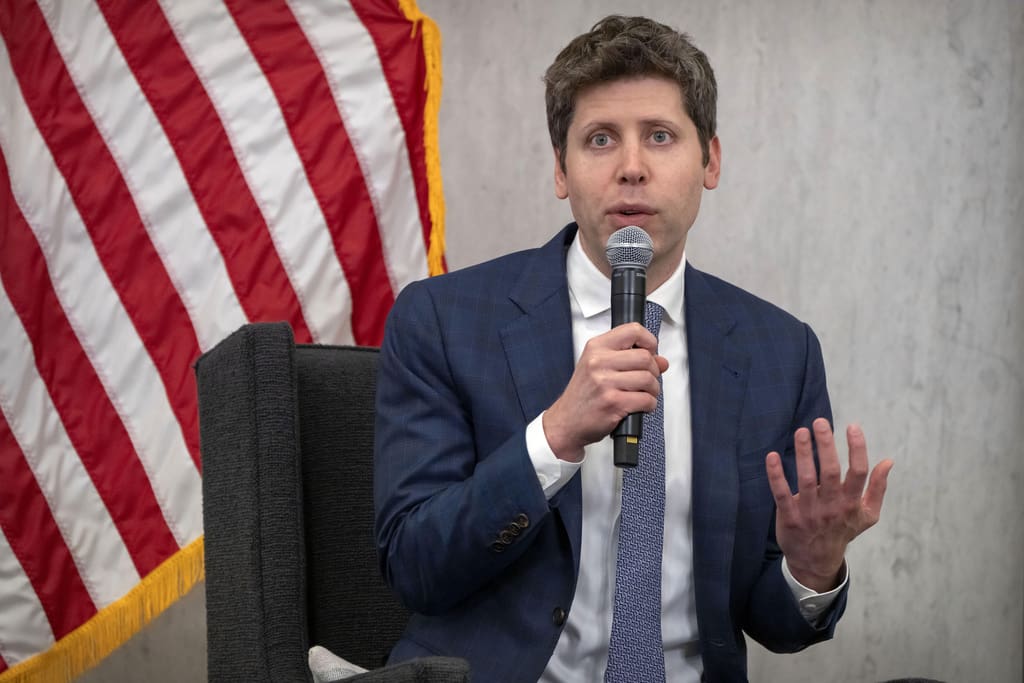
3️⃣ An explosive investigation questions whether Sam Altman’s can steward AI responsibly
Sam Altman, the chief executive of OpenAI, is one of the most consequential figures shaping the future of artificial intelligence. This week, a major investigation by The New Yorker sparked serious questions about whether Altman can be trusted to steward AI responsibly as he pushes forward with plans for technologies he and other AI evangelists say could soon rival or exceed human intelligence.
The reporting, based on internal documents and scores of interviews, reveals that some former OpenAI colleagues have repeatedly questioned Altman’s leadership and candour. One senior scientist’s memos reportedly argued that he was not sufficiently trustworthy to run the organisation as it approached the powerful frontier of artificial intelligence, a debate that exploded publicly when the OpenAI board briefly ousted Altman in 2023 before reinstating him in response to pressure from investors and staff.
Altman released a report of his own this week. In the paper, Industrial Policy for the Intelligence Age, he warned that “superintelligence” systems capable of outperforming humans in cognitive tasks could reshape economies and societies on a scale comparable to previous industrial revolutions. Altman proposed wide‑ranging preparations, from robot taxes and universal wealth funds to shortening the work week and expanding social safety nets.
Some see Altman’s regulatory vision as a necessary wake‑up call for global lawmakers and social contracts to evolve as AI rises. Others argue that positioning such broad economic reforms distracts from the urgent need for concrete, enforceable rules to govern current AI models and warn that calling for a kind of “AI New Deal” could dilute regulatory focus.
This isn’t merely a debate for tech insiders: AI has the potential to change our world, for better or for worse, so it’s crucial for society at large to weigh in.
———————-
That’s it from us at The Wrap, an award-winning product of explain.co.za – simple news summaries for busy people. 💁🏾♀
The Wrap is sponsored by explain’s agency division. We specialise in content marketing for purpose-driven organisations, often with a pan-African reach. Mail info@explain.co.za for a quote.
🇸🇺🇧🇸🇨🇷🇮🇧🇪
Remember to share the love. 💫
Tell your friends to sign up:
📩 Email: http://explain.co.za/subscribe
📲 Our new WhatsApp channel: https://whatsapp.com/channel/0029Vac06yM8kyyLmOulb80J
_Till next time, goodbye from the team, Verashni, Natasha, Sinawo, Tshego, and Kamogelo._ ✌🏽

Tshego is a writer and law student from Pretoria. A keen follower of social media trends, his interests include high fantasy media, politics, science, talk radio, reading and listening to music.
He is also probably one of the only people left who still play Pokemon Go.