Hi there 🙋🏾♀️
Welcome back to the Wrap and happy 2026! 🥳
Before we get into the mess, thank you to everyone who completed our end of year survey. We hear you, we took notes, and yes, we are actually acting on your suggestions.
This edition is loaded, so let’s jump in. The race for ANC president 2027 is picking up speed, with a billionaire who is related to the current billionaire president being touted as a contender. South Africa is also mourning after a tragic school transport accident in the Vaal. Separately, we explain why many people were surprised to learn about an unusual government agency, and we break down a Constitutional Court ruling that could change mjolo in Mzansi.
Globally, Donald Trump’s Nobel Prize snub has turned into a storyline involving Greenland and the current Peace Prize winner, which sounds fake but is unfortunately real. Iran’s leadership is tightening control, China’s birth rate has dropped again, and in rare good news, a language that was close to extinction is being revived in one of our neighbouring countries.
The big moment this week came from Davos, where the Canadian prime minister gave a rousing speech about the world changing and called on long-time allies to work together again. In short, the beacons are lit. Will South Africa answer?
We also dive into the Beckham family feud because no global news cycle is complete without celebrity drama.
So, let’s dive into these stories and more in this week’s wrap, brought to you by Verashni Pillay and the explain.co.za team. 😄
Format:
▁ ▂ ▄ ▅ ▆ ▇ █BRIEFS
NATIONAL
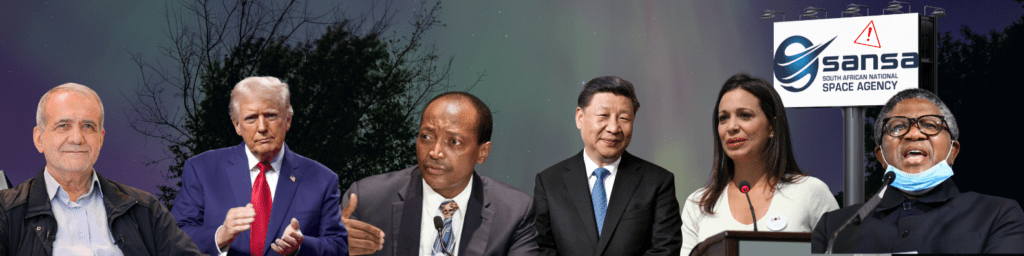
- Who will be the next ANC president? Turns out, some party supporters are so desperate for a better successor than Deputy President Paul Mashatile that they’re faking a campaign for Patrice Motsepe, despite the billionaire repeatedly saying he will not run. T-shirts bearing the slogan “PM2027” were widely shared on social media this week. The ANC’s elective conference is set for December 2027. Secretary-General Fikile Mbalula shut down the idea, but the party is clearly short on inspiring successors.
- The death toll of the Vaal scholar crash rose to 14 on Thursday. An overloaded taxi carrying 18 pupils collided with a truck during the morning school run, after reportedly trying to overtake several cars, immediately killing 12 children. The 22-year-old driver was arrested and charged with culpable homicide and negligent driving, and is expected to appear in court today. Unions and families are now demanding reforms, with President Cyril Ramaphosa discussing a dedicated public transport system for scholars with the relevant education departments.
- South Africa’s Constitutional Court settled a long-running legal grey area around marriage and money yesterday. In a landmark ruling, the court confirmed that customary marriages carry full property consequences — and that couples can’t quietly rewrite those rules later with private antenuptial contracts. The case matters because it closes loopholes that have historically left women, especially in customary marriages, financially vulnerable. In short: customary marriages aren’t second-class, and the law now treats them that way.
- SA did a collective double-take this week when the South African National Space Agency issued a geomagnetic storm warning. 🧑🏾🚀 “Wait? There’s a space agency in South Africa? 😮” asked one X user. SANSA was formed in 2009 and operates from Hermanus, tracking solar activity that can disrupt GPS, radio communications, and even power grids. Fun fact: NASA missions from the sixties to the seventies were supported from a tracking station at Hartebeesthoek, SA, where the first images of Mars were received.
- The Springbok Women’s Sevens were crowned champions of the inaugural HSBC SVNS 3 tournament in Dubai on Sunday. 🇿🇦 This followed a 12-5 win against Argentina and a weekend where the team went unbeaten across all five matches. The Springbok Women’s Seven are SA’s national women’s rugby sevens team — the fast-paced, seven-a-side version of rugby that’s an Olympic sport, who are unbeaten regionally. It’s a second consecutive title for former men’s sevens legend, coach Cecil Afrika, since his October appointment.
INTERNATIONAL
- Trump has backed off Greenland – for now. Following talks with NATO leaders at the World Economic Forum in Davos this week, the US president dropped threats to slap tariffs on European allies over his long-running fixation with the Arctic island. Adding to the farce, Trump reportedly sent a letter to Denmark demanding control of Greenland partly because he had not received a Nobel Peace Prize — awkward considering the fact that the prize is awarded by an independent committee in Norway, not Denmark. 🤭
- Iran’s autocratic leadership said on Monday it’s “just getting started” in its deadliest crackdown in decades. More than 3000 have been killed after protests erupted in late December, sparked by soaring prices, fuel hikes and a collapsing currency. By January 8, unrest had spread nationwide, prompting a near-total internet blackout that lasted almost two weeks and only began easing this week. The UN Security Council convened emergency discussions last week, and the EU signalled new sanctions over Tehran’s response.
- Trump finally got his Nobel medal. Venezuelan opposition leader María Corina Machado handed her 2025 win over last week, hoping to curry favour with Trump. After the US military’s shock capture of Venezuelan President Nicolás Maduro earlier this month, Trump has backed Maduro’s deputy over Machado. But she left empty-handed, unless you count the Trump-signed swag bag, or as Late Night host Seth Meyers joked: “what I assume you get when you renew your membership at Mar-a-Lago.” 😆
- China’s birth rate hit a record low as its population shrinks for the fourth year in a row. 😬 A decade after ending the one-child policy, government efforts to encourage more births – from subsidies to tax breaks, cash bonuses, extended maternity leave, and allowing up to three children per family – have had limited success. Many young people say having kids is just too expensive. Experts have warned that the country will lose more than half of its population by 2100.
- In the remote Daliwe valley in Lesotho, a language many thought was on its way out is getting a second life. SiPhuthi, spoken by only a few thousand people, has been rescued through years of patient work by linguists and local activists. This week, The Guardian reported on efforts to record elders, build a dictionary, translate the Bible and secure official recognition. While still under pressure from dominant Sesotho and Xhosa, children are speaking SiPhuthi again — a rare reversal in language decline.
▁ ▂ ▄ ▅ ▆ ▇ █ BIG STORIES
1️⃣ Canada’s Carney calls time on old alliances – and SA must decide its place
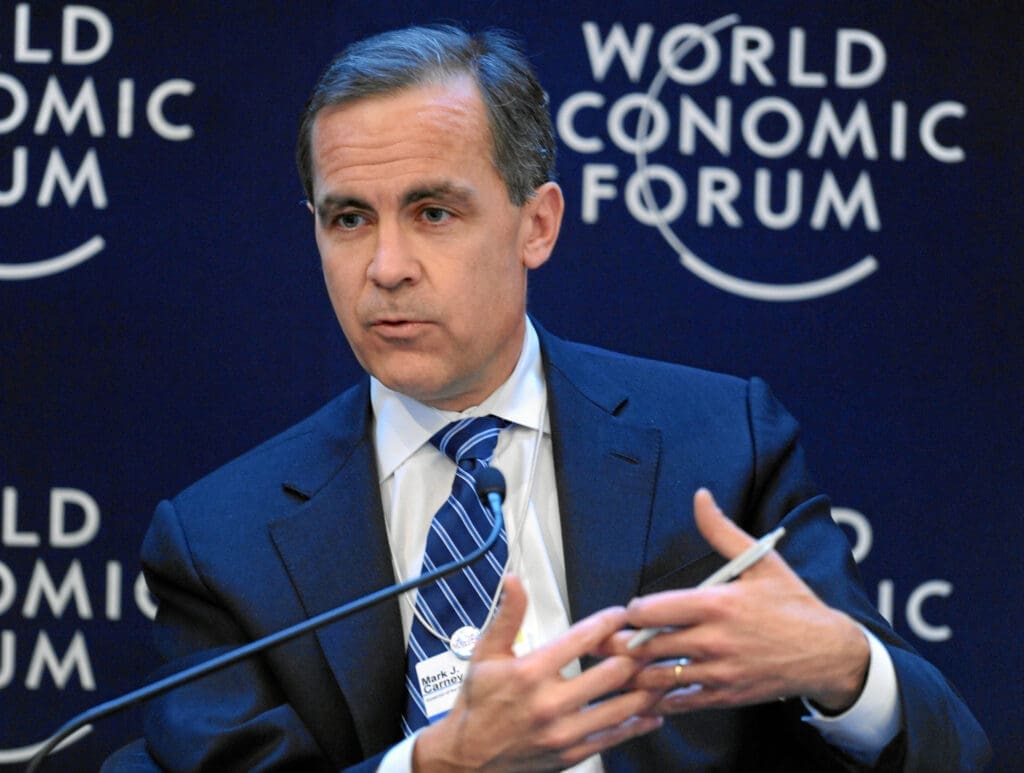
Mark Carney made everyone sit up and pay attention at the World Economic Forum in Davos on Tuesday, telling world leaders and business bigwigs that the old, US-led rules-based world order is… gone. For good.
The Canadian prime minister and former Bank of England governor said the era of predictable alliances and automatic protections is over. His advice to so-called “middle powers” (countries that aren’t superpowers but still matter) was simple: work together, be ambitious, and stop clinging to the old way of doing things.
Or, as he put it: “If you’re not at the table, you’re on the menu.”
Carney didn’t mention Donald Trump by name, but his bulldozing of the international order and embrace of might over right loomed large over the gathering.
For South Africa and other middle powers, Carney’s message hits home.
The country “would be well advised to tuck in behind the position that Carney has struck – principled and pragmatic, forging alliances and solidarity amidst the ‘middle powers’,” said political analyst and author Richard Calland. Veteran foreign correspondent Peter Fabricius added it was a better fit than “staying the course with a BRICS bloc that will probably only get more problematic as it expands, and which Trump, incidentally, has already threatened to hit with punitive tariffs”.
Other experts say the country is a natural fit for this new world order because Mzansi is no stranger to shocks and volatility. Over the last three decades, South Africa has persisted through economic crises and political upheavals, along with rapid social and market changes.
But our country will be handicapped in this new landscape by “domestic dysfunction”, added human rights lawyer Nicole Fritz, while others warned that aligning with brutal regimes like Iran and Russia weakens potential partnerships with other middle powers.
So, the takeaway from Davos? The world is changing fast, the old playbook is obsolete, and if countries want to stay in the game, they’d better get creative, cooperative, and a little bit bold.
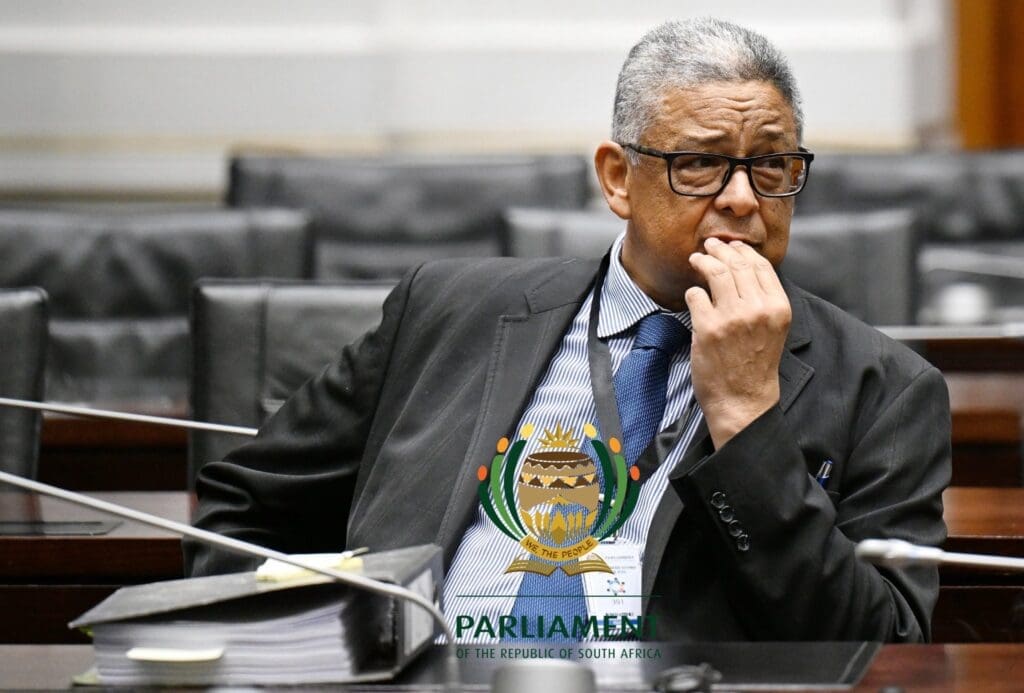
2️⃣ McBride spills SAPS secrets: who’s credible, who’s not
Former head of the Independent Police Investigative Directorate (IPID), Robert McBride, has thrown down a series of bombshells in Parliament this week, at the ad hoc committee probing corruption and interference in South Africa’s police and justice systems (remember the one running alongside the Madlanga Commission last year?).
Here’s what you need to know:
Who’s who?
🟠Robert McBride: Former head of IPID, the agency responsible for investigating police misconduct and corruption and currently head of the Foreign Branch of the State Security Agency. He is a polarising figure: supporters view him as a struggle hero and advocate for accountability in policing and intelligence, while critics point to his controversial decisions at IPID.
🟠Paul O’Sullivan: A controversial forensic investigator and former intelligence operative who has been involved in investigating corruption within the police.
🟠Khomotso Phahlane: Former acting National Commissioner of the South African Police Service (SAPS). He’s been accused of corruption, including alleged benefits from SAPS procurement contracts and luxury perks, accusations he says were driven by political vendettas.
🟠Lieutenant-General Nhlanhla Mkhwanazi: Senior police officer in KwaZulu-Natal — and crucially, the original whistleblower whose explosive press conference last year triggered this entire saga.
🟠Cedric Nkabinde: Former Chief of Staff in SAPS. Nkabinde is currently facing a criminal perjury case for providing false evidence under oath in the same ad hoc committee last year.
In his testimony, McBride noted three big things:
🔹He claimed Phahlane, Mkhwanazi, and Nkabinde could not be trusted and had interfered with investigations into police misconduct. He said Mkhwanazi tried to block investigations and influence appointments, and that Nkabinde lived a lifestyle far beyond what his official salary could explain. McBride said Nkabinde was “a questionable character, who is driven by greed” referring to whistleblower complaints and questionable financial behaviour.
🔹He defended O’Sullivan. Some critics have said O’Sullivan had too much control over investigations into senior police figures. McBride said O’Sullivan was simply providing evidence and guidance, not running the investigations.
🔹He highlighted, like many other witnesses, systemic problems in policing and a system where political and personal influence can interfere with accountability.
Why it matters
Mkhwanazi was previously seen as a hero — the whistleblower whose public allegations last year about political meddling in SAPS kick-started parliamentary scrutiny. For McBride to now accuse him of interference could mark a dramatic reversal.
If it’s getting harder to sort out the good from the bad guys, we don’t blame you. The parliamentary committee will continue examining evidence, and the outcomes could shape the way South Africa polices itself in the future.
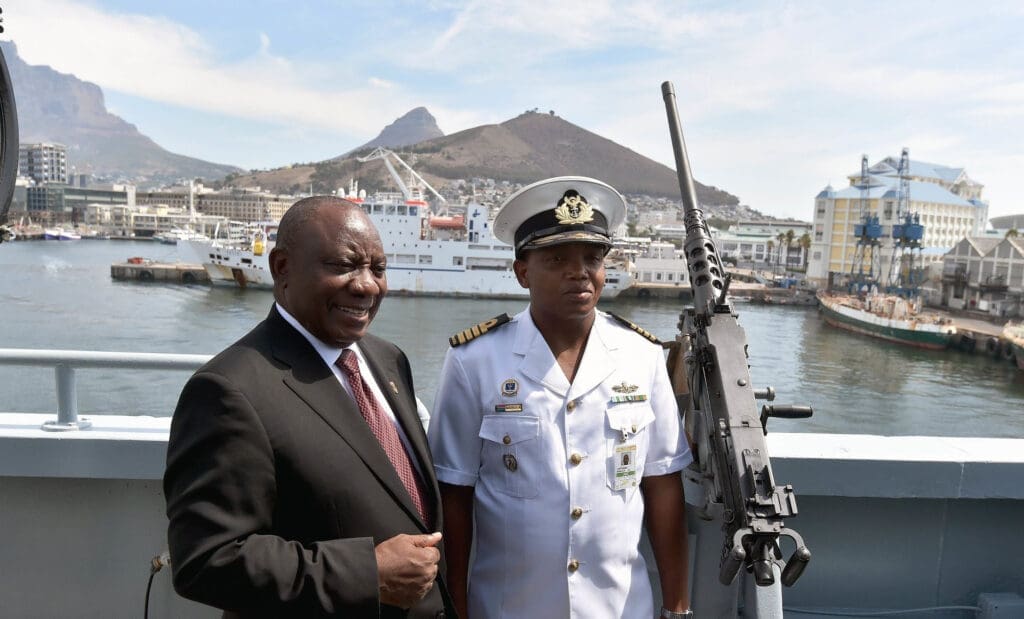
3️⃣Angie Motshekga’s job hangs in the balance over Iran navy drills
South Africa has once again found itself in hot diplomatic water, this time over a naval exercise that was meant to be routine, but quickly turned political.
The drills in question, officially called Exercise Will for Peace 2026, took place off South Africa’s coast near Simon’s Town and False Bay from 9 to 16 January. Framed as a BRICS Plus maritime exercise, the stated aim was fairly benign: cooperation between navies to protect shipping lanes and maritime economic activity around the strategically vital Cape sea route.
South Africa hosted the exercise, with participation from China, Russia, the United Arab Emirates and other partners. China led the drills. On paper, none of this was unusual. Joint military exercises happen all the time, and South Africa has hosted similar ones before.
The problem? Iran.
Iran is now part of the expanded BRICS Plus grouping and was expected to be involved. However, on 9 January, President Cyril Ramaphosa instructed that Iranian warships should only participate as observers, a move clearly aimed at avoiding further strain with the United States. But things didn’t quite play out that way.
Images and reports soon emerged showing three Iranian vessels operating in False Bay during the exercise. The timing couldn’t have been worse: As we’ve told you already, Iran is currently facing one of the largest waves of protests in years, sparked by economic hardship and political repression, with reports of mass arrests, internet shutdowns and deadly crackdowns.
Even limited military engagement with Iran looks like legitimising a regime accused of brutalising its own citizens.
Defence Minister Angie Motshekga and the SANDF were deafeningly silent about the incident for a week before Motshekga finally announced a board of inquiry last week Friday to determine whether the president’s instructions were ignored, misunderstood, or misrepresented. They have seven days – till tomorrow – to report back.
A Sunday Times report notes SA Navy chief Vice-Admiral Monde Lobese may take the rap on his own, but military experts are calling for Ramaphosa to fire Motshekga and all top officers involved in the fiasco.
Relations with Washington were already strained over BRICS, South Africa’s principled stance on Israel, its closeness to Russia, and AGOA (Oh, and let’s not forget Trump’s debunked narrative of a ‘white genocide’, and all the G20 drama). Add in Iran, and it’s a diplomatic perfect storm.
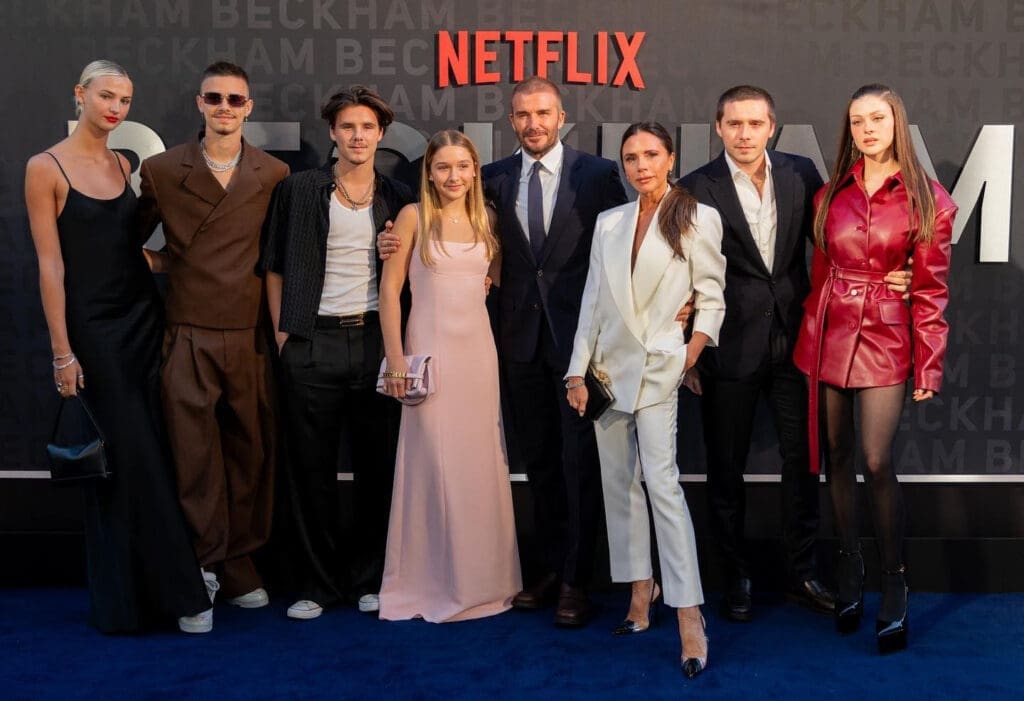
4️⃣Inside the Beckhams’ family feud
The world is finally privy to why things have been… weird in the Beckham family for a while now. On Monday, 26-year-old Brooklyn Peltz Beckham posted a dramatic series of Instagram stories accusing his parents of favouritism, control and performative family values. He is the eldest child of footballing great David and Spice Girl-turned-fashion designer Victoria, probably the UK’s top power couple.
Tabloids have been speculating for years on what’s going on with the Beckhams. Brooklyn has kept his distance from the family since his 2022 wedding to fellow nepo baby heiress Nicola Peltz. Fans previously noticed that David, Victoria, and their youngest son, Cruz, were not following Brooklyn on Instagram, and Cruz clarified that it’s because they “woke up blocked” by Brooklyn. 😳
Here’s Brooklyn’s top claims from Monday’s posts:
🔹 His parents care more about social media and their brand than real connections.
🔹 His mother was apparently very Monster-In-Law coded in the lead up to his nuptials in 2022, pulling out at the last minute on an offer to design the bride’s dress and hijacking the first dance at the wedding to dance “inappropriately” with him in front of their 500 guests. However, a glowing 2022 Vogue interview with Nicola and the rest of the family contradicts both claims, with the bride’s Valentino dress apparently a year in the making.
🔹His parents tried to pressure – and even “bribe” – him into signing away the rights to his name just before the wedding. He didn’t say exactly what those rights were, but he claims his refusal changed how they treated him.
🔹 The couple was ignored in the lead-up to David’s 50th birthday last year May. His father was apparently only willing to meet him without Nicola, which he says felt like a “slap in the face”. The couple notoriously did not attend the party in the end, adding to speculation at the time.
The parents’ response? Neither has addressed the claims directly. Victoria posted a cheerful birthday shout-out to fellow Spice Girl Emma Bunton, while David – currently at the World Economic Forum in Davos, Switzerland – spoke about, of all things, guiding youth on social media: “Children are allowed to make mistakes,” he said. “That’s how they learn.”
Point taken!
That’s it from us at The Wrap, an award-winning product of explain.co.za – simple news summaries for busy people. 💁🏾♀
The Wrap is sponsored by explain’s agency division. We specialise in content marketing for purpose-driven organisations, often with a pan-African reach. Mail info@explain.co.za for a quote.
🇸🇺🇧🇸🇨🇷🇮🇧🇪
Remember to share the love. 💫
Tell your friends to sign up:
📩 Email: http://explain.co.za/subscribe
📲 Our new WhatsApp channel: https://w