Across South Africa, women are switching off the news.
This is not simply apathy. It is fatigue, alienation, and a growing sense that political reporting no longer speaks to their lives or their ability to shape change. When people disengage from news, they are not only stepping away from headlines — they are stepping away from public debate, political participation, and the information needed to hold power accountable.
Globally, news avoidance has reached record levels. According to the Reuters Institute’s 2025 Digital News Report, around 40% of people say they sometimes or often avoid the news, a sharp rise from 29% just eight years ago. South Africa broadly tracks these trends. Women are consistently more likely to disengage, citing emotional exhaustion, negativity and a sense that political news rarely leads to meaningful change.
But this disengagement has consequences, particularly as South Africa moves toward the 2026 local government elections.
Municipal politics determines who controls some of the most immediate aspects of everyday life — water, electricity, housing, clinics and transport. Yet local government is also where reporting is often weakest, where misinformation spreads easily, and where the consequences of political failure are most directly felt.
When large segments of the public disengage from news, accountability weakens. Information gaps widen. And misinformation moves in to fill the space.
South Africans already report exceptionally high concern about misinformation. In 2024, 81% of South Africans said they were worried about false or misleading information, well above the global average. In an environment where trusted news does not reach everyone, misleading narratives, especially around elections and governance, can spread quickly.
At the same time, the media industry itself faces its own contradictions. Women make up the majority of journalists in South Africa, yet they remain underrepresented in senior editorial leadership globally, holding around 38% of top editorial roles. Leadership matters because editors shape which stories are prioritised, whose experiences are reflected, and how politics is explained to audiences.
In other words, the relationship between women and news is not simply about audience behaviour. It is also about the structures and storytelling choices within journalism itself.
These questions formed the backdrop to a recent conversation hosted by Explain News at the Nelson Mandela Foundation in Johannesburg, titled When Women Switch Off: News, Accountability and Local Power Ahead of the 2026 Elections.
Watch a video played at the event below on how women are increasingly switching off from news, and why it’s a problem.
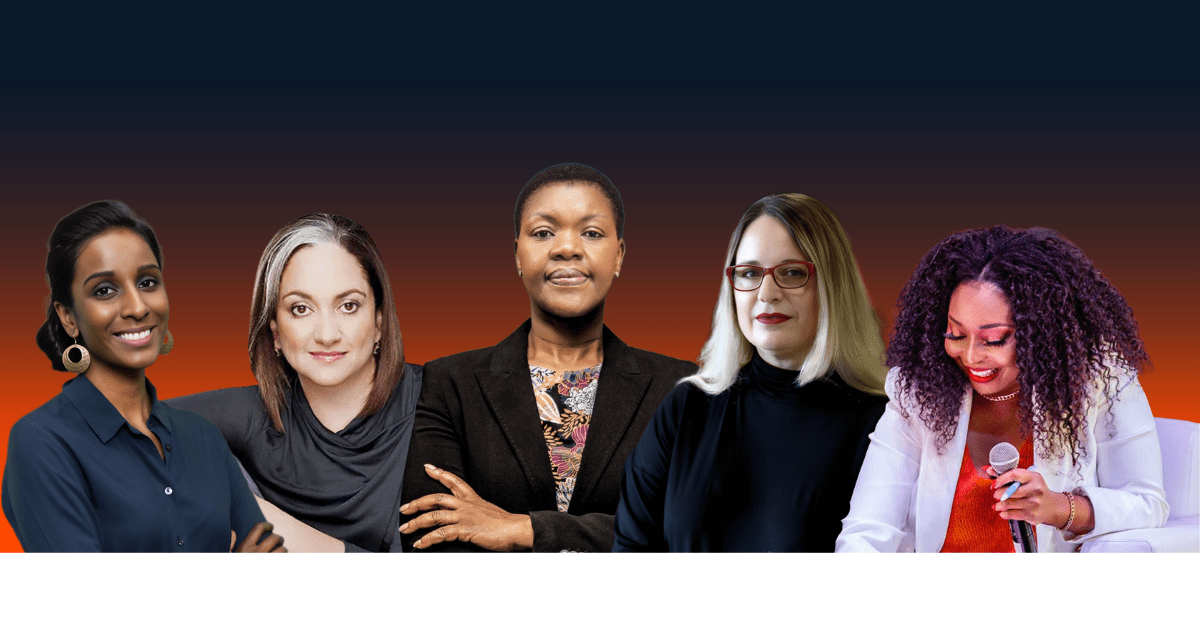
The event opened with welcome remarks from Verashni Pillay, founder of Explain News, who framed the discussion around the importance of accessible, relevant journalism that reflects the lived realities of South Africans. H.E. James Christoff, the Canadian High Commissioner to South Africa, also delivered opening remarks, highlighting the importance of inclusive information ecosystems in strengthening democratic participation.
The keynote address was delivered by Phathiswa Magopeni, Executive Director of the Press Council of South Africa. Magopeni reflected on the implications of news disengagement for democratic accountability and civic participation.
Following the keynote, a moderated panel discussion explored how newsrooms and journalists can respond to the challenges outlined in the keynote address. The panel, moderated by Verashni Pillay, featured:
- Ferial Haffajee, Associate Editor at Daily Maverick
- Nicki Gules, Head of News at News24
- Makhosazana “Khosi” Zwane-Siguqa, Managing Director of Frontpage Media House
The event concluded with an interactive audience Q&A session, where participants shared their own perspectives on media trust, misinformation, and the role of journalism in strengthening civic participation ahead of the elections.
Keep an eye out on our site and socials as we unpack the discussions and post insights from the day in the weeks to come.