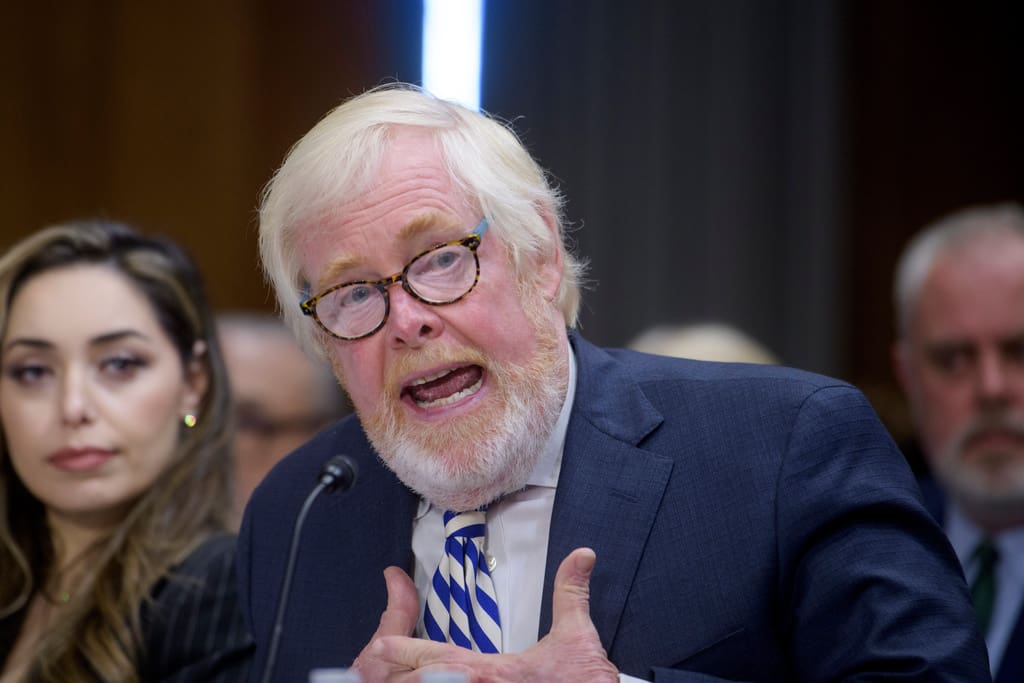
Remember that new US ambassador we told you about last week? Leo Brent Bozell III had a rocky introduction, given his previous defence of apartheid back in the 1980s.
Well, he managed to make things even worse in his first few weeks, despite a charm offensive, which included trying to explain away his previous views and a visit to the Apartheid Museum.
The trouble began on Tuesday at a BizNews conference in Hermanus. Bozell told business leaders that Washington had five issues with South Africa: its ties with Iran, land reform, BEE rules affecting US companies, rural safety, and the struggle chant “Kill the Boer”. He said the US had “run out of patience” with our policies – as if we’re naughty school kids instead of a sovereign nation. (Dirco director-general Zane Dangor later said the five demands were part of trade negotiations and SA hadn’t received formal communication on them.)
Then came the bombshell.
“We may not get clarity on the ‘Kill the Boer’ chant that we believe is hate speech. I am sorry, I don’t care what your courts say: it’s hate speech,” Bozell said.
The Equality Court ruled in 2022 that singing the song was not hate speech in its historical context, a decision upheld by the Supreme Court in 2024 and left standing when the Constitutional Court declined to hear an appeal in 2025.
The backlash to Bozell’s attack on our judiciary and sovereignty was immediate. Radio talk shows lit up. The EFF called for Bozell to be expelled, and ANC secretary-general Fikile Mbalula warned that SA would not be “dictated to” by a foreign envoy.
At a press conference the next day, Minister of International Relations and Cooperation Ronald Lamola confirmed the ambassador had been summoned to explain himself in a formal diplomatic rebuke, known as a demarche.
Bozell was under pressure and, on Wednesday, he took to X, saying: “I want to clarify that while my personal view – like that of many South Africans – is that ‘Kill the Boer’ constitutes hate speech, the US government respects the independence and findings of South Africa’s judiciary.”
It’s a big deal because the Vienna Convention on Diplomatic Relations explicitly states diplomats must “respect the laws and regulations of the receiving state” and must not “interfere in the internal affairs of that state”.
Judicial independence is particularly hard won in SA, where it came under pressure during the state capture years under Jacob Zuma. There is a certain irony in a US envoy lecturing South Africa about its courts. Trump has repeatedly criticised judges who ruled against him, questioned the fairness of court decisions, and framed adverse rulings as political attacks.
As former deputy justice minister John Jeffery put it: “Accepting court judgments even if you disagree with them is a fundamental part of the rule of law, which he ironically claims is part of the ‘right conditions’ [for investment]. Seems rule of law is only needed if it agrees with you.”