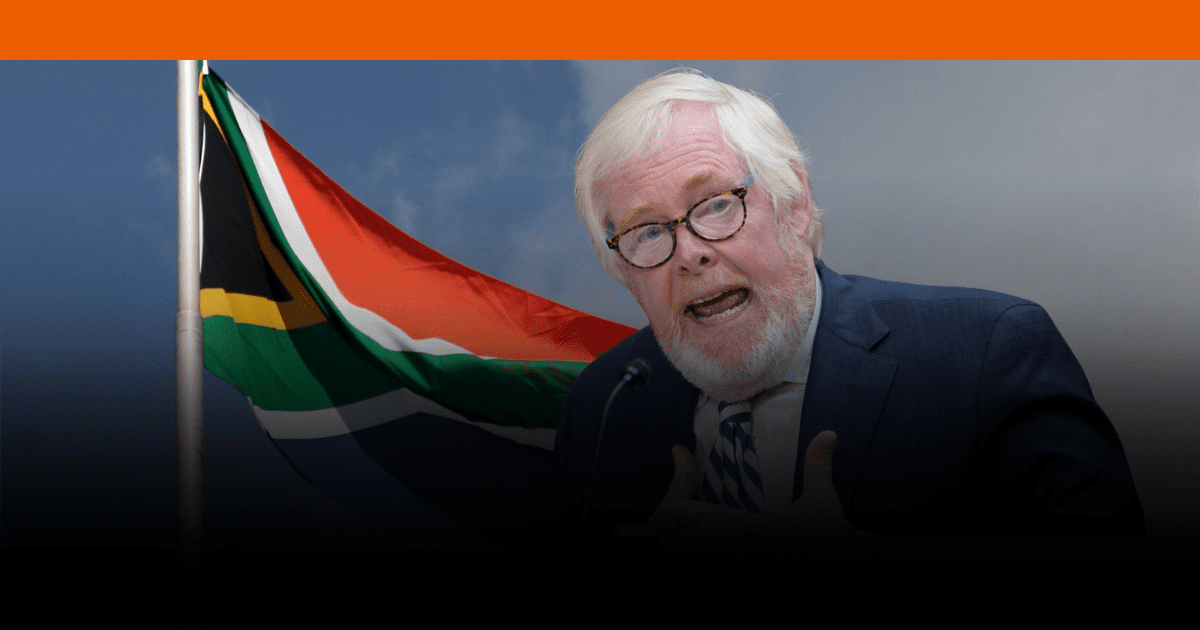
Hi there. 🙋🏾♀️
Diplomatic incidents, war in the Middle East, and, wait for it… Home Affairs possibly becoming more efficient. It has been one of those weeks.
In this week’s Wrap, we tell you how US President Donald Trump’s new ambassador to South Africa managed to trigger a diplomatic spat barely weeks into the job after insulting our courts in public. Meanwhile, the US-Israel war with Iran is starting to ripple through the global economy (and yes, that includes your petrol price). Back home, Sars is reminding influencers that brand deals count as income, the government is trying to turn cannabis into a formal industry, and one state-capture figure has finally been sent to jail.
Also in this edition: a rapper about to become Nepal’s prime minister, Gen Z outsourcing awkward conversations to ChatGPT, and why some South Africans abroad are quietly coming back home.
So, let’s dive into these stories and more in this week’s wrap, brought to you by the explain.co.za team. 😄
Format:
▁ ▂ ▄ ▅ ▆ ▇ █BRIEFS
NATIONAL
- Trend alert: Prodigal Saffas are returning home. Since 2000, at least 500,000 South Africans have left the country, according to Stats SA. Safety concerns and “a lack of job opportunities” have been the drivers. Now they’re changing their tune. Saffas from around the globe are coming home, citing family ties, a better quality of life, and global political turmoil. Employment agencies told Reuters there’s recently been a 70% increase in inquiries from South Africans wanting to follow suit. The grass isn’t always greener on the other side, my china.
- ANC-linked businessman Suleiman Carrim was neatly caught out at the Madlanga Commission this week. Chief evidence leader Advocate Matthew Chaskalson SC announced they’d discovered undisclosed payments by one of Carrim’s companies of more than R2 million to alleged crime boss Vusimusi “Cat” Matlala’s Medicare24 enterprise. Carrim swore he knew nothing about it (sure, buddy). Chaskalson asked how someone could fail to notice R2 million leaving their account. As one X user put it: “Imagine being Chaskalson’s child? You’re not getting away with anything in that household 😅!”
- Home Affairs might actually get more efficient. 🤯 On Monday, the department announced a digital system partnering with banks for Smart ID applications. Previously, banks hosted mini Home Affairs offices where clients applied online but still had to visit branches for biometrics, making scaling difficult. The new model connects banks directly to Home Affairs, allowing applications to be completed in minutes, without an appointment. Seventeen Capitec and Standard Bank branches will be live by the end of the week, with more to follow.
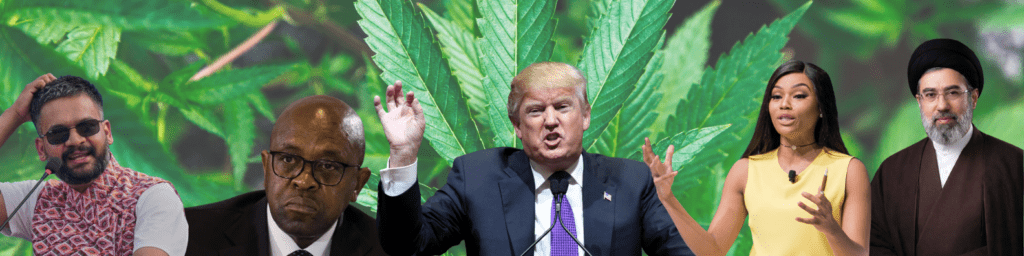
- Puff and pass: The government is changing cannabis rules to unlock a multibillion-rand industry. On Friday, officials from the trade, agriculture, health, and justice departments told Parliament new regulations and policies are being developed to grow the cannabis and hemp sector. The National Cannabis Master Plan aims to create jobs, boost the economy, support rural development, and formalise the currently illicit R36-billion market. A Cannabis Bill is expected in Parliament by mid-2027, meaning the green economy might soon be a little more green. 🌿
- Sars is coming for Bonang Matheba – proof the taxman follows influencers as closely as their fans. 😅 On 17 February, the revenue service slapped one of SA’s biggest media personalities with a final debt-collection notice for more than R7 million in alleged unpaid tax. Sars gave Bonang 10 business days to settle or make arrangements, but it’s unclear if the matter has been resolved – both parties cited taxpayer confidentiality. Sars has previously emphasised that non-traditional earnings are taxable. Influencers everywhere should probably log off their socials and check their tax returns.
INTERNATIONAL
- The bombing of an Iranian school, killing more than 170 people, most of them young girls, was likely by the US. That’s according to preliminary investigations by the US military, despite Trump blaming Iran “inaccuracy” in munitions. But it was the US that apparently targeted the school, which is next to a military base, in the opening hours of the war. It’s one of the most shocking US military errors in recent decades. Unesco called it a “grave violation” of international law, but experts say consequences will be limited.
- The US Justice Department has finally released Epstein files related to Trump. The agency said it had “mistakenly” withheld files previously. 🙄 The files, released last Thursday, include FBI interviews with an unnamed woman back in 2019. She alleged Trump and Epstein sexually assaulted her when she was between 13 and 15 years old. Trump has denied any wrongdoing. Some analysts, like Shaiel Ben-Ephraim, noted the war on Iran has conveniently buried the story. Google searches for the Epstein files have plummeted since the bombs started falling.
- Nepal’s elections saw rapper-turned-politician Balendra Shah’s Rastriya Swatantra Party secure a landslide. He won at least 122 of 165 directly elected seats – the biggest electoral majority since Nepal became a democracy in 2008. Shah, 35, known as Balen, is widely tipped to become prime minister, though final results, including proportional representation seats, are still being tallied. The RSP, formed just four years ago, rode a wave of Gen Z anger that toppled the previous government in September. Nepal’s old guard didn’t see this coming.
- Iran has a new supreme leader, but no one’s seen him around. Mojtaba Khamenei, 56, was named on Sunday to succeed his father, Ayatollah Ali Khamenei, who was killed in joint US-Israel airstrikes last month. The strikes also killed six of Mojtaba’s family members, including his wife and teenage son. Iran’s ambassador to Cyprus claimed Mojtaba was injured in the same attack, although Iranian officials said he “remains safe”. Meanwhile, Trump called his appointment “an unacceptable choice”, and Israel has warned it won’t hesitate to target him too.
- Gen Z is increasingly using ChatGPT to handle the awkward parts of their social lives. Some ask chatbots to write apologies, set boundaries, or analyse texts from friends and parents. The problem? Ages 10 to 19 are when people normally build social confidence the old-fashioned way. The pandemic, twinned with AI, hit Gen Z at a particularly vulnerable moment, when “the frontal lobe was starting to form”, one researcher said. The good news? It’s reversible: more talking to people, fewer consultations with the world’s most polite robot.
▁ ▂ ▄ ▅ ▆ ▇ █ BIG STORIES
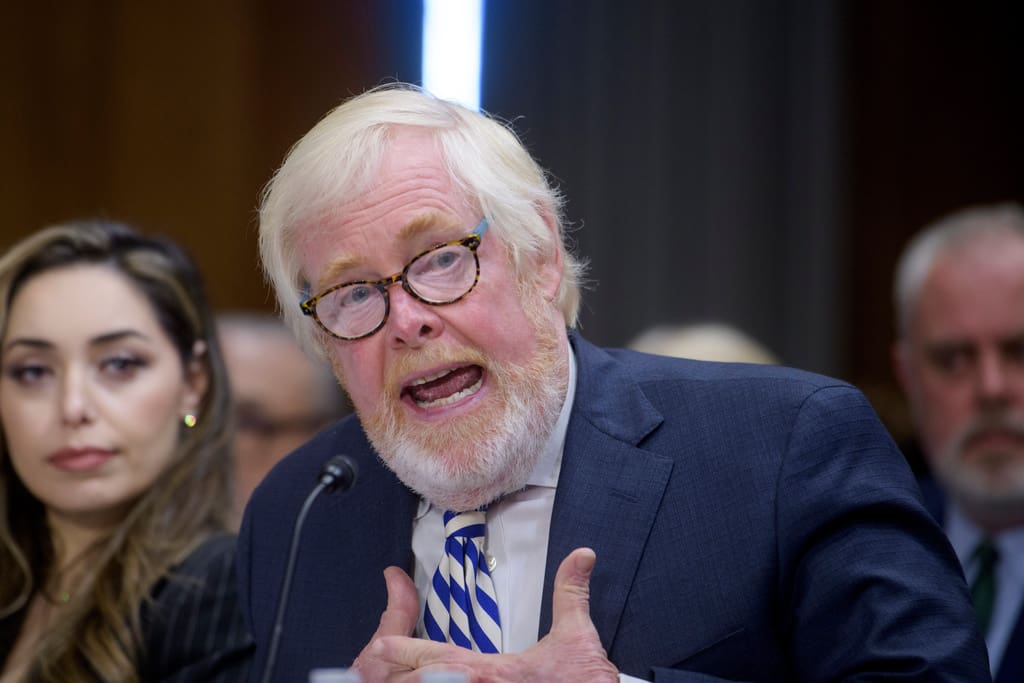
1️⃣ Not the smoothest landing for Trump’s man in Pretoria
Remember that new US ambassador we told you about last week? Leo Brent Bozell III had a rocky introduction, given his previous defence of apartheid back in the 1980s.
Well, he managed to make things even worse in his first few weeks, despite a charm offensive, which included trying to explain away his previous views and a visit to the Apartheid Museum.
The trouble began on Tuesday at a BizNews conference in Hermanus. Bozell told business leaders that Washington had five issues with South Africa: its ties with Iran, land reform, BEE rules affecting US companies, rural safety, and the struggle chant “Kill the Boer”. He said the US had “run out of patience” with our policies – as if we’re naughty school kids instead of a sovereign nation. (Dirco director-general Zane Dangor later said the five demands were part of trade negotiations and SA hadn’t received formal communication on them.)
Then came the bombshell.
“We may not get clarity on the ‘Kill the Boer’ chant that we believe is hate speech. I am sorry, I don’t care what your courts say: it’s hate speech,” Bozell said.
The Equality Court ruled in 2022 that singing the song was not hate speech in its historical context, a decision upheld by the Supreme Court in 2024 and left standing when the Constitutional Court declined to hear an appeal in 2025.
The backlash to Bozell’s attack on our judiciary and sovereignty was immediate. Radio talk shows lit up. The EFF called for Bozell to be expelled, and ANC secretary-general Fikile Mbalula warned that SA would not be “dictated to” by a foreign envoy.
At a press conference the next day, Minister of International Relations and Cooperation Ronald Lamola confirmed the ambassador had been summoned to explain himself in a formal diplomatic rebuke, known as a demarche.
Bozell was under pressure and, on Wednesday, he took to X, saying: “I want to clarify that while my personal view – like that of many South Africans – is that ‘Kill the Boer’ constitutes hate speech, the US government respects the independence and findings of South Africa’s judiciary.”
It’s a big deal because the Vienna Convention on Diplomatic Relations explicitly states diplomats must “respect the laws and regulations of the receiving state” and must not “interfere in the internal affairs of that state”.
Judicial independence is particularly hard won in SA, where it came under pressure during the state capture years under Jacob Zuma. There is a certain irony in a US envoy lecturing South Africa about its courts. Trump has repeatedly criticised judges who ruled against him, questioned the fairness of court decisions, and framed adverse rulings as political attacks.
As former deputy justice minister John Jeffery put it: “Accepting court judgments even if you disagree with them is a fundamental part of the rule of law, which he ironically claims is part of the ‘right conditions’ [for investment]. Seems rule of law is only needed if it agrees with you.”
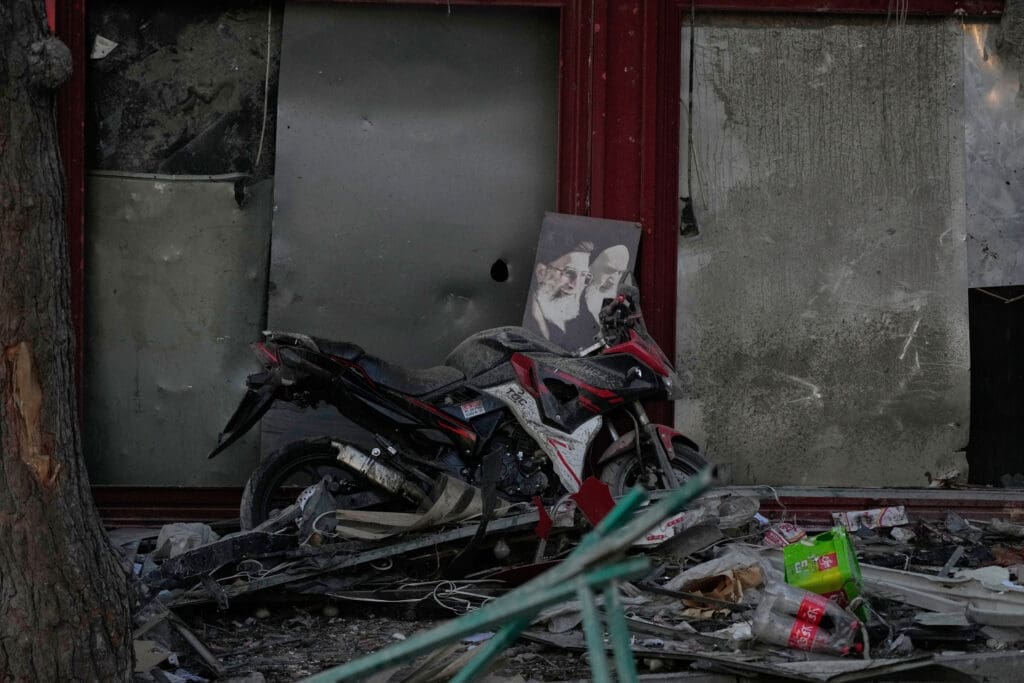
2️⃣You should care about the war in Iran – if you don’t, the petrol price might make you think again.
Twelve days into the US-Israel war against Iran, and the Middle East is already a different place. Lebanon has joined the fighting, Iran has struck Gulf states hosting US military bases, and Trump (in classic Trump fashion 🙄) declared the war would end soon, then threatened to hit Iran even harder if it didn’t. Make it make sense.
For most South Africans, this probably feels like someone else’s problem. It isn’t.
The most immediate concern is petrol. The Middle East produces about 30% of the world’s oil, and the war has already sent prices soaring – from about $70 a barrel to more than $100, before settling back down at $90. It’s still a significant jump. This is all because Iran effectively controls the Strait of Hormuz, a narrow waterway through which about a fifth of global oil supply travels. Now, with military threats, attacks on vessels, and insurers refusing to cover the route, maritime traffic has stopped almost entirely. South Africa imports 70% to 80% of its crude oil, which means global oil shocks translate directly to our forecourts, often within weeks.
Then there’s the rand, which has fallen about 12% against the dollar since the war began. A weaker currency plus pricier oil is a particularly nasty combination – imports become more expensive, which feeds into inflation, which in turn puts pressure on interest rates. This affects everything from home loans to government borrowing. Economist Iraj Abedian put it plainly in an interview with /explain/ this week: higher petrol prices and a weaker currency mean the whole economy starts to feel the squeeze. The Institute for Security Studies’ Jakkie Cilliers views the timing as particularly unfortunate. SA was looking at modest growth in 2026 after years of stagnation, but the war could derail that.
But there’s another trickier and more uncomfortable dimension. South Africa has positioned itself as a voice for diplomacy and dialogue in the Middle East, but some people aren’t convinced. Pretoria maintains close relations with Iran (both are Brics+ members), and some analysts point out SA has been notably louder about Israel’s conduct at the International Court of Justice than about Iran’s human-rights record. Abedian argues this inconsistency has damaged South Africa’s credibility as a potential mediator. A mediator needs to be trusted by all sides. Right now, it’s not clear whether South Africa is.
The war may feel like geopolitics happening at a great distance. But the effects – at the pump, in the shops, on the economy – have a way of hitting much closer to home. Watch the oil price. Watch the rand. And watch whether this conflict shows any real signs of ending to see if Trump’s “it’ll be over soon” is to be trusted.
3️⃣Vincent Smith is going to jail. It only took a decade.
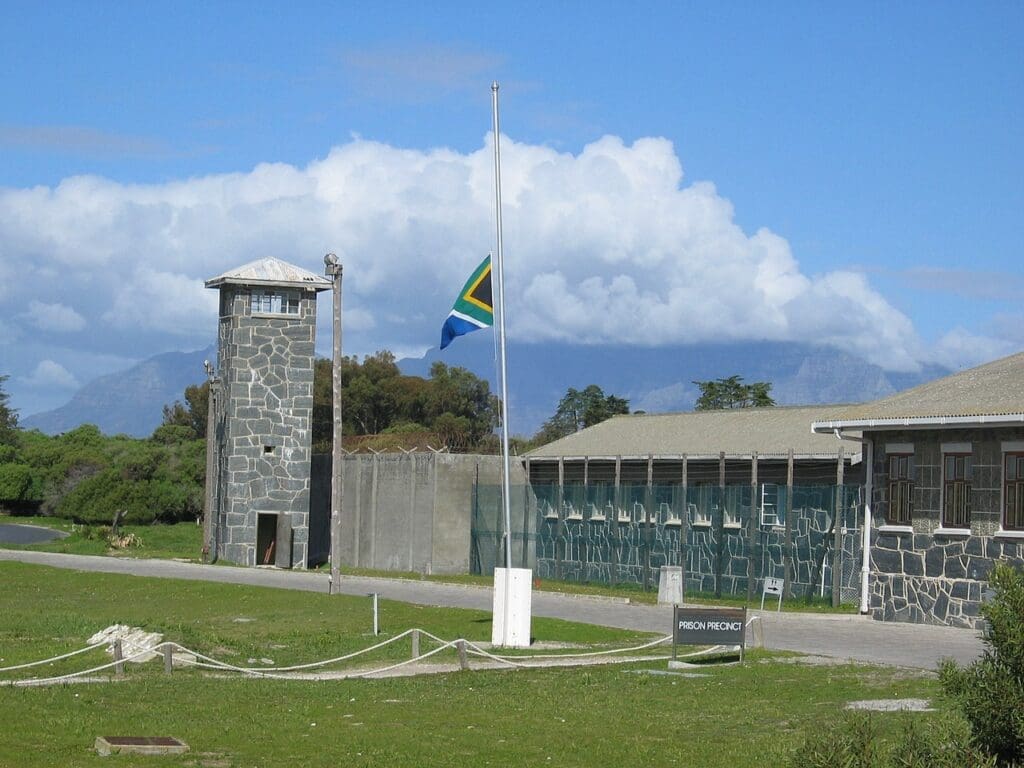
For years, the Zondo Commission felt like a very expensive, very thorough exercise in documenting corruption that would never actually lead anywhere. Name after name, scandal after scandal… and then silence from prosecutors, mostly. So when former ANC MP Vincent Smith was sentenced to an effective seven years in prison last week for his role in the Bosasa corruption saga, it landed differently. Because this case has actually led to accountability.
The details are grim, as they tend to be with Bosasa. Smith, who chaired parliament’s portfolio committee on justice and correctional services (the very committee meant to hold the system to account), was on the take. Bosasa, the facilities-management company that wormed its way into billions worth of government contracts, allegedly paid Smith in security upgrades to his Gauteng home and cash funnelled through his company, Euroblitz. In return, Smith used his parliamentary position to shield Bosasa from scrutiny. He also failed to declare about R28 million in company income to Sars. The judge didn’t mince words, calling corruption a scourge that needed to be addressed decisively. Smith pleaded guilty and reached a plea deal with the state, which is how he got seven years instead of twelve.
The significance here isn’t just in the sentence, but what it represents. This is the first major state-capture conviction to come out of years of Zondo Commission findings. The commission has identified dozens of implicated figures, from Jacob Zuma to former mineral resources minister Mosebenzi Zwane to former SAA chairperson Dudu Myeni, and the wait for consequences has been long enough to feel permanent. Smith’s conviction is a crack in that wall.
But let’s not get carried away. One conviction, via plea deal, of a figure who was relatively far from the top of the state capture food chain, is certainly progress. But it’s not a full reckoning. Many of the bigger names remain untouched, and the few cases that have resulted in prosecution – such that of former public enterprises minister Malusi Gigaba, for alleged kickbacks he received in relation to a Transnet deal – are still wending their way through the court system. This means the National Prosecuting Authority has a lot more work to do before anyone can credibly claim the wheels of justice are turning. Smith’s case took longer than it should have, and many of the people who benefited far more extravagantly from state capture are still living their best lives.
What this moment does do is send a signal – that the political class is not entirely untouchable. Whether the NPA has the appetite and the capacity to pursue the rest of the people implicated is the real question. For now, we’ll take the small win. It’s been a long time coming.
That’s it from us at The Wrap, an award-winning product of explain.co.za – simple news summaries for busy people. 💁🏾♀
The Wrap is sponsored by explain’s agency division. We specialise in content marketing for purpose-driven organisations, often with a pan-African reach. Mail info@explain.co.za for a quote.
🇸🇺🇧🇸🇨🇷🇮🇧🇪
Remember to share the love. 💫
Tell your friends to sign up:
📩 Email: http://explain.co.za/subscribe
📲 Our new WhatsApp channel: https://whatsapp.com/channel/0029Vac06yM8kyyLmOulb80J
_Till next time, goodbye from the team, Verashni, Kajal, Tshego, Theresa, and Kamogelo._ ✌🏽