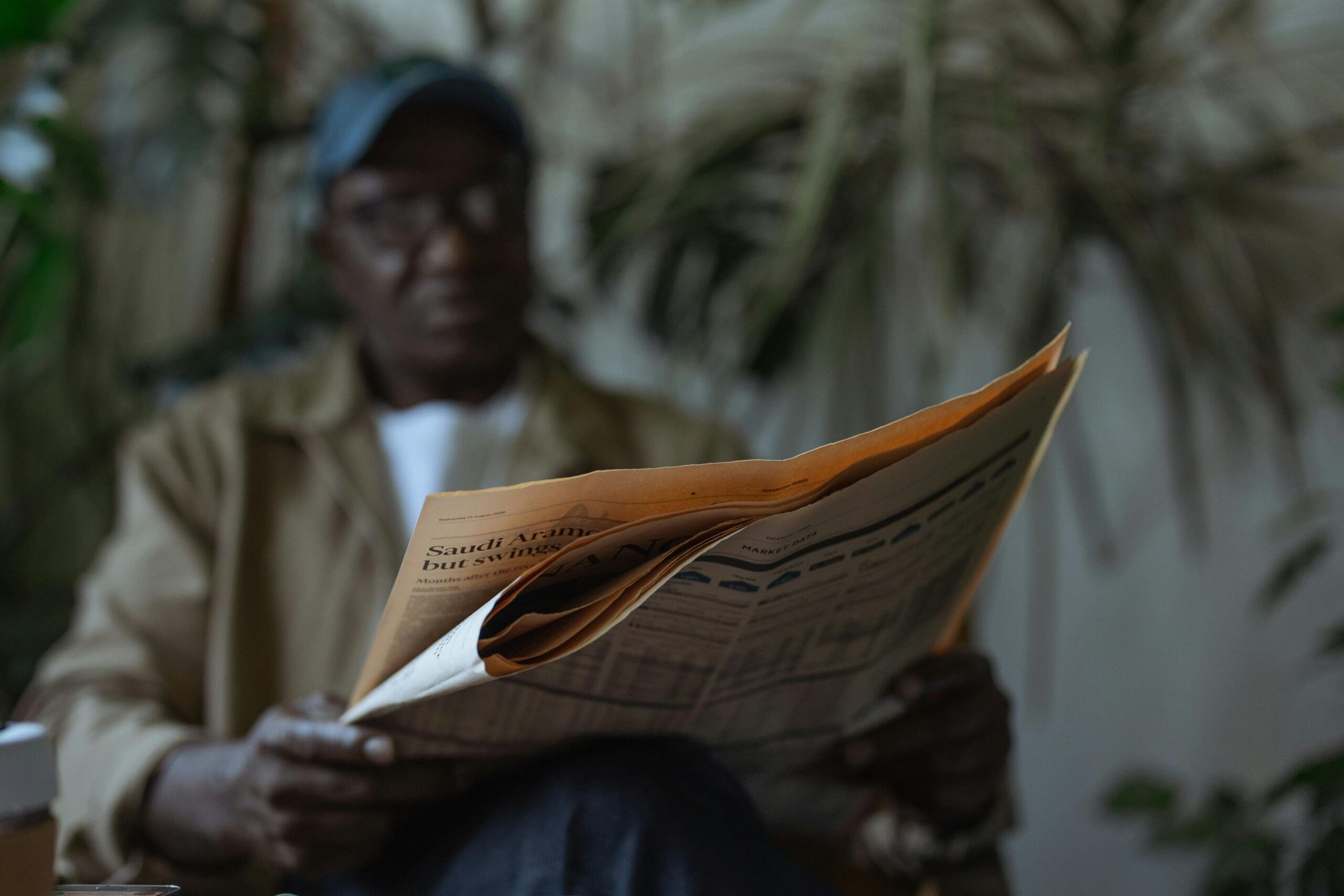
For 44 years, City Press has been a South African institution. On Sunday mornings, it landed on stoeps and kitchen tables across the country, carrying stories that other papers didn’t often bother to tell. Now, it’s closing down. And its demise raises questions that go well beyond one newspaper.
Why City Press mattered
The paper, originally called Golden City Press, was born in 1982 at the height of apartheid. The goal was simple, but radical for its time: create a newspaper that actually served black readers, who were largely ignored by mainstream media. It covered politics, inequality, and the liberation struggle – and swiftly built a reputation for hard-hitting political reporting and big investigations. By 1984, it had been acquired by Naspers, the company that would eventually own industry giant Media24.
Ask Mathatha Tsedu, a former editor of the paper, how City Press evolved, and he doesn’t hesitate. “It became probably the pre-eminent platform for black voices,” he told explain. “Unashamedly black voices as a platform.”
That was not a small thing in a country in which the media was built around and for a white minority. Dr Dinesh Balliah, the director of the Centre for Journalism at the University of the Witwatersrand, puts the paper’s role into even sharper relief.
“City Press has been home to many prominent names in South Africa’s media history,” Balliah says, “names that represent the power of the media to agitate for social change through the act of journalism.”
What went wrong?
The short answer is that the money ran out. But the longer answer is more complicated.
The print edition closed first, at the end of 2024, after circulation collapsed from a peak of about 350,000 copies to a fraction of that.
The hope was that the online version would pick up the slack. It didn’t. Part of the reason, Tsedu argues, was a decision to fold City Press’s online presence into News24, a move that was later reversed – but not before damage was done to the brand.
“Its brand was already being seen through the eyes of News24,” Tsedu says. Even when you clicked on a City Press story, you were routed through the News24 domain. The name survived, but the identity didn’t.
Now Media24 has confirmed it has begun consultations with City Press staff, with the intention of closing the newsroom down entirely.
Are black audiences being served?
Here’s where things get uncomfortable. Balliah’s take on this is succinct and direct: no.
“If you are asking me if the majority of black South Africans are represented as their multifaceted lives demand, the answer is no,” she says. “We still have a long way to go to fully represent the lived realities of the vast majority of South Africans, especially those who live outside of our cities.”
Dr Kate Skinner, from the Association of Independent Publishers, goes further. The problem isn’t just representation at the top: it’s the silence at the bottom. Small community publications in townships, small towns, and rural areas that cover local government, local culture, and local life are “struggling the most”.
“As the media struggles financially and becomes less and less sustainable, those little voices – the local voices, different languages – those are particularly being hurt, being silenced,” she says.
When you think about it, if you grew up in Soshanguve, or Tzaneen, or Cradock, where was your paper? Who was covering your ward councillor?
Why funding is running dry
This is a global problem dressed in local clothes. Making money from journalism online is hard everywhere in the world. But in South Africa, there are specific pressures that make it even harder for black-centred outlets.
Balliah raises one factor that often goes unspoken: most Black South Africans still don’t have enough disposable income to pay for news subscriptions. Instead, they spend on data, which gives them access to a sprawling mix of news, entertainment, and everything else on the internet. You can’t blame them for that. But it does mean the traditional reader-pays model is largely off the table.
Then there’s advertising. Skinner is blunt: corporate South Africa has never really shown up for community and black-focused media in the way it should. Big brands chase big audiences and mostly end up in the same handful of mainstream outlets. The small publications, which collectively reach real, underserved markets in townships and rural areas, are overlooked.
“There needs to be a huge campaign to basically explain to corporate South Africa that there is local media that should also be supported by the big brands,” Skinner says.
Is there still a future?
Tsedu’s answer is almost defiant: yes. As he sees it, there is no alternative to credible journalism. Social media will always exist, but people will turn to trusted sources when they need to know whether something is actually true. “In the end, there is no alternative to verified, reliable information,” he says.
Skinner points to an interesting approach in Brazil and other parts of the Global South: what she calls “resource mapping”. Instead of waiting for advertising revenue that never arrives, local newsrooms are building ecosystems: connecting with schools, clinics, NGOs, and community organisations. This enables them to access funding that isn’t just cash, but also volunteers, information exchanges, and shared infrastructure.
This also means communities are invested in the success of their own news outlets. “It’s literally about building society,” Skinner says. “From the bottom up.”
Although City Press is closing, the need it filled hasn’t disappeared. The question is who steps up, and whether the rest of us – as readers, as advertisers, as people who say we care about democracy – actually support them when they do.

Tshego is a writer and law student from Pretoria. A keen follower of social media trends, his interests include high fantasy media, politics, science, talk radio, reading and listening to music.
He is also probably one of the only people left who still play Pokemon Go.