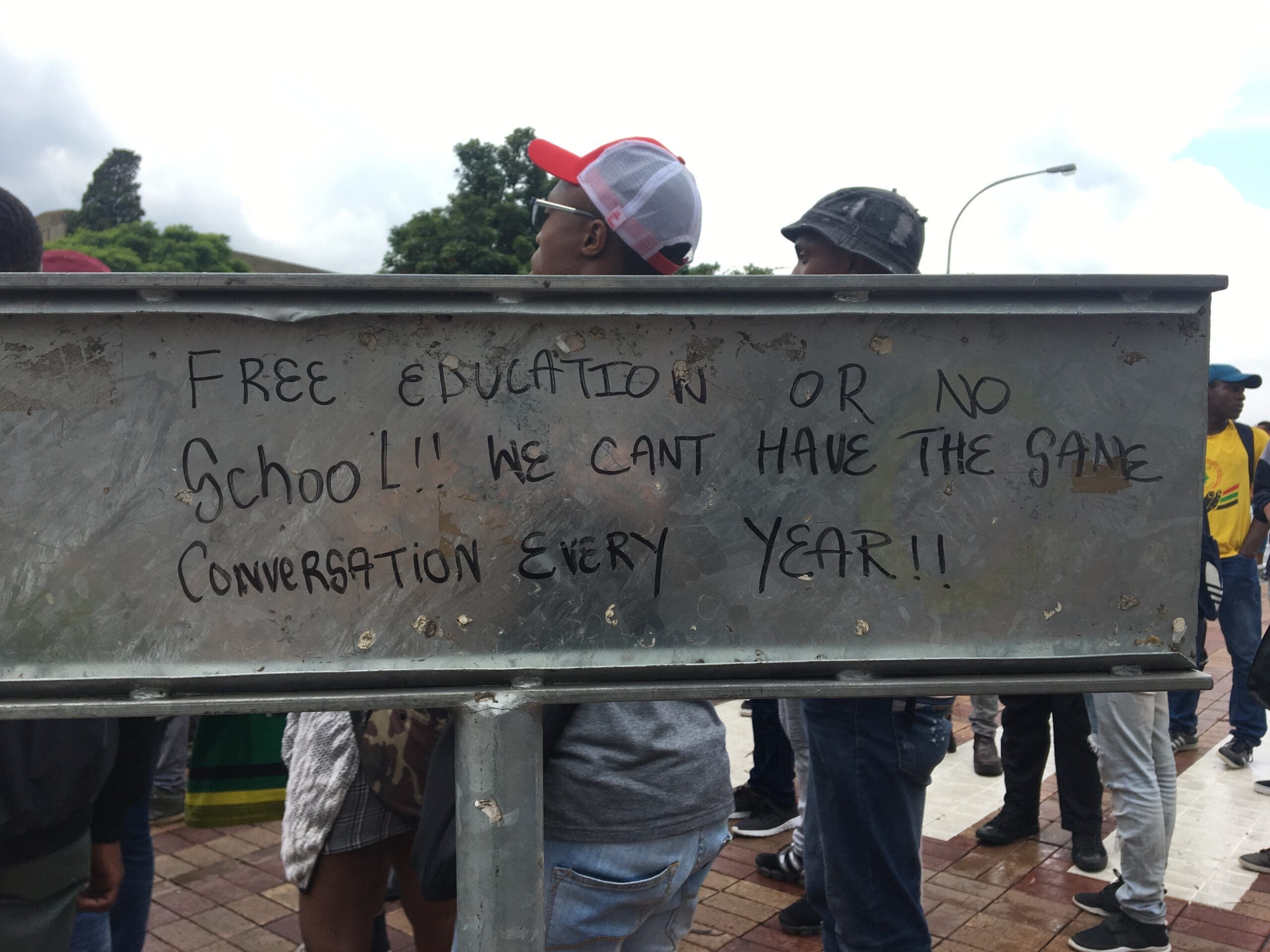
As the 2026 academic year kicked off, it was accompanied by the familiar chorus of student protests. The University of Cape Town (UCT), Nelson Mandela University (NMU), and the Cape Peninsula University of Technology (CPUT) were among the campuses affected.
There are many issues, but three main ones stand out:
- Delays in funding from the National Student Financial Aid Scheme (NSFAS)
- Students are being excluded from registering because they owe money to universities, and
- Accommodation shortages.
“What’s likely is that, within a week or so, most of the protests will have died down. We will carry on for the rest of the year as if there’s no problem, and then the same thing will happen next year,” Noor Nieftagodien, the head of the History Workshop at the University of the Witwatersrand, told explain.
What’s happening this year?
At UCT, a student was suspended for the February protests. This year, the protests have largely focused on students’ frustration about “fee blocks”. This prevents students who owe the university money from registering. Accommodation is another major issue because unfunded students are unable to secure accommodation.
UCT Economic Freedom Fighters (EFF) chairperson Mahlatse Dlamini said academically eligible students must be allowed to register. Dlamini also said the academic programme must be shut down until all students have registered.
Meanwhile, in Gqeberha, NMU took out an interdict against student organisations to prevent them from protesting oncampus. The NMU student representative council (SRC) condemned management’s alleged failure to address the accommodation crisis. The SRC said until the university helped students who lacked housing, the academic programme would continue to be disrupted.
This interdict is a cause for concern, according to Omhle Ntshingila, coordinator at the Right2Protest Project. She said interdicts silence student protests and don’t allow students to express themselves. She emphasised that students have the right to protest and should be allowed to exercise this right.
When President Cyril Ramaphosa delivered his state of the nation address (Sona) earlier this month, students from CPUT protested outside the City Hall precinct. Their grievance? Ongoing evictions from campus accommodation due to funding issues.
But higher education seems to have dropped down the government’s list of priorities. Ramaphosa didn’t acknowledge the protests in his Sona, although he did outline plans to build more universities and TVET colleges with specialised areas of focus.
What Ramaphosa did mention was the student accommodation crisis. The president said he’d directed the education minister to work with financial institutions on “innovative ways in which the government can provide student accommodation”.
In the 2026 budget, R22.7 billion was allocated to education administration. NSFAS was allocated more than double that, at R54.3 billion.
@explain.co.za February hits… and so do campus protests. 🎓✊ NSFAS delays. Historical debt. No accommodation. More than a decade after #FeesMustFall — why are we still here? Temporary fixes every year. No long-term plan. And students are the ones paying the price. #Explainsaywhat #ExplainNews #protests #nsfasmoney #NSFAS #studentprotest #feesmustfall #highereducation #CampusCrisis #SouthAfrica #SAnews #UniversityLife #StudentDebt #YouthPolitics #educationmatters #ProtestSeason #Mzansi #Explainer #NewsTok #currentaffairs #LearnOnTikTok #foryou #foryoupage ♬ original sound – /explain/
What’s the big picture?
Nieftagodien knows the issues well. He says the cycle of protests goes back at least 15 years.
One of the big triggers is exclusion, either due to historical debt or inadequate funding.
Ntshingila told explain the issues affecting students are systemic. The fact that they aren’t being addressed is causing a perpetual protest culture.
Universities’ temporary fixes, such as using discretionary or donor funds, are just “band-aids on the big problem”, Nieftagodien says. He adds that it is not up to universities to pay students’ fees – this should be the state’s responsibility.
What is the government doing?
The government has taken too long to respond to the multiple issues affecting higher education.
The number of students who qualify for university entry far outnumbers the number of available places. “We have too few public universities to accommodate all the students who qualify and who would like to have a tertiary education,” Nieftagodien says.
Ntshingila agrees, saying: “It’s urgent for the government to attend to the building of new universities, but also to [provide] temporary relief for students currently needing assistance.”
Nieftagodien describes the situation as a “perfect storm”. Students who don’t qualify for NSFAS rack up massive debts at university. When they graduate, it is nearly impossible for them to repay their debts, given the record levels of youth unemployment in South Africa.
And the blame can be largely laid at the government’s doorstep. Instead of delivering on its mandates and fulfilling policy promises, it reacts only when there’s a crisis.
Then there’s NSFAS and its many issues, which have been well documented. These include delays in disbursing funds to students, accommodation funding caps, and general maladministration at the scheme, among others.
This week, Finance Minister Enoch Godongwana said he did not see the value of NSFAS, as opposed to a bursary scheme. He said the R700 million spent each year on administering NSFAS could cover the fees of 9 000 students.
Ntshingila agrees with the minister. Previously, the system was decentralised and universities and NSFAS shared the responsibility of ensuring students received their funds. According to Ntshingila, this worked very well.
But the system fell apart when student aid was centralised under NSFAS in 2016. Ntshingila says this is another example of the government’s lack of proper planning.
What’s the way forward?
The government needs to stop reacting. Instead, it needs to address the issues facing students and universities proactively.
Until that happens, young people will make their voices heard – one way or the other.
- At the election polls
Nieftagodien says the state’s inability to adequately deal with the multiple crises facing education further alienates young people from politics and political parties. Young people will show their disgruntlement at the polls.
- On the streets
The Fees Must Fall movement did not emerge out of nowhere. It was built by students who were angry and disappointed at the system after years of frustration. Nieftagodien says that kind of eruption could happen again, particularly in the context of South Africa’s own history, but also considering broader global youth movements.
“What one is seeing across the world is young people, in one country after the other, losing so much hope in the future; losing hope in what the status quo is failing to deliver, which has erupted into protests,” Nieftagodien says. “Often these protests have not been planned over a long time: they’ve erupted at certain moments.”
Higher education has been a flash point in South Africa for decades. How long the current cycle of protests can continue without sustainable solutions is anyone’s guess. As protesting students said as far back as 2019: “We can’t have the same conversation every year.”