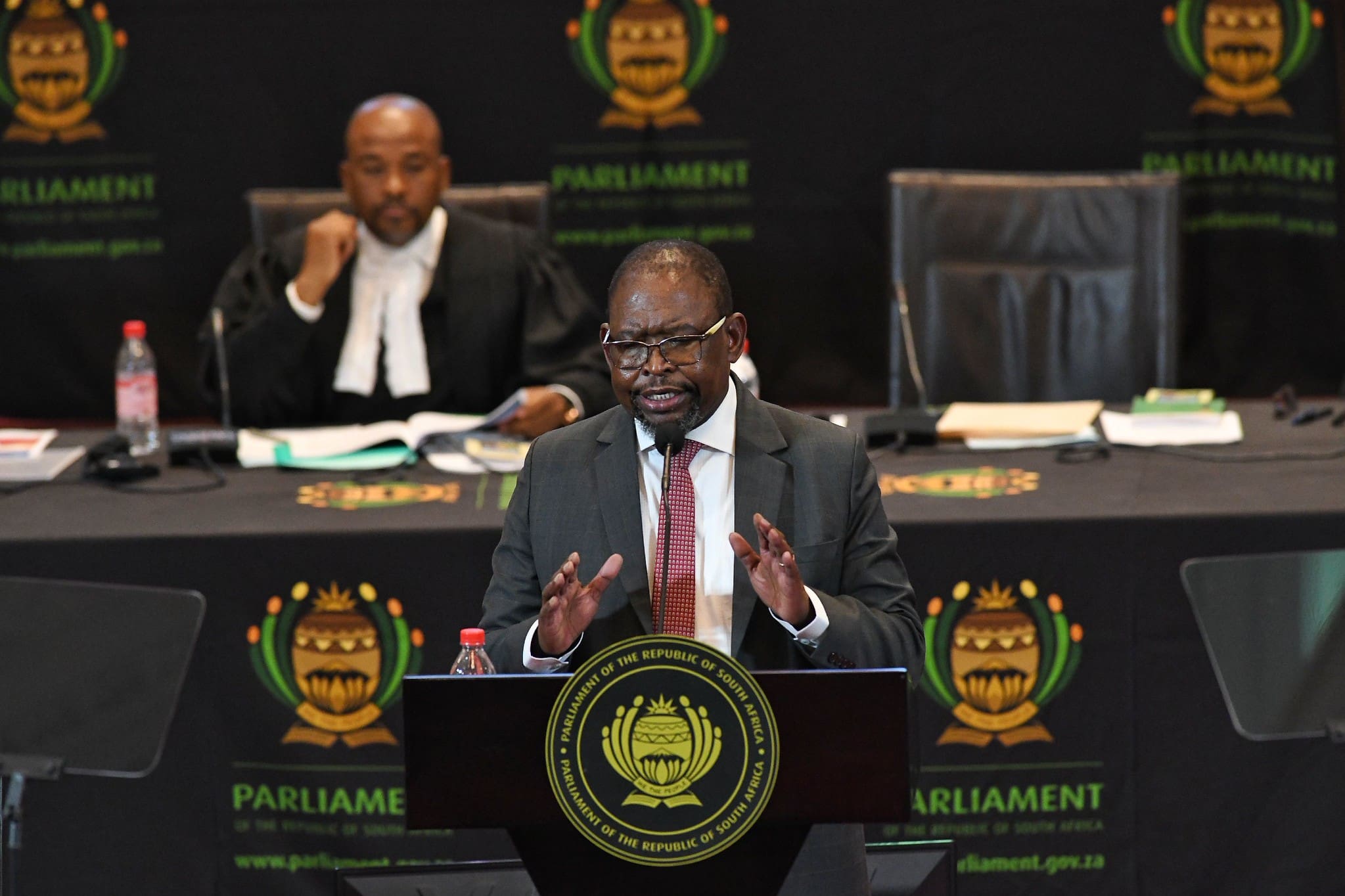
Things are looking up for South Africa. Growth outlook is steadily improving. For the first time in 17 years, debt will stabilise. The budget deficit (the difference between government revenue and spending) has narrowed. These were the big announcements that defined Finance Minister Enoch Godongwana’s fifth budget speech.
“Faced with this crisis, we chose not to be defined by it. Instead, we turned it into a catalyst for change,” Godongwana said.
Unlike the 2025 budget speech, this year’s edition did not need three iterations. The minister got his speech over the line during the first try. It is an election year, and political parties need to avoid a repeat of last year’s fiasco.
Following on from President Cyril Ramaphosa’s State of the Nation Address (Sona), Godongwana set out how the Sona priorities will be funded.
Read our Sona takeaways piece here.
Let’s break down the important points.
1. Debt stabilisation
For the first time since the 2008 financial crisis, the minister announced that debt will not grow as a percentage of South Africa’s gross domestic product (GDP). This is a good sign for the country, with the minister noting that South Africa had secured its first credit-rating upgrade in 16 years.
In addition, borrowing costs have eased, creating space for growth and development.
The economy is expected to grow 1.6% in the 2026 financial year, a modest increase from 2025. Looking ahead, real GDP growth is forecast to reach 2% by 2028. This is supported by continued momentum on structural reforms, improving confidence, lower interest rates, and higher investment.
Although our gross debt still isn’t great, it has stabilised as a share of GDP in 2025/26, at 78.97%. The minister has forecast that it will decline for the next three years.
2. Addressing the water crisis
The water crisis dominated conversations before Sona. In his budget, Godongwana was tasked with finding the money to solve this issue.
The minister said municipalities must return to the foundational principle of fiscal integrity, which he characterised as consistently being flouted. “Revenue collected for a specified function must first sustain that function before any cross-subsidisation can occur,” the minister said, issuing a warning to municipalities.
To address the water crisis – as well as other municipal issues – Godongwana announced the allocation of R27.7 billion over the medium term to a performance-linked reform for metro trading services in electricity, water, sanitation, and solid waste.
He said qualifying municipalities, including eThekwini and the City of Johannesburg, had begun implementing council-approved improvement plans to ring-fence revenue and reinvest in water and electricity.
Ramaphosa had first announced this solution to the water crisis during Sona: incentives to ensure that revenue from water usage is put straight back into fixing pipes, reservoirs, and pumping stations. Now the government has the funds to make that happen.
3. The fuel levy and ‘sin tax’ are up
There wasn’t a fight around tax increases this year, as happened in 2025 with the proposed VAT increase, but the Gondongwana said increases to certain taxes were unavoidable.
He was referring to “sin tax” and fuel levies. Time to brace yourself…
The general fuel levy will be going up by 9c a litre for petrol and 8c a litre for diesel. For carbon fuel, the levy will increase 5c a litre for petrol and 6c a litre for diesel.
For those of you planning to have a fun night out, the sin tax has once again been increased.
This is what you will be paying in extra taxes:
- The tax on a 20-pack of cigarettes rises from R22.81 to R23.58.
- Pipe tobacco rises by 28c per 25g, and cigarette tobacco by 87c per 50g.
- Cigars rise by R4.56 per 23g.
- A 340ml can of beer or cider increases by 8c.
- A 750ml bottle of wine goes up by 15c.
- A 750ml bottle of spirits will increase by R3.20.
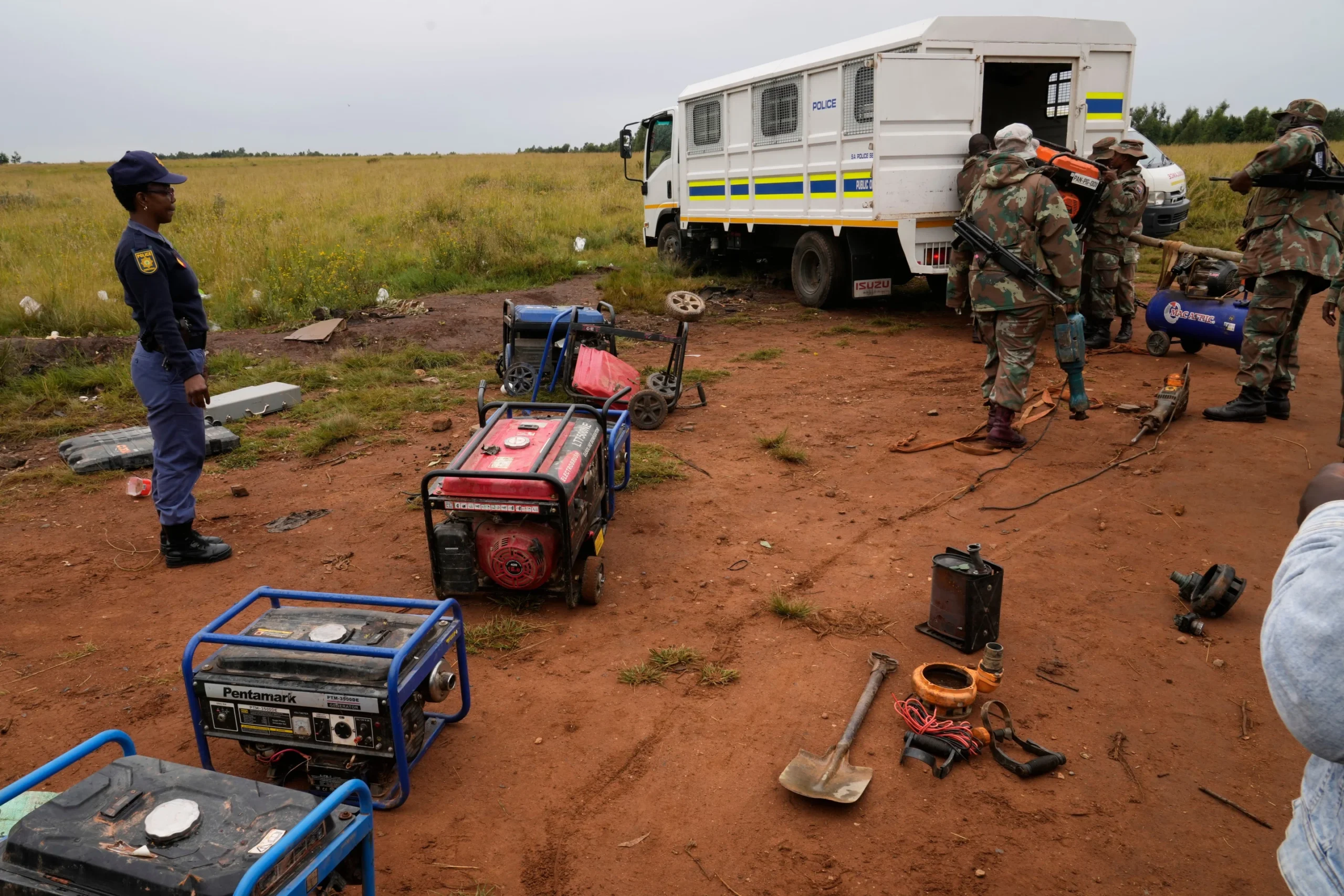
It was big news in the world of tobacco producers when British American Tobacco announced it would close its South African operations because of competition from the illicit tobacco trade. Godongwana emphasised that this illicit trade represents a major threat to hard-won gains for the economy.
4. Most grants increased, but SRD grant stays flat
Economic wins are important for the government. But for ordinary South Africans, the important thing is how much the government will be spending on making their lives better.
Godongwana said that in 2026/27, the government will be spending R2.67 trillion.
To break it down, basic education, health, and social protection will constitute 70.3% of what the government calls the “social wage” in 2026/27.
Social grants are always a big part of the budget as they provide a lifeline for 26.5 million beneficiaries. R292.8 billion has been allocated to social grants, meaning there’s been an increase for most of the grants.
- The old-age grant, disability-grant, and care-dependency grant rise by R80 in April 2026, to R2 400.
- The veterans grant also increases by R80, to R2 420.
- The foster care grant goes up to R1 290 in April, a R40 increase and to R1 300 in
October, a R10 increase.
- The child-support grant and grant-in-aid grant will increase by R20 to R580.
During Sona, Ramaphosa noted that the social relief of distress (SRD) grant would be redesigned “to more effectively support livelihoods, skills development, work opportunities and productive activity”.
However, there was no budget increase allocated to the grant, which is set to continue in its current form over the next year. It is possible that basic income support will come into effect in 2027, but this wasn’t specifically mentioned in the budget.
Read more about social grants and the basic income policy here.
Another important initiative is South Africa’s HIV and Aids programme. The United States withdrew funding from its President’s Emergency Plan For AIDS Relief (Pepfar) last year. Godongwana announced that R26 billion will be allocated to provinces to bolster the HIV and Aids programme. Some of the funding will be repurposed by provinces to meet their obligations towards Pepfar.
5. Local government needs work
With the local government elections set for later this year, municipalities will be in the spotlight for the next few months.
In Sona, Ramaphosa already expressed concern at how local government is run, saying: “Water outages are a symptom of a local government system that is not working.”
The numbers don’t lie. Audits of most municipalities show that they are in financial distress, with only 16% achieving clean audits in the 2023/24 financial year.
This was emphasised by Godongwana, who said that many municipalities were in financial and operational distress and, therefore, unable to deliver the services they should.
To support the provision of free basic services to 11.2 million households, the minister announced that local government would be allocated funding of R86.9 billion.
Building on Ramaphosa’s Sona promises, Godongwana said the Treasury was revitalising support for development of long-term financial plans to improve local government.
Looking to the future
After a messy budget last year, this year’s speech featured no major bold reforms. It was all about celebrating the wins, while introducing subtle tweaks. The minister referred to the uncertainty of global politics and finances, suggesting a window of opportunity for the established norms to be shifted.
His speech was about “fiscal strategy that advances inclusive growth”, and he noted that sustainable public finances played a crucial part in achieving this.
The budget has been delivered. It’s now up to people in government to actually carry out the mandate Godongwana referenced: “fulfilling our constitutional promise to do all that it takes for our people to live with dignity and prosperity”.