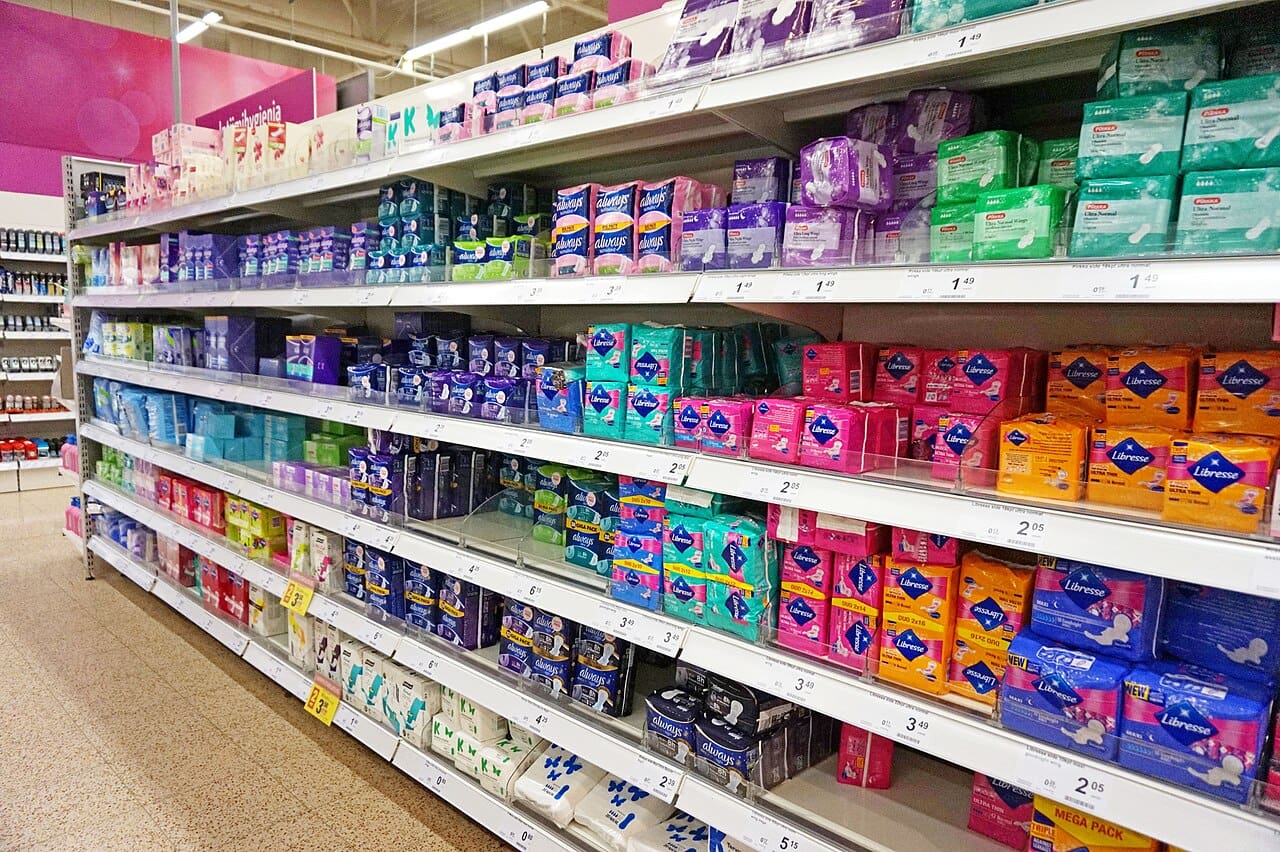
Menstruators are panicking after the release of a concerning study last week. And there’s plenty of reason for the millions of South Africans who menstruate to be worried. University of the Free State (UFS) researchers tested several menstrual products and found they all contained hormone-disrupting chemicals – even when marketed as “free from harmful chemicals”.
The levels of these chemicals detected in a single product may be small, but menstruators use these products for several days each month, over many decades. The cumulative exposure to toxins has been linked to hormonal imbalances, fertility problems, endometriosis, and even certain types of cancer.
What did the research actually find?
The main takeaway is that every one of the 23 sanitary pads and pantyliners the researchers tested contained at least two endocrine-disrupting chemicals (EDCs).
The research, published in the Science of the Total Environment journal, provided the first comprehensive data on EDC contamination in sanitary pads and panty liners sold in South Africa.
The research team analysed 16 brands of sanitary pads and seven types of pantyliners for sale in South Africa. If you’re wondering if your preferred brand was among them, the brands tested include Always, Anna Organics, Kotex, My Time, Libresse, Lil-lets, Stay-free and Flo.
The researchers focused on three groups of EDCs, and their findings showed widespread contamination across all the products tested. Every single pad and liner contained at least two of the target chemicals.
These chemicals are not always added on purpose, but sometimes migrate into the products during the manufacturing process or leak from plastics and adhesives.
“The heat-pressing process can cause these chemicals to move into the top layer that touches your skin,” explained Professor Hendrik Visser, one of the authors of the study.
A lack of labelling
The study found that, unlike food or cosmetics, the chemical composition of menstrual products is not clearly labelled. This means consumers are unable to make informed choices about their menstrual-health management.
The research team say there is a need for clearer labelling, safer material choices, and greater consumer awareness so individuals can make decisions that align with their health priorities.
Nokuzola Ndwandwe, a menstrual-health-rights activist and founder of the Team Free Sanitary Pads, agrees with this. In 2025, she gave a presentation to Parliament’s portfolio committee on health, emphasising that menstrual products being sold in South Africa did not meet regulatory standards.
That’s why Ndwandwe and other activists have been pushing for a Menstrual Health Rights bill. They want menstrual health to be recognised as a fundamental human right.
The activists’ proposed bill includes better regulation of menstrual products and calls on the government to make menstrual products free.
@explain.co.za Your pad might contain hormone-disrupting chemicals. 😳 A new South African study tested common sanitary pads and pantyliners — and found endocrine-disrupting chemicals in every product sampled. Before you panic: here’s what that actually means, what researchers say, and what you can do. Periods are stressful enough. Transparency shouldn’t be optional. #ExplainSayWhat #MenstrualHealth #PeriodTok #PeriodProblems #WomensHealth #ReproductiveHealth #hormonehealth #EndocrineDisruptors #PeriodCare #southafricatiktok🇿🇦🇿🇦 #SAtiktok #HealthTok #learnontiktok #didyouknow #ConsumerRights #HealthAwareness #BodyLiteracy #FYP #foryoupagethis #NewsTok #Explainer #StayInformed ♬ original sound – /explain/
How can you stay safe?
The new study has provided us with more information, but it leaves menstruators with many questions about products they’ve probably been using for years.
We asked the “Minister of Menstruation”, Candice Chirwa, an academic, author, and menstrual-rights activist, for advice on what to do.
Listen to your body
Menstruators should listen to their bodies to see how they are responding to products, Chirwa says. If you are experiencing intense period pains and suspect the product you’re using is to blame, it’s time to try out other options. And don’t forget to have a talk with your doctor as well.
Try reusable options
These are not affordable for everyone, but Chirwa says you should use reusable options if you can. These include reusable pads, menstrual cups, and period underwear. These are all more environmentally friendly than regular pads or tampons and do not contain any harmful chemicals.
“Having your own agency and knowing what’s right for your body matters because you are your biggest advocate for yourself,” Chirwa told explain.
Ask others for advice
Chirwa says menstruation is a subjective experience for everyone, and only you will know what’s right for your body. However, she encourages young people to be open and ask other people for advice. There’s no need to be isolated during this experience.
“If you have a friend who’s tried a menstrual cup, ask them about their experience. If you’ve seen this person always talking about period underwear, ask them,” Chirwa says. “Get as much information as possible.”
Menstrual health is a human right
Ndwandwe also weighed in with some advice. Primarily, she says this isn’t a time to panic. Instead, she views it as an opportunity for taking constructive action on women’s health issues.
She says menstruators should be conscious of what products are available for sale and boycott those that contain harmful chemicals. Like Chirwa, she says this is a chance for menstruators to try out reusable products.
But Ndwande is also concerned about the bigger picture and wants menstrual-health-rights codified in laws. “We need a regulation that actually protects the rights of women and young girls in the country,” she says.
Chirwa says safety shouldn’t be a luxury option: it should be the baseline. She adds that consumers should pressure companies manufacturing unsafe products and hold them accountable.
There is a need for stricter regulation, accountability and transparency, Ndwandwe says. “It’s a human-rights violation that there’s no transparency about something that concerns the reproductive health and rights of young girls and women.”
The research continues
Visser from the research team also had advice for how consumers can protect themselves. “Look for the OEKO-TEX Standard 100 verification – an international standard – or use a reusable sanitary towel.”
Meanwhile, the research team is working on new innovations. “Our team is in the process of developing a reusable sanitary pad with superpowers – antimicrobial properties,” Visser says.