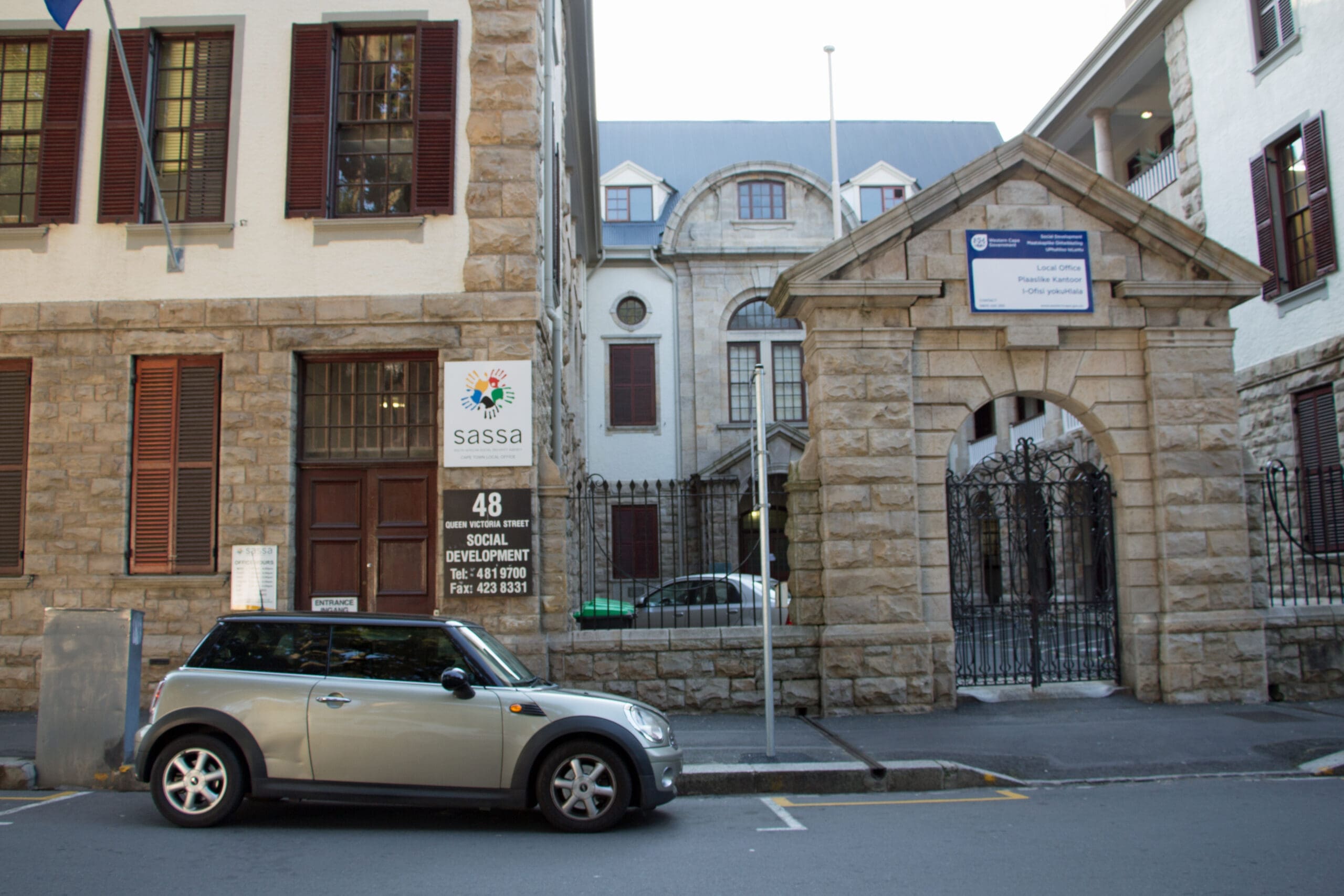
The South African Social Security Agency (SASSA) confirmed last week that 70, 000 grants were temporarily suspended due to non-compliance and verifications. The agency stated that the move is meant to ensure that only qualifying beneficiaries receive support.
But in a country with sky-high unemployment, deep inequality and rising food prices, SASSA isn’t just another government department — it’s the backbone of the social safety net. So when payments are delayed, applications are rejected, or verification rules tighten, it’s not an administrative hiccup. It’s a crisis for millions of households.
First, what is SASSA?
The South African Social Security Agency (SASSA) is responsible for paying out social grants to nearly 19 million people every month. That includes:
- The old age pension
- Child support grants
- Disability grants
- The foster care grant
- And the Social Relief of Distress (SRD) grant
For many families, these grants are not “extra money”; they’re the only income coming in.
So when there are delays, glitches or policy shifts, the impact is immediate.
What’s the current issue?
The latest controversy centres on stricter verification processes and payment disruptions that have left some beneficiaries confused, flagged, or unpaid.
SASSA says it is tightening checks to prevent fraud and ensure grants only go to eligible recipients. That includes cross-checking bank accounts and income data with other government databases. They’ve said that the process has so far saved the government about R44 million a month.
In theory, that sounds reasonable.
In practice, it has meant:
- People being flagged incorrectly
- Payments being delayed
- Beneficiaries struggling to understand why they were rejected
For someone living hand-to-mouth, even a few days’ delay can mean going without food.
Read more about our previous coverage here.
@explain.co.za Thousands of grants were suspended due to non-compliance, and millions of rands were saved for the government. Good news for SASSA, right? We dig a little deeper to see what’s behind the big numbers… 👀 #SASSA #socialgrants #fyp #southafrica #SouthAfricanSocialSecurityAgency #nationaltreasury #government #southafricangovernment #departmentofsocialdevelopment #grants #basicincomegrant #socialsupport #politics #news #budget #money #instituteforEconomicJustice #explainsayswhat ♬ original sound – /explain/
Why is SASSA tightening the rules?
The government has long argued that fraud and “double-dipping” (people receiving grants while also earning income) cost the state millions.
The SRD grant, in particular, was introduced during COVID and has been controversial because of how quickly it was rolled out and how difficult it is to administer at scale.
With high unemployment and fiscal pressure, Treasury is watching every cent. That means more scrutiny, more verification, and less tolerance for error.
But there’s a trade-off: the tighter the system, the higher the risk of excluding legitimate beneficiaries.
So what changed?
In April 2025, National Treasury instructed SASSA to step up its oversight. It now has to submit quarterly reports on suspended, cancelled or reviewed grants, and intensify income verification through database cross-checks with financial institutions and biometric authentication for beneficiaries flagged as suspicious.
To do this, SASSA partnered with:
- Credit bureaus
- Banks
- The South African Revenue Service (SARS)
- The National Student Financial Aid Scheme (NSFAS)
- Government payroll systems
- Correctional services
Treasury said these measures were essential to combat fraud, and warned that failure to comply could result in grant funding being withheld.
SASSA CEO Themba Matlou told Newzroom Afrika that the tighter controls are necessary to meet legislative requirements and maintain the integrity of the system.
Sounds reasonable. So what’s the problem?
On paper, stronger oversight makes sense. But the rollout has sparked concern.
In July 2025, during a joint meeting of Parliament’s Portfolio Committee on Social Development and the Standing Committee on Appropriations, MPs raised alarm about the strict compliance conditions attached to SASSA’s budget.
They flagged:
- Data inaccuracies
- The burden placed on beneficiaries
- The risk of unfair exclusion
- And whether SASSA actually has the operational capacity to implement these changes without disrupting payments
That last concern is key.
By December 2025, reports showed SASSA had filled less than 50% of permanent positions in local offices nationwide due to budget constraints. In other words, the agency is being asked to do more oversight, with fewer staff.
@explain.co.za The Basic Income Grant has been delayed… again 👀 Are social grants just survival money — or do they actually grow the economy? We asked an economist to break it down. What do you think? 💬 #BasicIncomeGrant #SRD #SocialGrants #SouthAfrica #EconomicTok #PolicyTalk #MzansiNews #ExplainSayWhat #Mzansi#SApolitics#EconomicJustice#PublicPolicy#FinanceTok#MoneyTalk#UnemploymentCrisis#CareWork#DevelopmentEconomics#WelfareState #CostOfLiving #YouthUnemployment#GovernmentNews#BreakingNewsSA#CurrentAffairs#LearnOnTikTok #fyp ♬ original sound – /explain/
What have the reviews found?
According to Matlou, SASSA has reviewed around 240,000 grants so far. Data cross-checks identified about 420,000 accounts that required review.
After notifying beneficiaries, often via SMS, about suspected additional income, roughly 70,000 people were found to have gained employment or other income, meaning they no longer qualified under SASSA’s rules.
Siyanda Baduza, a junior researcher at the Institute for Economic Justice, told explain that while reviews are important to protect the system’s integrity, they must account for SASSA’s real-world capacity to implement them fairly and efficiently.
Fraud crackdowns are necessary — but the system isn’t easy to navigate
SASSA says the intensified reviews are about protecting public funds.
CEO Themba Matlou has explained that after identifying fraudulent cases in the system, the agency engaged Treasury to strengthen verification processes and prevent money from being misused. The goal, he says, is to safeguard the integrity of the grant system.
Importantly, SASSA does not unilaterally cancel grants. There is an appeal process handled by an independent tribunal, largely overseen by the Department of Social Development. If a review is found to be unjust, it can be reconsidered.
But on the ground, the experience looks very different.
Social grant activist Elizabeth Raiters told explain that many beneficiaries only discovered their accounts were under review when they tried to withdraw money, and found nothing there. No warning. Just an empty balance.
Even when people do receive notification, getting the issue resolved isn’t simple. Local SASSA offices are frequently understaffed, meaning long queues and multiple visits.
And that staffing problem is real.
The Department of Social Development was allocated R294 billion for the 2025/26 financial year (an increase from the previous year), of which R284 billion (96%) was allocated for social assistance. Only a small portion covers operations, including staffing and infrastructure.
At the same time, the reviews have become more demanding.
They now include:
- Compulsory biometric enrolment for new applications
- “Life certification” checks for identified beneficiaries
- Targeted reviews of specific groups
For older persons’ grants, biometric verification is now often required because of cases where deaths were not registered and grants continued to be paid. But this means elderly beneficiaries must physically visit a SASSA office — not always an easy task.
There is an online system, but it requires a smart ID. And if you don’t have one, you first need to visit Home Affairs. That adds another layer of bureaucracy.
There is broad agreement that reviewing the system isn’t inherently bad. But without fixing operational bottlenecks and staffing shortages, the risk is that legitimate beneficiaries end up suspended simply because they couldn’t get to an office in time.
What happens next?
A few key questions remain:
- Will SASSA improve communication with beneficiaries?
- Can it fix verification errors quickly?
- Will the SRD grant be extended again — and if so, for how long?
- Can the state afford a long-term basic income model?
The bigger issue is trust. When people don’t know if their grant will arrive, confidence in the system erodes.
And in a country with one of the highest inequality rates in the world, social grants are not a side policy. They are the social safety net.