Hi there. 🙋🏾♀️
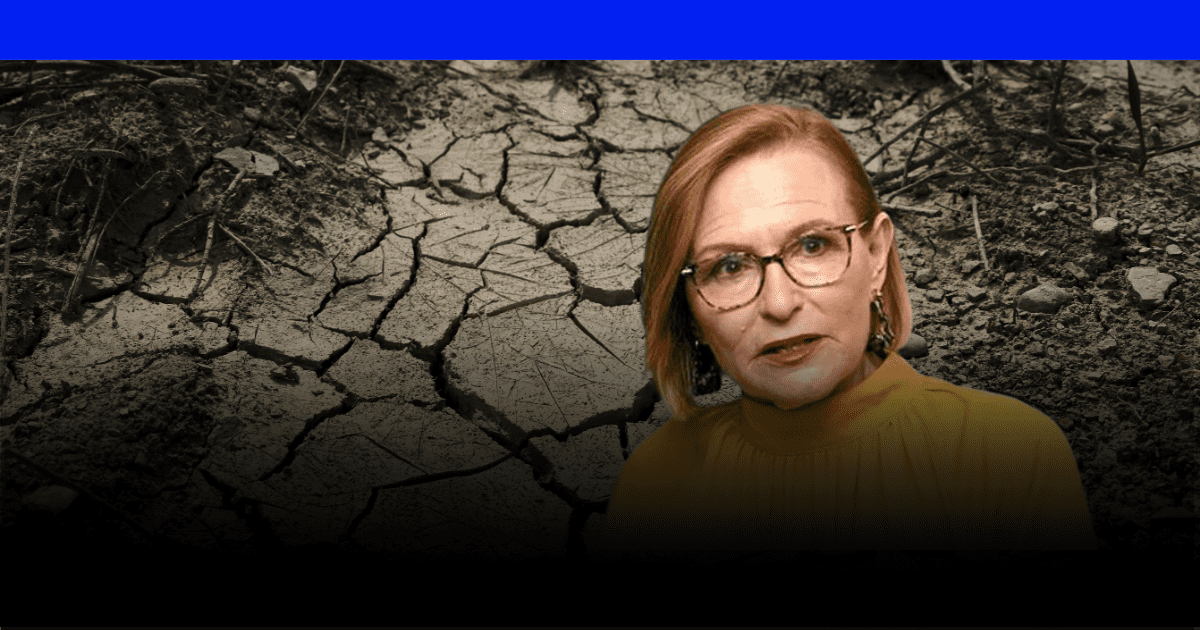
It’s almost Valentine’s Day, but we’re not loving Joburg’s leadership amid the water crisis. The people in charge seem clueless, offering promises that mean very little when taps are running dry. While all of this is happening, Helen Zille is dipping her feet in the mess, in a bid to become Joburg mayor. We break down the latest for you.
Tonight, President Cyril Ramaphosa will deliver the State of the Nation Address (SONA) at 7 PM, and we’re keeping a close eye on what he has to say. You can read our SONA explainer on our site, as a pre-game to the main event. Look out for our breakdown of his speech later tonight, also on explain.co.za.
In happier news, the Proteas are showing up and showing off at the T20 World Cup, and our national carrier is finally looking like it might survive long enough for us to use those Voyager miles.
There’s also plenty of drama at and outside the Madlanga Commission, including an unexpected Ozempic order that has everyone raising an eyebrow. Speaking of Ozempic, a tennis legend (and Beyoncé muse) is facing criticism over a GLP-1 Super Bowl ad, while another sports star has the internet dissecting his apology to his ex like it’s a bad referee decision.
So, let’s dive into these stories and more in this week’s wrap, brought to you by the explain.co.za team. 😄
Format:
▁ ▂ ▄ ▅ ▆ ▇ █BRIEFS
NATIONAL
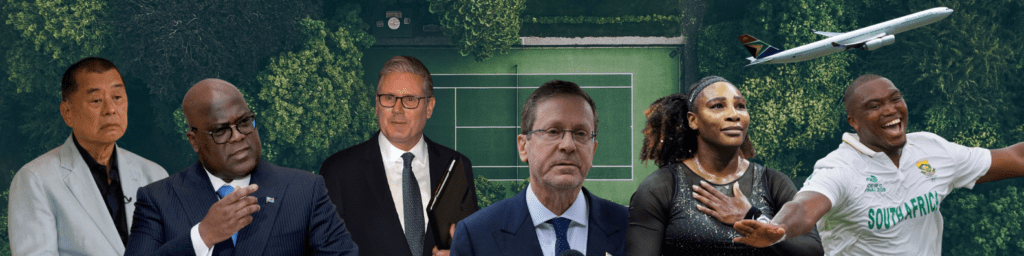
- After a decade of losses, SAA is back in the black. This week, the national carrier posted a R30m profit for the 2025 financial year, marking its second annual profit since exiting business rescue in 2021. For an airline that swallowed nearly R50bn in taxpayer bailouts previously, that’s quite the plot twist. Revenue jumped almost 36%, the fleet is expanding, and management says governance reforms are taking hold. It’s still early days, but, for once, the trajectory looks up. ✈️
- Some of Mzansi’s historic towns are getting new names, and not everyone’s thrilled. 😬 The changes were formally gazetted on Friday after Sports, Arts and Culture Minister Gayton McKenzie approved 21 place name changes last month. This includes Graaff-Reinet to Robert Sobukwe Town and East London to KuGompo City. The department says it’s about transformation and recognising diverse heritage. But a 2024 study found 83.6% of Graaff-Reinet residents find change unnecessary. The public now has a month to object.
- After nearly three decades in the DRC, SA is packing up. On Sunday, Pretoria formally notified the UN that it will withdraw more than 700 SANDF troops from the MONUSCO peacekeeping mission, set to be finalised before the end of 2026. The Presidency says it’s about “realigning resources” after 27 years on the ground. But defence experts say the real driver is cash. SA will still back peace efforts regionally, but boots-on-the-ground involvement is winding down. A quiet end to a long, costly chapter.
- A Joburg school tennis match has sparked an antisemitism row. 😦 Earlier this week, a leaked voice note circulated, featuring King David High’s deputy head claiming that Roedean School refused to play against his school, calling it “anti-semitic”. Roedean says that wasn’t the reason: it had informed King David in writing days earlier that it couldn’t play due to prior commitments. Both schools, alongside the Independent Schools Association of Southern Africa and the SA Jewish Board of Deputies, are in talks.
- The Proteas are off to a flying start at the ICC T20 World Cup. 🏏 It’s cricket’s fast-food format: 20 overs a side, wrapped up in an evening. We’re still chasing our first T20 World Cup title after reaching our first final in 2024, only to lose to India by seven runs. This year feels different. SA beat Canada by 57 runs in Ahmedabad, then edged Afghanistan in a dramatic, sudden-death finish — just the third men’s T20 decided by multiple Super Overs. Knockouts begin on 4 March, with the final on 8 March.
INTERNATIONAL
- Violence erupted in Sydney on Monday during protests over Israeli President Isaac Herzog’s visit. The Australian government invited Herzog after the deadly Bondi attack in December, saying his visit would help the Jewish community heal. Police charged crowds and used pepper spray, arresting 27 people, with nine later charged, while 10 officers were injured. Authorities say they showed “remarkable restraint” (🙄). Hundreds of protesters gathered the following day outside a police station, protesting the force. The standoff follows new protest rules that allow rallies, but ban marches.
- UK Prime Minister Keir Starmer has survived… for now. After appointing Peter Mandelson as UK ambassador to the US despite his past links to Jeffrey Epstein, his party erupted. Scottish Labour leader Anas Sarwar publicly urged him to quit, while senior advisers resigned and backbench MPs circled. But heavyweights quickly closed ranks after Starmer apologised in an apparently rousing internal speech. (Where’s that charisma the rest of the time? 👀) But with Scottish elections looming and party nerves fraying, can he survive the year?
- Hong Kong’s media landscape just told its own story. After pro-democracy media tycoon Jimmy Lai was sentenced on Monday to 20 years under the national security law, many outlets stayed silent or openly applauded the ruling. Once home to a fiercely independent press, the city’s major associations declined to comment, while pro-Beijing papers praised the “rule of law”. Press freedom groups say the chill is obvious: five years on from Beijing’s security crackdown, Hong Kong’s once-vibrant media is now a shadow of itself.
- Serena Williams’ Super Bowl cameo has sparked more than halftime chatter. 😶 On Sunday, the tennis legend appeared in an ad for telehealth firm Ro, promoting a GLP-1 weight-loss drug and crediting it with helping her lose around 14kg. Cue backlash. Critics say it’s tone-deaf for an elite athlete to endorse prescription weight loss medication, especially as her husband is an investor in Ro. Supporters call it honest. Either way, Big Pharma is getting increasingly aggressive during America’s biggest ad break.
- Your period might one day double as a cervical cancer test. Chinese researchers have found that menstrual blood collected with a sample strip from a sanitary pad can accurately detect HPV — the virus behind most cervical cancers. A study of more than 3,000 women showed the at-home method was just as effective as those awful gynae visits. It could help reach the millions who skip screening. If it holds up in larger trials, this could revolutionise how cervical cancer is caught and prevented. 🙌🏾
▁ ▂ ▄ ▅ ▆ ▇ █ BIG STORIES
1️⃣ Joburg’s water crisis boils over as election season heats up
Johannesburg’s water crisis has officially moved from “mild inconvenience” to full-blown breaking point.
The once-vibrant city has been brought to its knees in general thanks to decades of mismanagement and political instability. But it’s the gradual and then sudden collapse of its water systems that’s grabbed everyone’s attention lately, with the local government elections just around the corner and the ANC-led management of the city under fire.
The worst-hit areas are Midrand in the north and the older western suburbs like Melville, Auckland Park and high-lying Brixton — where gravity is not your friend when water pressure drops. In nearby Selby, some residents have had intermittent or no water for nearly five months.
On Wednesday, Melville residents took to the streets, toyi-toying their frustration after almost three weeks without water. Midrand residents protested earlier this month. Across Gauteng, people are beyond gatvol.
So what is causing all this?
It is not just one thing. There’s ageing infrastructure and years of underinvestment. There’s high demand, which has led bulk supplier Rand Water to throttle supply to the City of Johannesburg (COJ). There have been power failures at pump stations. And recently, an unprotected strike by workers affiliated with the South African Municipal Workers Union that COJ said added further strain before it was called off.
In other words: a perfect storm, decades in the making.
Enter politics.
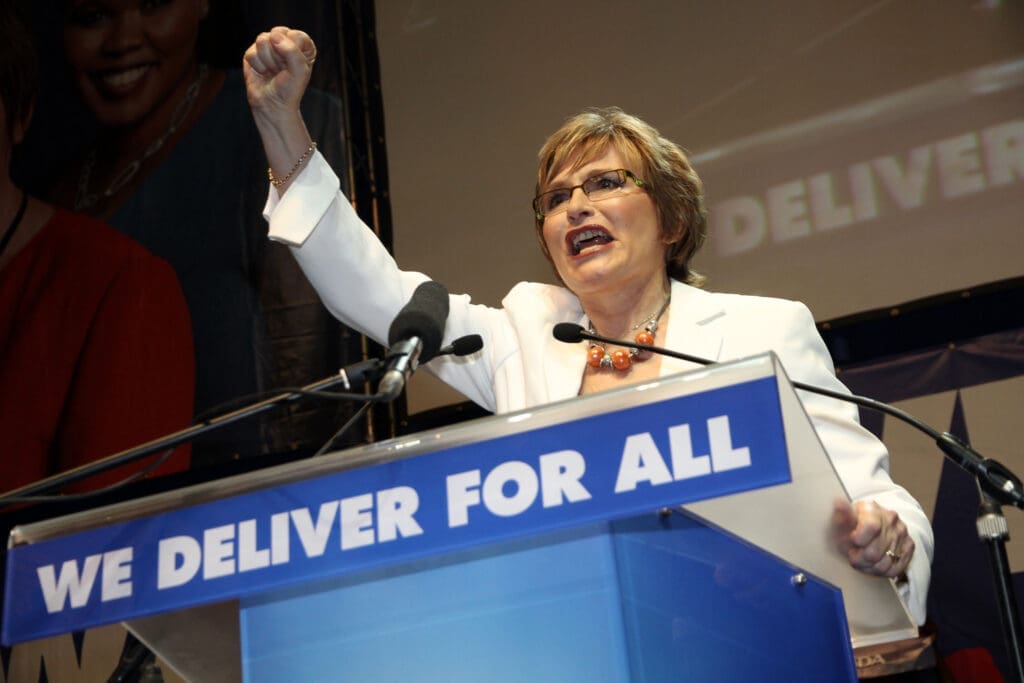
Helen Zille has seized the moment in her bid to become Joburg mayor, even filming a popular campaign video dipping her feet into a “dam” formed by burst pipes in Linbro Park. The symbolism writes itself: water where it should not be, and none where it should.
So what’s the way forward? On Wednesday, Gauteng Premier Panyaza Lesufi announced yet another task team – the third intervention in four years – aimed at stabilising Joburg’s water crisis.
Yet in 2025, the Johannesburg City Council already approved a comprehensive turnaround strategy for Johannesburg Water. It includes ring-fencing water revenue to fix infrastructure, improving revenue collection, expanding public-private partnerships and protecting funding for free basic services.
The question is not whether there is a plan… It is whether anyone can execute it.
Because residents are not asking for new committees or new slogans. They are asking for something much simpler: water when they turn the tap.
2️⃣ Three major developments since Madlanga resumed
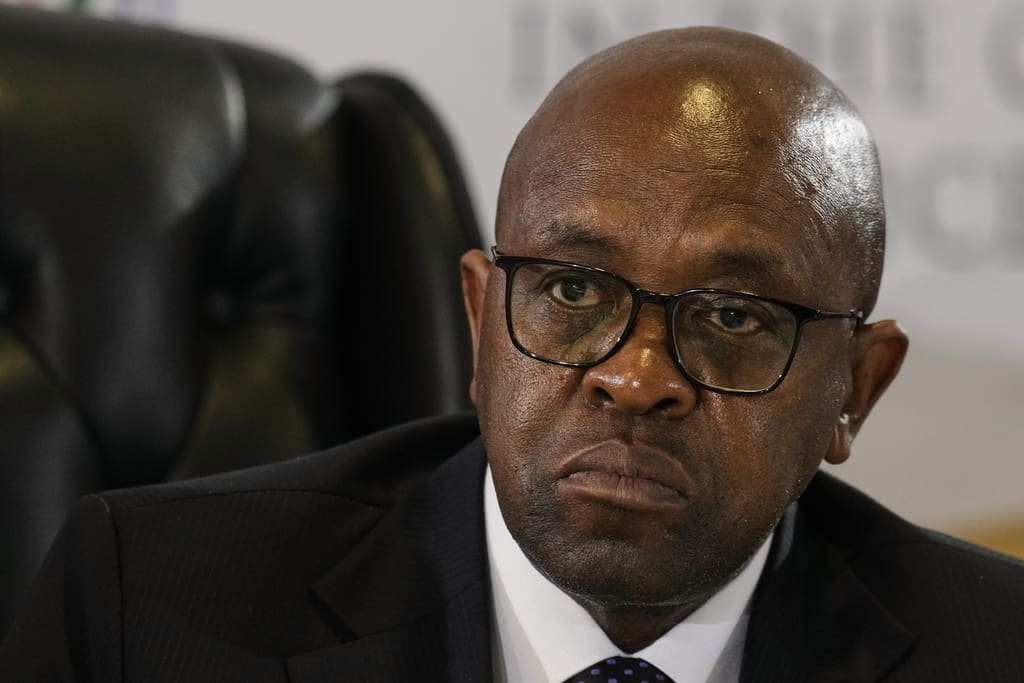
Two weeks after it resumed, the Madlanga Commission is serving more political thrillers.
As you know, the commission is probing allegations of corruption inside South Africa’s policing system. It broke in December after compiling an interim report that has not yet been made public. Since returning, the testimony has been… explosive.
Here are the biggest developments so far.
🔸 Senior police officials and an alleged crime figure
One name keeps surfacing: Vusimuzi “Cat” Matlala, an alleged underworld figure linked to the so-called Big 5 criminal cartel.
Major-General Lesetja Senona, head of the KwaZulu-Natal Hawks, defended his close relationship with Matlala on the stand — even describing him as a “brother”. Brigadier Rachel Matjeng, a senior SAPS official, admitted to having had a romantic relationship with him and spilling details about BBLs and Ozempic that we never expected to hear at a commission. 👀
This matters because Matlala’s company had a R360-million contract with SAPS to provide medical and wellness services. Senona admitted to texting Matlala messages like “take them on brother”, after the contract was ended over irregularities, while it was revealed that Matlala secured the contract under Matjeng’s division in June 2024… which is when they were romantically involved, according to her testimony.
🔸 Violence and fear around witnesses
The drama has not been limited to the hearing room.
Wiandre Pretorius was previously implicated at the commission after being named by Witness D as being involved in murder. When that witness — Marius van der Merwe — was killed in December 2025, Pretorius was subsequently identified as a person of interest.
Then things escalated quickly.
On Thursday, 5 February, Pretorius survived an apparent attempt on his life. Two days later, he died in what authorities have described as a suicide.
The sequence of events — a key witness killed, a person of interest attacked, then dead within days — has deepened fears around witness safety and the risks facing those entangled in the alleged networks being exposed.
🔸 Another task team — but will it mean action?
In response to the unfolding testimony, President Cyril Ramaphosa announced the formation of a new task team to investigate those implicated by the commission.
South Africa has seen this pattern before: commission findings followed by additional structures to “look into” the findings. The critical question is what happens after the final report is delivered.
Commissions gather evidence. They make recommendations.
Whether this one leads to prosecutions — rather than just headlines — will determine whether it changes anything at all
Read our full explainer here.
3️⃣Norwegian athlete wins the race and proceeds to tell the world that he cheated on his girlfriend
A moment in the Winter Olympics has just sparked a conversation about cheating. No, not the sporting kind… we’re talking relationships.
Norwegian biathlete Sturla Holm Lægreid, 28, shocked the world when he broke down in tears after winning bronze in the men’s 20km biathlon on Tuesday in Anterselva, Italy.
Speaking to broadcaster NRK, Norway’s state broadcaster, after the race, Lægreid took the moment to confess to having had an affair. He said, “Six months ago, I met the love of my life – the most beautiful and kindest person in the world. Three months ago, I made my biggest mistake and cheated on her.
I had the gold medal in life, and I am sure there are many people who will see things differently, but I only have eyes for her.
Sport has come second these last few days. Yes, I wish I could share this with her.”
The clip went viral instantly. To some, it looked like raw vulnerability. To others, it felt like something more calculated.
While Lægreid framed the moment as heartbreak and regret, his anonymous ex-girlfriend has had to deal with the fallout. She later told Norwegian newspaper VG that she “did not ask to be put in this position” and that it was “hard to be there”.
As Cosmopolitan bluntly put it, public confessions like this aren’t romantic. They can be manipulative, a way of shifting sympathy toward the person who did the harm in the first place. By airing his dirty laundry on the biggest stage of his career, Lægreid centred his pain and his redemption arc, not hers.
Lægreid later released a statement, saying that he regretted making the confession and apologising both to his teammate whose gold win was overshadowed in the drama and his ex-girlfriend.
“My apologies go to Johan-Olav (Botn), who deserved all the attention after winning gold. They also go to my ex-girlfriend, who unwillingly ended up in the media spotlight. I hope she is doing well.”
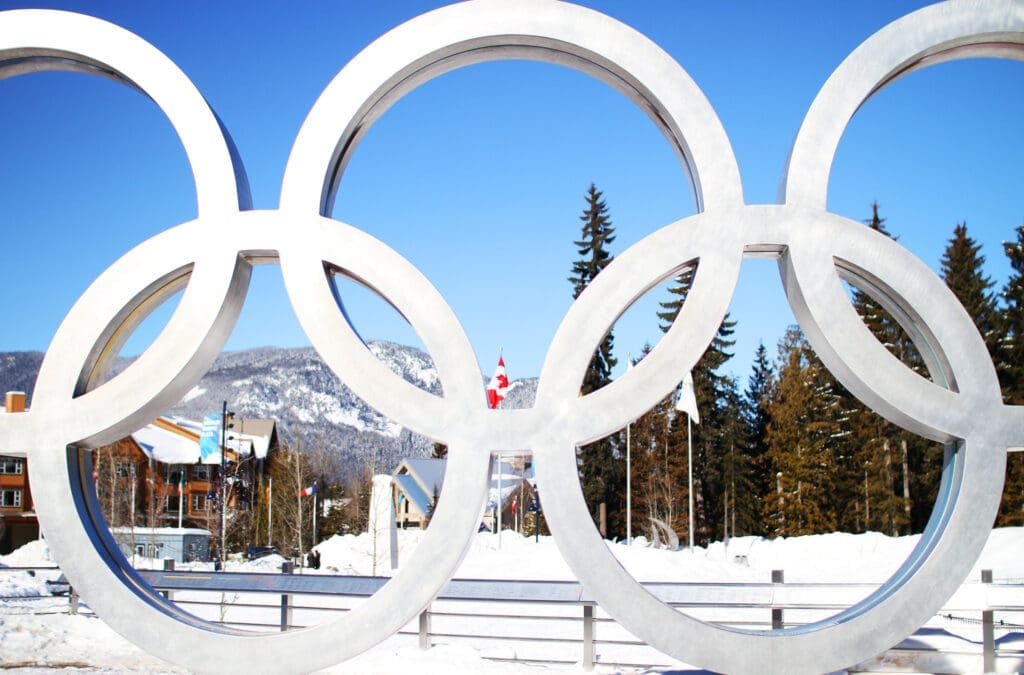
The Winter Olympics, known as Milano Cortina 2026, are currently taking place in Italy. The men’s biathlon race took place on Tuesday, and it is one of the most physically challenging sports on the programme, combining cross-country skiing and rifle shooting. Lægreid won bronze in the men’s 20km biathlon while his compatriot Botn won gold, with the Frenchman Éric Perrot in second.
That’s it from us at The Wrap, an award-winning product of explain.co.za – simple news summaries for busy people. 💁🏾♀
The Wrap is sponsored by explain’s agency division. We specialise in content marketing for purpose-driven organisations, often with a pan-African reach. Mail info@explain.co.za for a quote.
🇸🇺🇧🇸🇨🇷🇮🇧🇪
Remember to share the love. 💫
Tell your friends to sign up:
📩 Email: http://explain.co.za/subscribe
📲 Our new WhatsApp channel: https://whatsapp.com/channel/0029Vac06yM8kyyLmOulb80J
_Till next time, goodbye from the team, Verashni, Kajal, Tshego, Fatima and Kamogelo._ ✌🏽